
The Latvian airline airBaltic is moving forward with its restructuring and has announced further details regarding the planned job cuts. According to the Latvian Aviation Union (LAA), approximately 100 pilots and 200 cabin crew members are currently affected by the measures.
The airline confirmed the scale of the cuts to the aviation portal AeroTime but emphasized that the final number will not be determined until the selection process is complete.
Starting October 31, the affected employees will be gradually informed whether they will be able to keep their jobs. The current figures do not yet include those employees who have already voluntarily left the company since the start of the retrenchment process.
The planned layoffs are part of a restructuring that airBaltic announced in early October. At that time, the airline stated that between 500 and 700 jobs at its locations in Riga, Vilnius, and Tallinn could be affected. In total, airBaltic employs approximately 3,000 people in the Baltic states.
Smaller Fleet and Adjusted Route Network
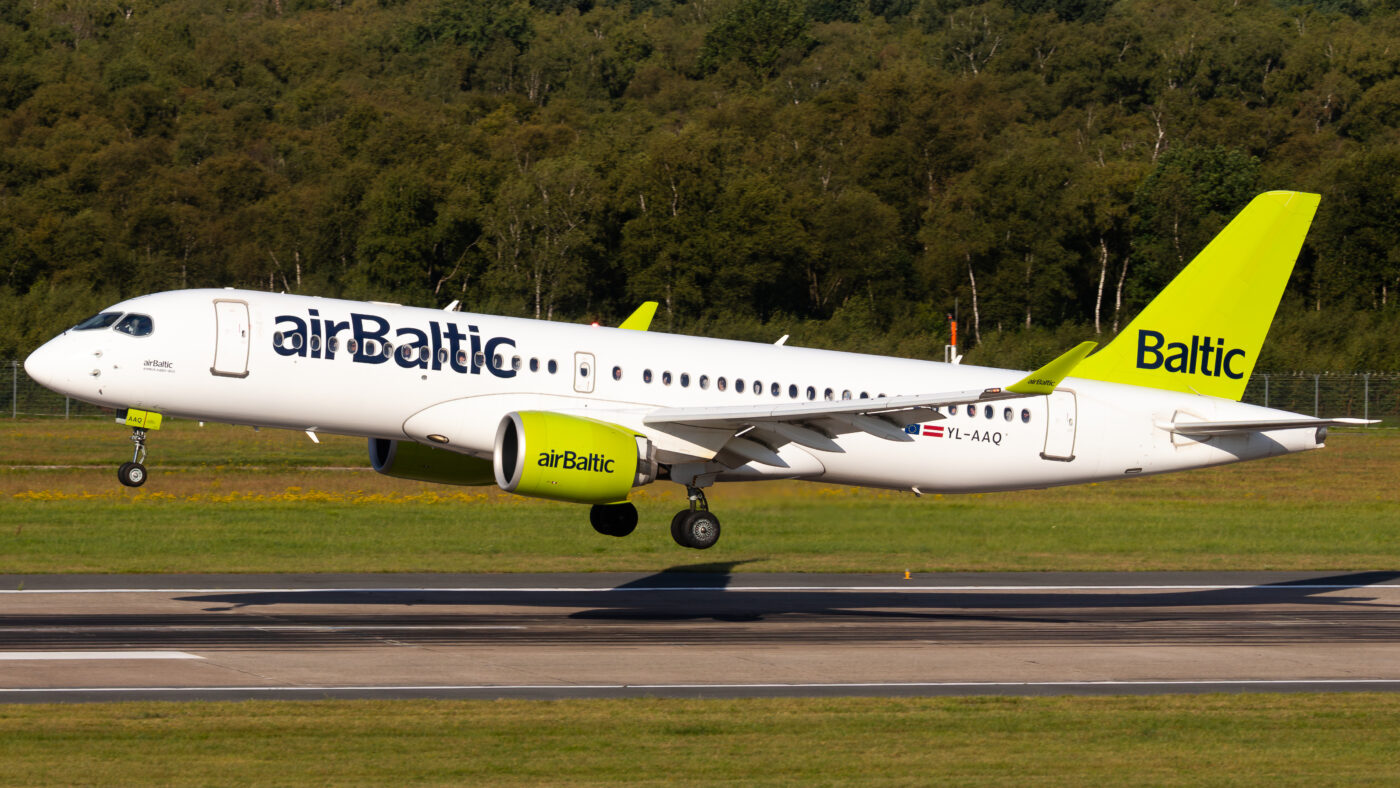
These measures are based on a new business plan through which airBaltic aims to improve its financial stability and align operating costs with its planned future capacity. This includes, in particular, a significant reduction in the size of its fleet, which consists exclusively of Airbus A220-300 aircraft.
By the end of 2026, the number of aircraft is set to drop from 54 to 36. In the long term, the plan is to gradually expand the fleet back to about 40 aircraft by 2031.
With the reduced number of aircraft, staffing requirements will also change. According to the airline, the planned job cuts are based on next year’s flight volume and route network. While the reduction in pilot positions will affect all three hubs, the planned cuts to cabin crew are concentrated at the Riga hub. According to airBaltic, the company employs more flight attendants there than will be needed in the future. At the same time, there is an additional need for staff at the Vilnius and Tallinn bases, which is why affected employees will be offered a transfer whenever possible.
In addition to adjusting its own fleet, airBaltic will increasingly rely on year-round ACMI partnerships in the future. Under this business model, an airline provides other airlines with aircraft, including crew, maintenance, and insurance. The combination of a smaller in-house fleet, a more focused route network, and additional ACMI agreements is intended to improve the company’s financial foundation.
Union Criticizes Selection Process
While airBaltic describes the restructuring as necessary, the process for selecting the affected employees in particular has drawn criticism. The Latvian aviation union accuses the company of using internal evaluation lists and selection criteria whose full methodology has not been provided in writing to employee representatives.
The union is therefore calling for the planned notifications to be suspended for the time being so that the criteria can be reviewed jointly. It also criticizes the fact that all planned job cuts among cabin crew are to take place in Riga, while the other two bases are exempt.
airBaltic rejects the allegations regarding a lack of consultation. Company spokesperson Edvards Dālderis told AeroTime that the selection criteria were established following several rounds of discussions with the unions. In doing so, the airline agreed on a compromise that takes into account existing evaluation systems for pilots and cabin crew. According to this approach, professional qualifications and other performance-related factors are factored into the decisions alongside length of service.
Restructuring Amid Financial Pressure
The personnel measures are being taken against the backdrop of a strained financial situation. Back in September, airBaltic filed for Chapter 11 bankruptcy protection in the U.S. to restructure its financial obligations. Flight operations will continue during this process.
The ownership structure also underscores the importance of the company’s future development. The Latvian government holds 88.37 percent of the voting rights, while the Lufthansa Group has held a 10 percent stake in the airline since 2025. The remaining shares are in private hands.
By downsizing its fleet and adjusting its workforce, airBaltic is now seeking to align its cost structure with its future business operations. The exact number of employees who will ultimately have to leave the company remains unclear until the selection process is complete. According to the airline’s current statements, ongoing flight operations are not expected to be affected by the restructuring measures.