The Dutch airline wants to downsize its organization, outsource activities and cut around 1000 jobs. In total, about 5000 jobs will be restructured. At the same time, the airline relies more on smaller aircraft’s for the European fleet. At first view, the numbers are appealing.
From the beginning of January to the end of September 2026, KLM increased its operating profit from 328 million euros to 526 million euros. Sales grew by more than 9% to 10.9 billion euros, while capacity increased by 4.3%. But the CEO of KLM, Marjan Rintel, isn’t satisfied with this. KLM’s operating margin was around 4.8% in the first nine months of 2026, but the management’s goal is 8%.
That is why it wants to tighten the Back on Track savings program, which has so far generated savings of 750 million euros.
According to CEO Rintel, the goal is to create a smaller, simpler and more flexible organization.
In the future, the focus will be on core activities that directly benefit customers. For activities that can be carried out better, faster or more efficiently by other actors, the company will take a different approach. They are to be carried out with external partners, reorganized or further consolidated within Air France-KLM.
The integration of the Scandinavian carrier SAS into the Group also offers opportunities for additional synergies. The airline has already pointed three areas out. The passenger service is to be made more efficient through digitization and new technologies. The employees in the terminals would henceforth concentrate more on guest care and direct customer contact.
The apron services European flights of KLM Cityhopper and the baggage service would now work together with external partners. And last but not least, the management also wants to optimize the hub control center at Amsterdam-Schiphol Airport through new working methods, modern technology and closer cooperation with external partners.
In addition, freight handling will be concentrated in Amsterdam and services on models that will leave the fleet will be assigned to external partners during maintenance. All this has consequences for the KLM staff. According to KLM, the number of jobs, which has already decreased in recent years, will decrease by a further almost 15%. About 5,000 jobs would be restructured. But in the end, around 1000 jobs remain, which are cut at KLM. The airline currently employs 31,000 people. The management believes that it can limit the impact on employees through natural fluctuation, voluntary measures and transfers.
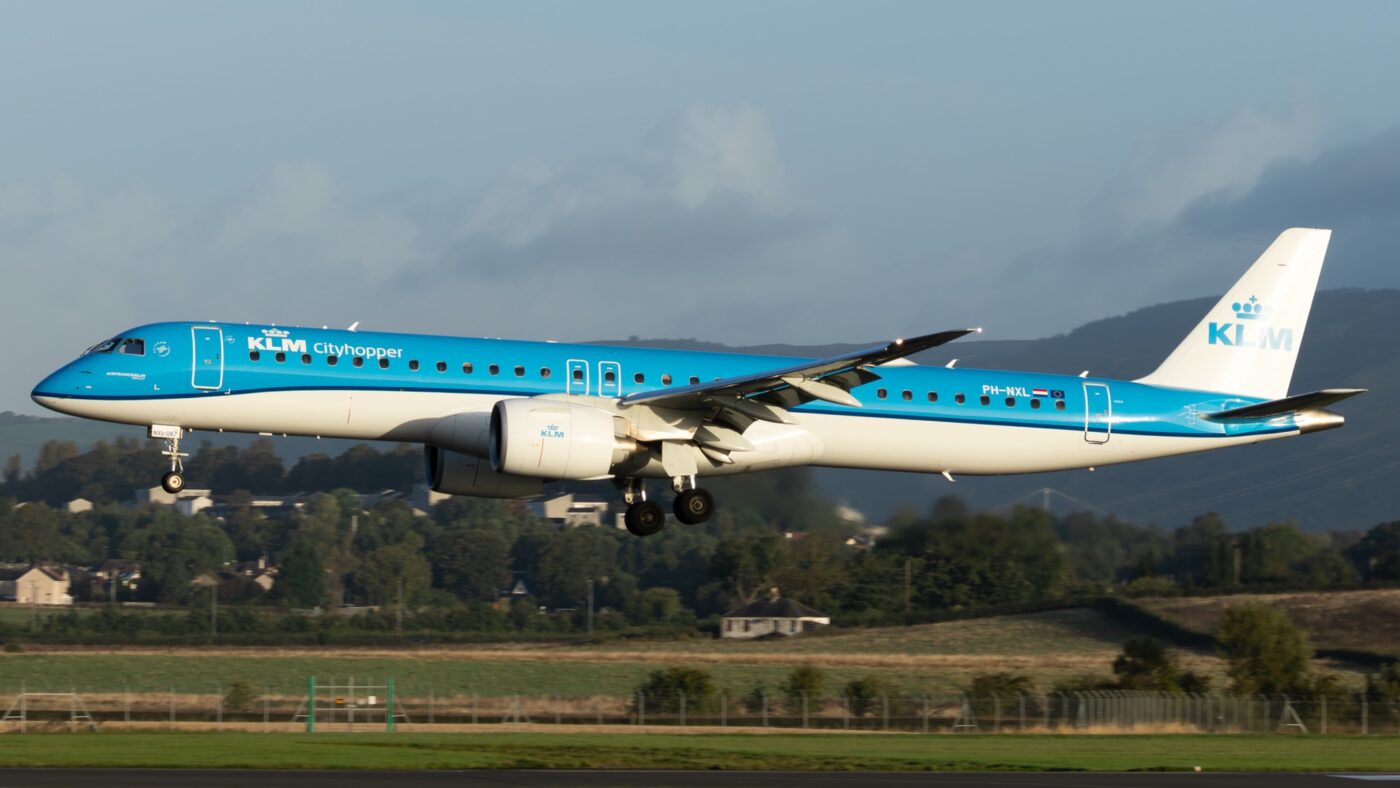
Not only the organization and the staff are scheduled. KLM is adjusting the ratio of larger and smaller aircraft in its European fleet. This will strengthen the role of regional subsidiary KLM Cityhopper. According to the airline KLM, the Airbus A321neo remains part of the fleet, while smaller Embraer E195-E2 replaced the planned Airbus A320neo. While using more smaller aircraft’s, KLM can better adapt the capacity to the demand in its entire European route network. The Boeing 737-fleet and the Embraer E190 will be decommissioned in the coming years. The plans with the Airbus A320neo at the low-cost daughter airline Transavia remain unchanged.