
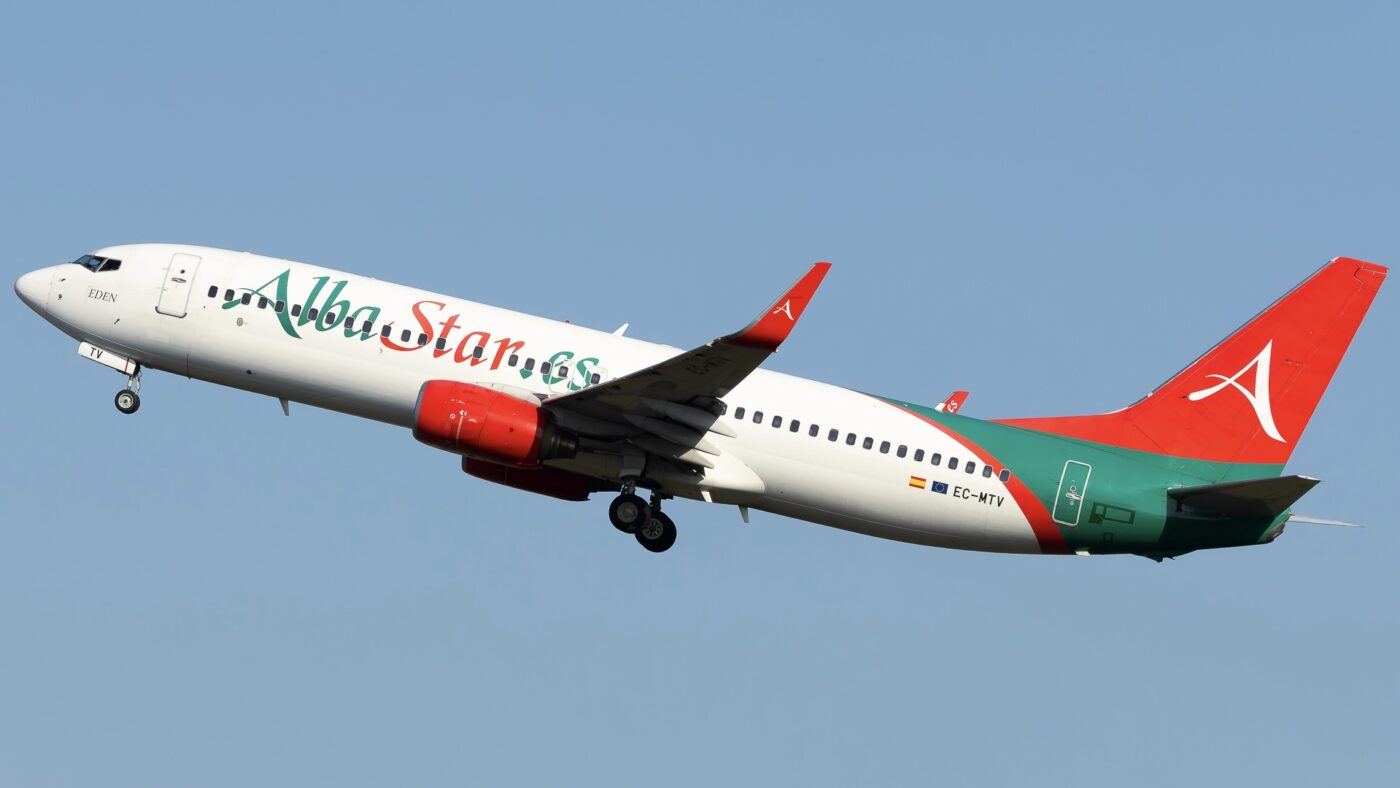
Mallorca-based AlbaStar announced the suspension of its commercial operations on Tuesday, 10 November 2026, after efforts to secure new investment failed to produce an agreement. The airline, which specialises in charter services and wet-lease operations, is preparing to enter voluntary insolvency proceedings in Spain, although management has not ruled out the possibility of a rescue.
According to Spanish aviation and tourism publication Preferente, the decision was communicated by AlbaStar’s managing director, Oriol Hernández, in a letter to business partners. Hernández attributed the airline’s financial difficulties to substantial debt accumulated during the COVID-19 pandemic, compounded by geopolitical tensions and rising fuel costs over the past year.
Despite discussions with several potential investors, the airline was unable to complete a transaction before its liquidity position became unsustainable. Management has indicated that negotiations remain ongoing and that new offers could still emerge, leaving the possibility of restructuring or a continuation of operations open.
Founded in 2009, AlbaStar began operating in 2010 and developed a niche in holiday charters, pilgrimage flights and services for European tour operators, particularly in Italy and Spain. Its fleet consists of five Boeing 737-800 aircraft, each configured with 189 seats, while approximately 200 employees face uncertainty over the company’s future.
Another casualty of a difficult year
AlbaStar’s financial troubles come amid a growing number of airline failures and operational shutdowns throughout 2026. On the same day that AlbaStar announced its suspension, Slovak charter and ACMI operator AirExplore confirmed that it had permanently ceased operations and requested the surrender of its Air Operator Certificate.
Elsewhere, US ultra-low-cost carrier Spirit Airlines ended operations in May, while Argentina’s Flybondi and Mexico’s Magnicharters have also experienced financial collapse. In Europe, British ACMI carrier Ascend Airways UK announced its closure earlier this year, while Romanian airlines AnimaWings and Dan Air have entered insolvency proceedings. AnimaWings has suspended its scheduled flights until at least the end of December.
The difficulties reflect broader pressures facing airlines worldwide. In its June financial outlook, the International Air Transport Association (IATA) forecast global airline profits of just $23 billion in 2026, down from $45 billion in 2025. The industry’s projected net profit margin of 2% illustrates just how limited the financial buffer has become, despite continued passenger demand.
Rising jet fuel prices, geopolitical disruption and increased operating expenses have placed particular pressure on smaller carriers, many of which lack the financial reserves available to larger airline groups. For operators still carrying substantial pandemic-era debt, these additional costs can quickly become unmanageable.
The immediate priority remains securing a financial solution capable of preserving the business. Whether the airline eventually returns to the skies remains uncertain, but its suspension adds another name to the growing list of carriers struggling to survive in 2026.