

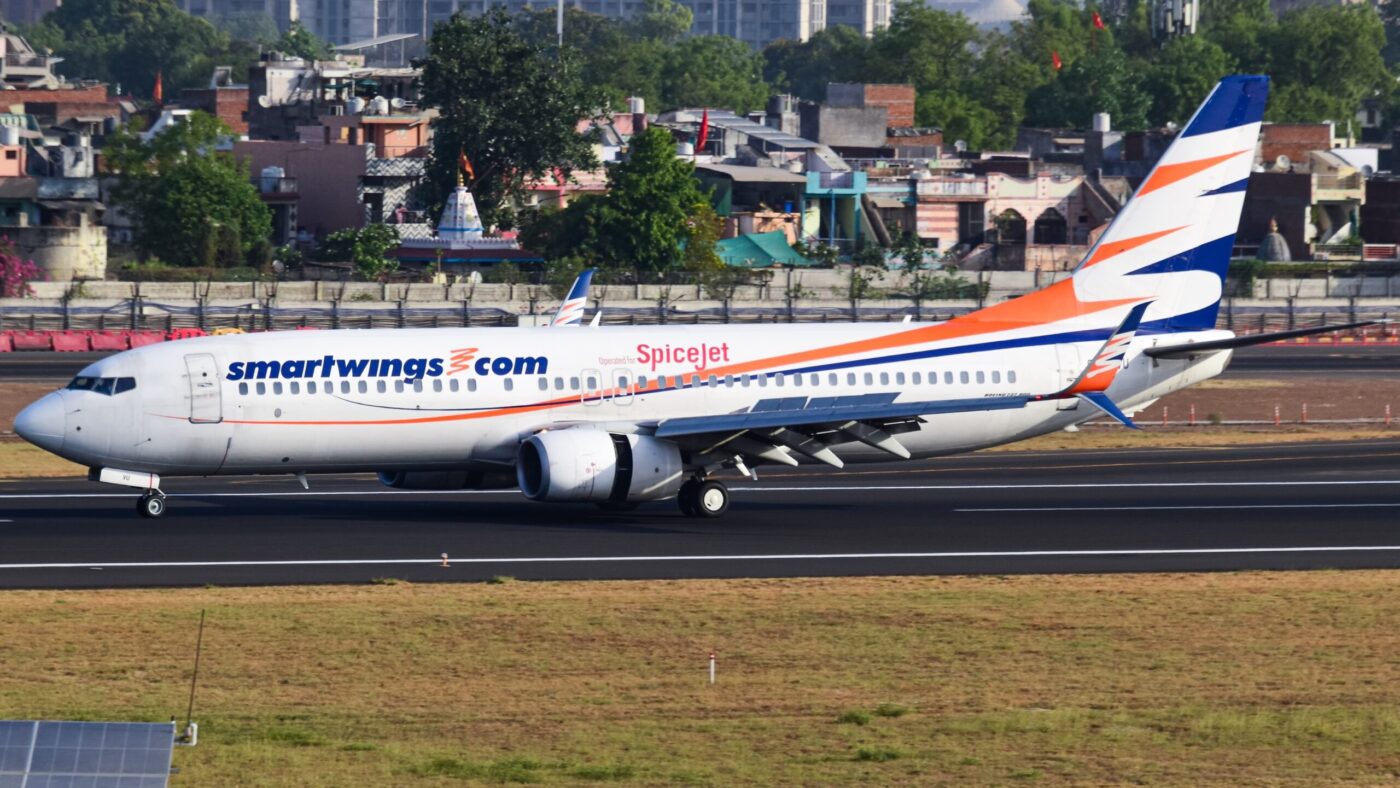
Passengers travelling with Indian low-cost carrier SpiceJet faced unexpected disruption at Dubai International Airport on Thursday, 12 November, after the airport suspended check-in services for the airline over approximately AED 14 million ($3.8 million) in outstanding payments.
Four flights to Amritsar, Jaipur, Mumbai and Delhi were cancelled, while two other services, bound for Ahmedabad and Delhi, were permitted to operate. The aircraft assigned to the cancelled flights reportedly departed Dubai without passengers.
The cancellations followed several days of warnings from Dubai Airports. Internal correspondence obtained by Indian media outlet Informist indicates that the airport operator had informed SpiceJet on 9 November that check-in services would be suspended unless the outstanding balance was settled. No payments had reportedly been received from the airline since 13 October.
With the deadline passed and the outstanding dues unresolved, SpiceJet’s Dubai station manager instructed operations staff to cancel the remaining departures. The Dubai Civil Aviation Authority subsequently intervened, reportedly demanding that alternative flights, hotel accommodation and transport be arranged for stranded passengers.
SpiceJet has maintained that sufficient bank guarantees are in place to cover the outstanding payments. Discussions with the relevant authorities are ongoing, although the airline has yet to announce when normal services from Dubai might resume.
SpiceJet’s Financial Troubles Deepen
Once a significant competitor in India’s rapidly expanding aviation market, SpiceJet has seen its operations contract dramatically over recent months. Its domestic market share fell from 3.9% in January to just 0.6% in September, while monthly passenger numbers declined from almost 592,000 to approximately 73,000.
Fleet availability has become another major concern. Recent reporting suggests that the airline has approximately 12 aircraft remaining, with only nine operational. The reduced fleet has placed considerable strain on its already limited network, making it increasingly difficult to maintain a reliable schedule.
Figures published by India’s Directorate General of Civil Aviation paint an equally concerning picture. More than one in five scheduled SpiceJet flights were cancelled in September, while its on-time performance at major Indian airports stood at just 16.6%.
Financial disputes with aircraft lessors, fuel suppliers and airport operators have continued to complicate the airline’s recovery efforts. Some service providers have reportedly demanded advance payments before extending further services, restricting the carrier’s financial flexibility.
Concerns about SpiceJet’s operational reliability reached Delhi on Friday, 13 November, when Indira Gandhi International Airport issued a passenger advisory warning of potential disruptions. Travellers were encouraged to contact the airline directly to verify their flight status before departing for the airport.
SpiceJet’s management is now looking to raise additional capital. A board meeting scheduled for 18 November will consider financing options, including the issuance of shares and debt securities, as the airline attempts to address its liquidity problems.
In the meantime, the dispute in Dubai remains unresolved, with the airline facing mounting pressure from creditors and service providers. Passengers booked on upcoming SpiceJet services have been advised to check their flight status ahead of departure.