
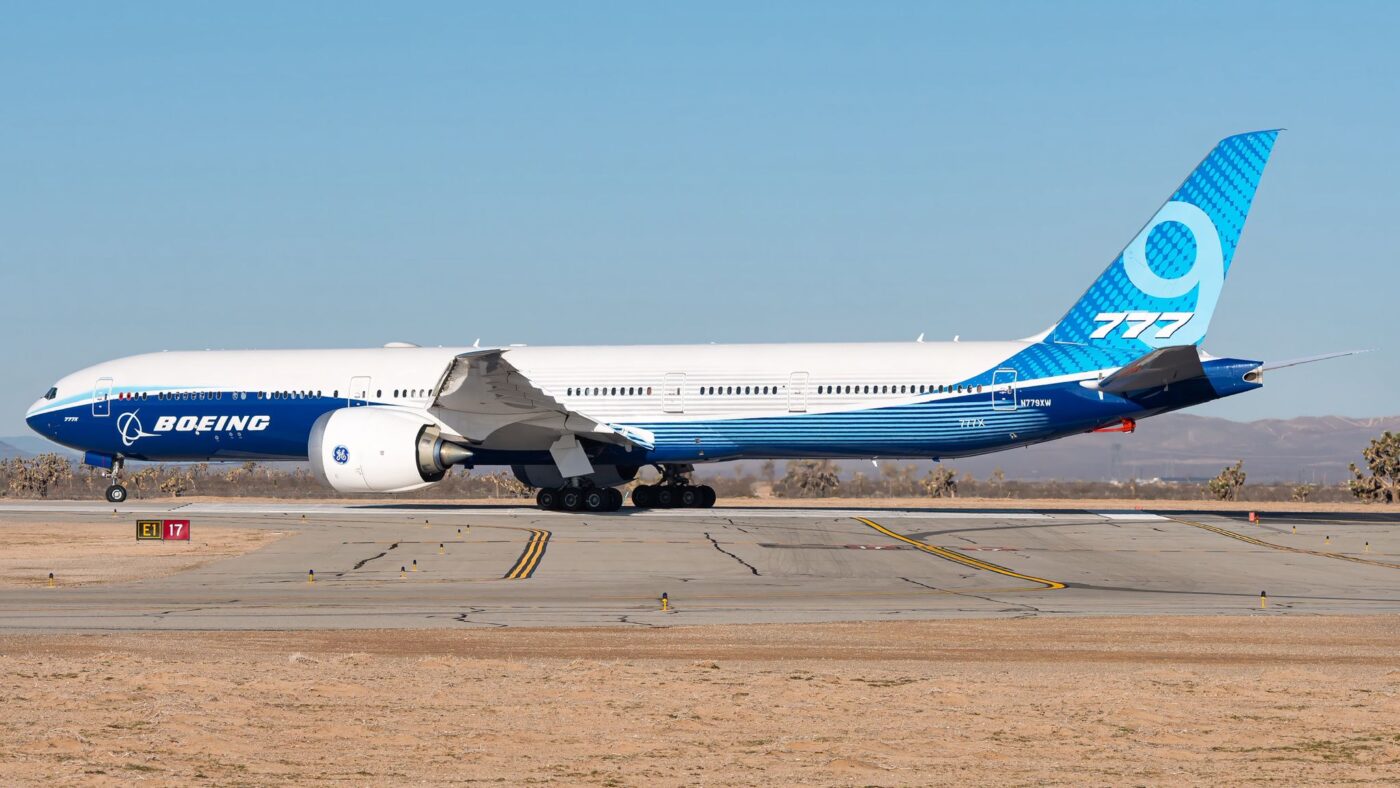
Boeing has warned that some 777-9 testing could extend into 2027 as additional work on its GE9X engines holds up part of the certification programme. The manufacturer still plans to deliver the first aircraft next year.
Speaking at the Morgan Stanley Laguna Conference on September 16, chief executive Kelly Ortberg said GE Aerospace needed to complete certification work involving an engine seal before Boeing could begin its extended-operations, or ETOPS, flight tests.
The warning adds pressure to a programme already running years behind schedule, with Lufthansa waiting to become the first operator.
Engine seal work holds up testing
Ortberg said the work on the GE9X mid-seal had required more testing than originally expected. Boeing was anticipating the necessary clearance soon, but the delay could push some of its remaining flight tests beyond the end of this year.
A GE Aerospace spokesperson told dpa-AFX that the cause of the seal durability problem had been identified. The company began delivering engines incorporating improved seals in August and said it remained focused on entry into service in 2027.
The GE9X itself received FAA engine certification in September 2020. The current obstacle concerns further work on the seal and the clearance needed to begin Boeing’s ETOPS test campaign. GE’s original certification announcement also identified ETOPS approval as a separate objective requiring additional testing.
Lufthansa aircraft already flying
Other parts of the 777-9 programme have continued to advance. Lufthansa’s first aircraft made its maiden flight in May, becoming the first 777-9 to fly with a fully fitted customer cabin.
Unlike the dedicated development aircraft, it carries passenger seats and inflight entertainment equipment. Boeing said the aircraft would undergo ground and flight tests focused on cabin systems and connectivity, helping establish the configuration for customer deliveries.
At that point, the 777-9 test fleet had accumulated more than 4,700 flight hours. Boeing also reported more than 620 orders across the broader 777X family, which includes the 777-9, the smaller 777-8 passenger aircraft and the 777-8 Freighter.
For airlines preparing to introduce the type, the remaining uncertainty complicates decisions about aircraft retirement, crew training and the launch of new cabins. Those preparations depend on a reliable delivery schedule as well as progress in flight testing.
First deliveries still targeted for 2027
Boeing moved its first-delivery target from 2026 to 2027 in October 2025, taking a $4.9 billion charge linked to the revised programme schedule. Delivery next year would put the aircraft seven years behind the original 2020 target.
Ortberg’s latest comments leave that delivery target in place, while acknowledging that testing may take longer. The immediate milestone is clearance to begin the ETOPS campaign; Boeing has not announced a move to 2028 yet, and will try everything to avoid deliveries slipping into 2028.