
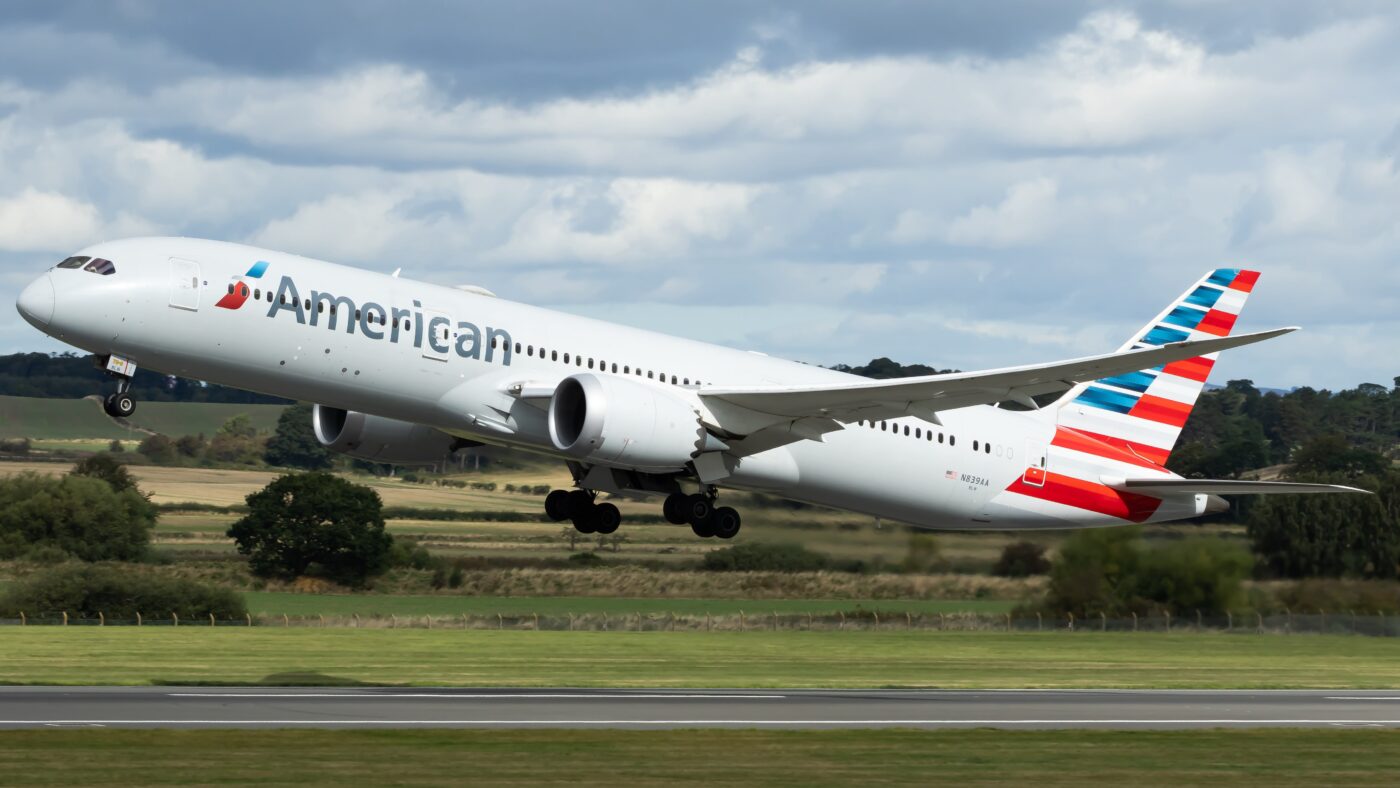
American Airlines and Taiwan-based STARLUX Airlines are expanding their cooperation with a new codeshare agreement, strengthening connections between Taiwan and North America. The partnership builds on an interline agreement introduced in 2025 and will give passengers access to a wider range of destinations through the two airlines’ combined networks.
Tickets for the new codeshare services went on sale on September 23, with the first flights scheduled to operate from September 30, 2026. American will place its code on selected STARLUX-operated flights between Taiwan Taoyuan International Airport and four U.S. gateways: Los Angeles, Ontario, San Francisco and Seattle. A planned codeshare between Phoenix and Taipei remains subject to regulatory approval.
The agreement’s main benefit extends beyond these trans-Pacific routes. Through American’s network, STARLUX customers will be able to connect from the U.S. gateways to 20 destinations across North America. The listed destinations include New York, Boston, Philadelphia, Atlanta, Charlotte, Miami, Orlando, Dallas-Fort Worth, Denver and Las Vegas.
For STARLUX, this significantly expands the number of North American markets it can offer without operating a separate long-haul service to each destination. Passengers can book connecting itineraries on a single ticket, while through-checked baggage is also available subject to applicable customs and operational requirements.
The arrangement also works in the opposite direction. American passengers travelling to Taiwan can use STARLUX-operated flights from the participating U.S. airports and, where available, connect through Taipei to destinations served by the Taiwanese carrier.
Taipei as a Trans-Pacific Hub
The agreement underlines the importance of Taipei Taoyuan as STARLUX’s main international hub. The airline has been expanding its long-haul network since beginning operations in 2020, positioning Taipei as a connecting point between North America and Asia.
For American Airlines, the cooperation provides an additional partner for the Taiwan market. Instead of relying exclusively on its own aircraft and network, the U.S. carrier can use STARLUX’s established operation between Taiwan and North America while providing onward connections through its own network.
The airlines have also highlighted growing economic and business links between Taiwan and the United States. The semiconductor sector is particularly significant. Taiwan remains a major centre of global semiconductor manufacturing, while U.S. investment in domestic semiconductor production has increased the number of business links between the two markets.
The new agreement therefore serves more than leisure traffic. Business travel, corporate connectivity and onward connections across both regions are important parts of the network opportunity, although the actual demand will depend on schedules, capacity and market conditions.
Building on an existing relationship
The codeshare represents the next stage of a relationship that began with an interline agreement in 2025. That arrangement allowed passengers to combine flights operated by the two airlines on a single itinerary.
Codesharing adds a deeper level of commercial integration by allowing American to market selected STARLUX-operated flights under its own flight numbers. This makes the partner network more visible within American’s distribution system and provides passengers with a more integrated booking experience.
The airlines have indicated that the cooperation could be expanded further, including additional customer benefits and mileage-redemption opportunities. The exact scope and timing of such developments will depend on the implementation of the respective programs.
A strategic role for partnerships
The agreement comes at a time when airline network growth is increasingly driven by partnerships as well as direct route launches. Codeshares allow carriers to reach additional markets without deploying their own aircraft on every sector.
This is particularly relevant for STARLUX as it continues to establish itself in the international market. Its long-haul fleet gives it direct access to selected destinations in North America, while American’s extensive domestic network provides additional reach beyond those gateways.
American, meanwhile, gains another connection to Taiwan through a carrier with an expanding long-haul network. The arrangement allows the two airlines to combine different network strengths rather than directly duplicating each other’s operations.
The success of the cooperation will ultimately depend on passenger demand and the ability of both carriers to align schedules and capacity, but the agreement provides a clear example of how partnerships are becoming an increasingly important tool for expanding global airline networks.