
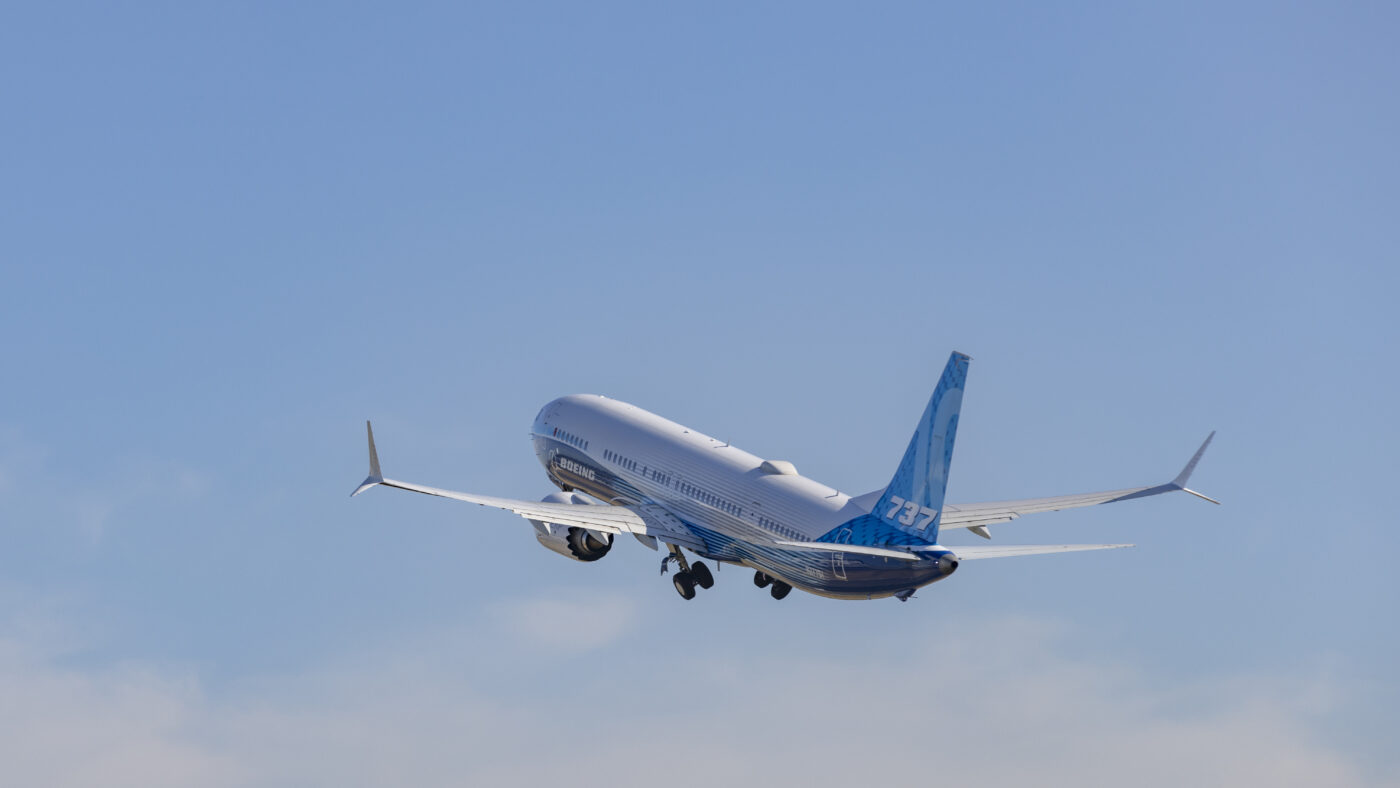
Certification of the Boeing 737 MAX 10 has taken a significant step forward. The U.S. Federal Aviation Administration (FAA) has investigated a software deviation in certain flight management systems of the 737 MAX and concluded that it does not pose a safety risk. This removes a major obstacle to the recently delayed certification of the largest MAX variant. However, final certification is still pending.
The investigation focused on an issue with a newer version of the Flight Management System (FMS) software. Under certain conditions, during a missed approach or go-around, the software may deviate from the standard vertical navigation (VNAV) if the crew alters the programmed flight path. Instead of the standard automated guidance, the system may then switch to other modes of pitch control.
The FAA assessed the issue in a specially convened Corrective Action Review Board. According to the agency, pilots retain control of the aircraft at all times, even in the scenario in question. Furthermore, the displays are unambiguous for the crew. The agency therefore does not classify the software error as a safety issue. At the same time, Boeing is working with the software supplier, GE Aerospace, on a permanent fix.
A software issue slowed down the certification process
The significance of the investigation lies primarily in the timing of its discovery. Boeing had already made significant progress in the certification process for the 737-10. As recently as mid-September, Boeing CEO Kelly Ortberg had stated that certification was imminent. However, the FAA halted the process in late September after the software anomaly came back into focus.
The problem had been known since 2024. During a WestJet validation flight, pilots detected the anomaly and reported it to Boeing. The analysis at that time concluded that there was no immediate safety risk. Following additional customer reports, Boeing revisited the issue later this year and involved the FAA more extensively. The agency subsequently conducted its own assessment and reached the same basic conclusion as the manufacturer.
The fact that the FAA nevertheless initially delayed MAX 10 certification underscores the importance of software and human factors in modern commercial aircraft. Even if a system error does not immediately lead to a loss of aircraft control, a change in automation during a go-around can increase the crew’s workload. This is precisely why not only the technical function but also the interaction between the system and the cockpit must be carefully evaluated.
The effects extend beyond the MAX 10
Software version U14.1 does not apply exclusively to the MAX 10, which has not yet been certified. Other aircraft in the MAX family are also equipped with the corresponding software versions. Boeing is therefore working in parallel on a solution for aircraft already in service or scheduled for delivery. The FAA also plans to issue a Special Airworthiness Information Bulletin to provide information about the problem and how to address it.
However, the FAA’s decision explicitly does not mean that the 737 MAX fleet will be grounded during ongoing operations. The agency sees no basis for a grounding. Boeing can continue deliveries of the existing variants, though the company is in some cases reverting to an earlier software version to meet customer requirements.
This is precisely where the difference between a regulatory safety assessment and the practical requirements of airlines becomes apparent. According to reports by Aviation Week, Southwest Airlines and United Airlines have stated that they do not intend to accept affected aircraft equipped with the software version in question. The technical classification as non-safety-critical therefore does not automatically mean that all customers will forgo an update prior to acceptance.
MAX 10 Remains Strategically Important for Boeing
For Boeing, the decision comes at a crucial time. The MAX 10 is the largest member of the 737 MAX family and is intended primarily for use on routes where airlines need more seating capacity without having to switch to a larger aircraft class.
Customer interest is correspondingly high. Boeing reports approximately 1,500 orders for the MAX 10. Key customers include United Airlines and Southwest Airlines, among others. Ryanair is also awaiting the model and continues to expect the first 737-10 deliveries in the spring of 2027.
The MAX 10 is thus not just another member of the product family, but a key component of Boeing’s offering in the upper segment of the narrow-body market. At the same time, the program reflects the protracted development and certification process for the latest MAX variants. It was not until August 2026 that the FAA certified the 737 MAX 7 following extensive testing.
Boeing had already announced in the summer that the certification flight tests for the MAX 7 and MAX 10 had been completed and that both variants were still on track for certification in 2026. The first delivery of the MAX 10 is expected in 2027.
No final approval yet
The FAA’s latest decision thus removes a major hurdle, but it is not equivalent to the actual type certification. Boeing must complete the ongoing certification process and meet the remaining requirements. At the same time, the company will continue to develop the software fix and coordinate it with the airlines.
For Boeing, however, the news is of considerable significance. The agency has made it clear that the software deviation under investigation does not fundamentally call into question the safety of the 737 MAX. This allows the focus to shift back to the final steps toward certifying the MAX 10.
The coming weeks will show how quickly Boeing can address the remaining regulatory and customer requirements. For the MAX 10, this could mean, that after years of delays, the final phase before commercial operation is finally beginning, though this time under particularly close scrutiny by regulators, airlines, and flight crews.