
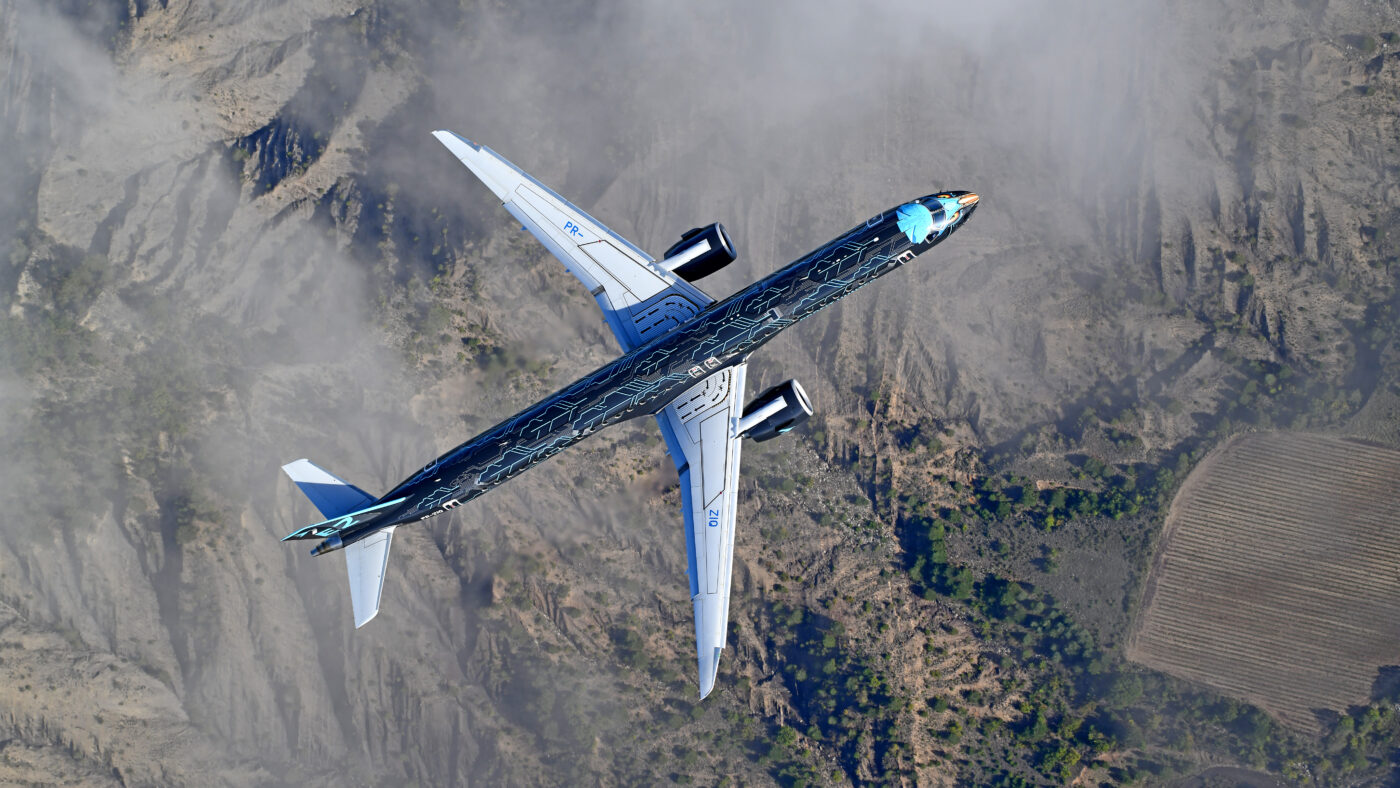
In the third quarter of 2026, Embraer delivered more aircraft than ever before in a third quarter. In total, the Brazilian manufacturer delivered 66 aircraft to its customers between July and September. This result was six percent higher than in the same period last year and two percent higher than in the second quarter. The picture is even clearer when looking at the first nine months of the year: With 175 aircraft delivered, Embraer exceeded last year’s figure of 153 aircraft by 14 percent.
This record is not attributable to a single program. Rather, it demonstrates that Embraer is increasingly organizing its production more evenly across multiple business units. The company specifically highlights progress in its efforts to stabilize and smooth out production. The goal is to reduce the previously heavy concentration of deliveries in the second half of the year.
E-Jets Remain a Key Growth Driver
Developments in commercial aviation are particularly relevant to civil aviation. Embraer delivered 22 new commercial aircraft in the third quarter. Of these, 11 were E175s and another 11 were from the E2 family. Compared to the third quarter of 2025 and the second quarter of 2026, the division’s delivery volume thus increased by 10 percent in each period.
These figures underscore the importance of the E-Jet family for Embraer’s position in the market for small and medium-sized commercial aircraft. While Airbus and Boeing dominate the market above this size class, Embraer focuses on the segment up to 150 seats. This size class remains of strategic importance, particularly for airlines that want to flexibly adjust capacity to demand or directly connect smaller markets.
However, the company is no longer associated exclusively with the original E-Jet generation. With the E2 family, Embraer is seeking to secure its position in the long term through modernized aircraft featuring new engines, revised aerodynamics, and an optimized cabin. At the same time, the E175 remains an important part of the business, particularly in the North American regional market.
A notable milestone had already been reached in September: Embraer delivered its 2,000th E-Jet. The program is thus one of the most successful commercial jet families in its size class.
Production Balancing Is Becoming More Important
The current record is therefore driven not only by high demand but also by the industrial capacity to translate that demand into actual deliveries. This point is particularly crucial for aircraft manufacturers: A large order backlog alone does not generate revenue as long as the corresponding aircraft cannot be built, tested, and delivered to customers.
Embraer has therefore been working for several years to organize production more evenly. This is particularly evident in Executive Aviation, where the company delivered 41 business jets in the third quarter—the same number as in the same period last year. At the same time, Embraer emphasizes that the production adjustments made over the past two years have helped reduce the traditionally higher concentration of deliveries in the second half of the year.
The Defense & Security division also contributed to the quarterly results. Embraer delivered one KC-390 Millennium and two A-29 Super Tucanos. This brings the total to three military aircraft, compared to just one delivered in the corresponding quarter of the previous year.
Annual Goals Remain Achievable
Despite the record quarter, Embraer has not yet reached the end of its annual program. For 2026, the company continues to expect 80 to 85 deliveries in Commercial Aviation. In Executive Aviation, 160 to 170 aircraft are expected. Based on the midpoints of these ranges, both forecasts represent growth of about six percent compared to the previous year.
With 175 aircraft delivered after nine months, Embraer has already completed a significant portion of its overall program. At the same time, the fourth quarter is likely to play an important role once again, as the aviation industry traditionally sees a large share of annual deliveries concentrated in the final months of the year.
This trend is also interesting when viewed against the backdrop of last year. In 2025, Embraer delivered a total of 244 aircraft—18 percent more than in 2024. Of these, 78 were in the Commercial Aviation segment, 155 in Executive Aviation, and 11 in the Defense & Security segment.
A Market Between Airbus, Boeing, and Regional Flexibility
Embraer’s success cannot be judged solely on the basis of absolute production figures. The Brazilian manufacturer occupies a market position that lies between traditional regional jets and larger narrow-body aircraft. For airlines, this opens up opportunities to tailor their fleets more closely to individual routes without automatically having to rely on aircraft from the A320 or 737 families.
This flexibility is becoming increasingly important in an aviation market where airlines are deploying their capacity in ever more differentiated ways. Not every route justifies a larger single-aisle aircraft, yet traditional regional jets may offer too little capacity on many routes. The E-Jets fill this gap.
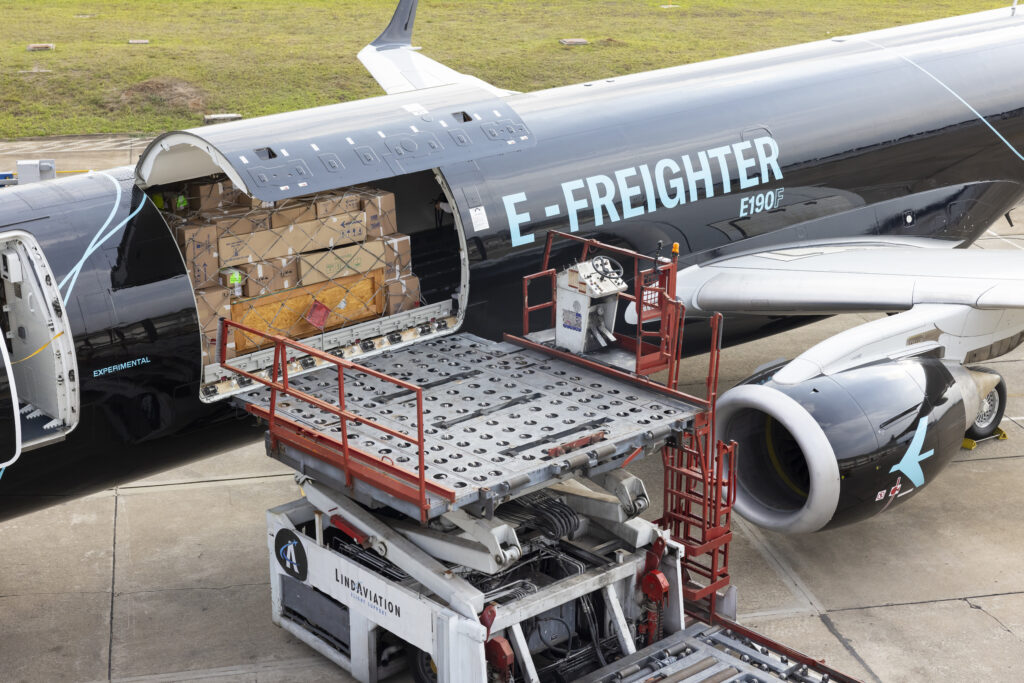
For Embraer, this is compounded by the fact that the E2 family now constitutes a larger portion of its commercial product portfolio. In September, for example, ANA Holdings placed an order for eight additional E190-E2s. At the same time, BermudAir was announced that same month as another operator of the E-Freighter from the E-Jet family.
Record as a Sign of Growing Industrial Stability
This record quarter is therefore less of a snapshot and more of another sign of Embraer’s industrial growth. The combination of rising deliveries, a stabilized production system, and continued strong demand for smaller commercial aircraft is strengthening the Brazilian manufacturer’s position.
The key question now is whether Embraer can maintain this pace over the long term. The record of 66 aircraft in the third quarter shows that its production structures are increasingly capable of handling higher volumes. For the manufacturer, it will be crucial to secure this trend with a stable supply chain, sufficient production capacity, and additional orders for the E-Jet family.
As a result, Embraer is increasingly moving into an interesting position in the global aircraft market: The company does not compete directly with Airbus and Boeing for their entire core business, but occupies a segment in which airlines continue to seek efficient and flexible capacity in light of varying demand profiles. The current delivery record is therefore one thing above all else: a sign that Embraer is currently serving this market segment with increasing success.