
Sales of the Boeing 777-9 continue to grow ahead of its expected delivery start in 2027. At the same time, Boeing has recently secured numerous new orders for its widebody aircraft, once again pulling clearly ahead of Airbus in the highly profitable long-haul segment. Airbus is therefore once again examining whether a stretched version of the A350 could help close the gap.
In the single-aisle market, the situation remains clear: Airbus’s A320neo and A321neo families are more popular with airlines and leasing companies than Boeing’s 737 MAX.
Airbus had also managed to gain ground on Boeing in the widebody segment for a time. Since 2025, however, the market has shifted back in favor of the U.S. manufacturer. Boeing currently accounts for 62 percent of the widebody order backlog, compared with 38 percent for Airbus.
As first reported by Leeham News, Boeing has secured a total of 706 new orders for the 787 and 777X families since the beginning of 2025. These include 293 orders for the 787-9, 217 for the 787-10, and 196 orders for the 777X. Less than half of the 777X orders received since 2025 have come from the Gulf region.
Over the same period, Airbus sold 265 A350s. In addition, the European manufacturer received 167 orders for the A330neo.
Airbus Wants to Return to the 400-Seat Class
Boeing’s advantage is particularly evident in the segment of aircraft with around 400 seats. The 777X has already accumulated more than 700 orders, even though the first deliveries are not expected until 2027. Airbus has not been represented in this segment since the end of new A380 production five years ago.
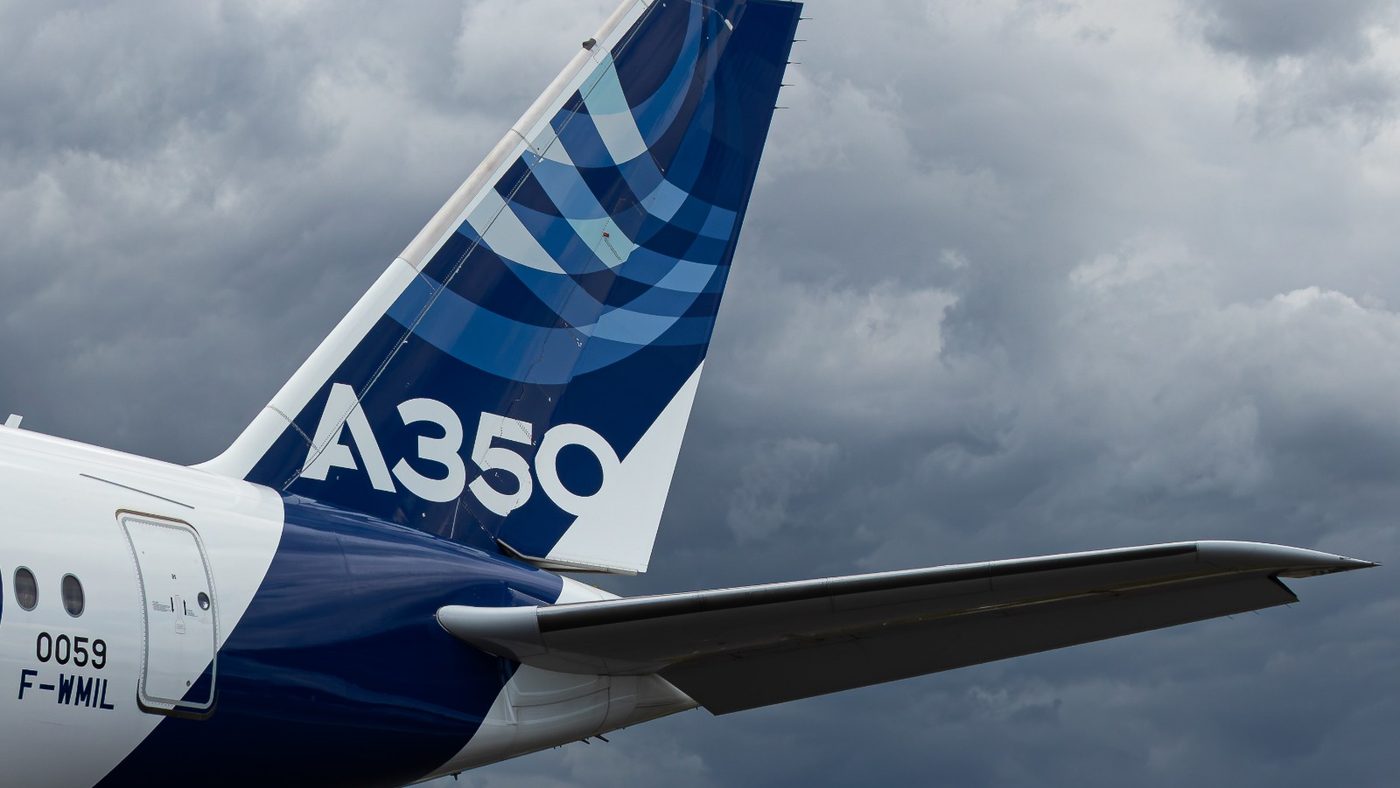
The A350-1000 cannot currently fully replace the 777-9. Since the beginning of 2025, the A350-1000 has received 88 new orders, compared with almost 200 sales for the 777X.
Airbus could therefore respond with a stretched variant. Possible names include “A350-1100” or “A350-2000.” Lars Wagner, head of Airbus’ Commercial Aircraft division, confirmed in July 2026 on the sidelines of the Farnborough Airshow that Airbus is considering such a variant.
“We are looking at a stretched version of the A350 that will be longer than the A350-1000,”
Wagner said at an investor event. An aircraft with around 380 seats could bring Airbus closer to the Boeing 777-9 and give the manufacturer a stronger presence in the upper end of the twin-aisle market.
Higher A350 Production Needed
Such a strategy would also require Airbus to significantly increase A350 production. According to Wagner, Airbus’ supplier network is currently producing between eight and nine A350s per month.
The next target is a monthly production rate of 12 aircraft. However, that is not expected to be the final goal. Airbus is planning to increase production significantly further in the long term as demand for the A350 family continues to grow.
A production rate of 20 A350s per month is ruled out by Wagner, however. Further plans to expand production are expected to be discussed by Airbus’ executive committee later this year.
For Airbus, the potential A350-2000 would therefore not only be a response to the 777-9 but also an attempt to strengthen its position in a segment where Boeing has recently gained significant ground.