
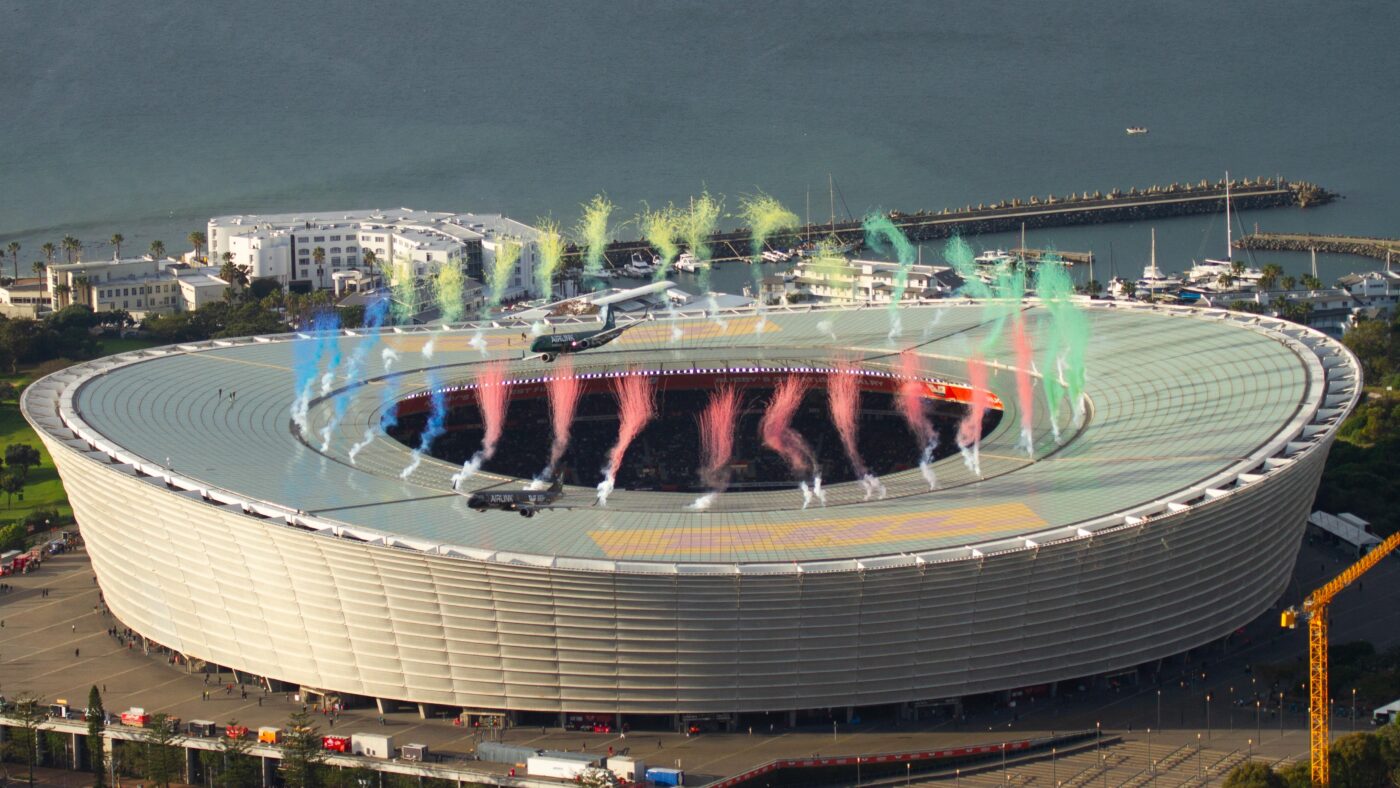
Two Airlink Embraer E190 and E195 aircraft performed an exceptionally low formation flypast over Cape Town’s DHL Stadium on Saturday, 29 August, moments before the second Test between the Springboks and New Zealand. While the ceremonial display formed part of the pre-match celebrations, it quickly became one of the most talked-about aviation events in South Africa after footage appeared to show the aircraft passing only metres above the stadium’s roofline. The trailing Embraer E190, ZS‑YDE, flew directly through the stadium’s pyrotechnics as they were discharged.
The flypast, carried out by the specially painted Rugby’s Greatest Rivalry-liveried aircraft ZS-YAE and ZS-YDE, was witnessed by more than 55,000 spectators and broadcast live nationwide. Within hours, videos from television cameras, photographers and fans had spread across aviation groups and online forums, with reactions ranging from admiration for the crews’ precision to concern over the apparent lack of clearance.
FlightRadar24 Analysis
Publicly available FlightRadar24 data became central to the discussion after recording the lead aircraft at a lowest ADS-B altitude of 50 feet. Because ADS-B uses barometric altitude referenced to standard pressure, aviation analysts corrected the data using Cape Town’s local QNH of 1019 hPa to determine the aircraft’s approximate true altitude.
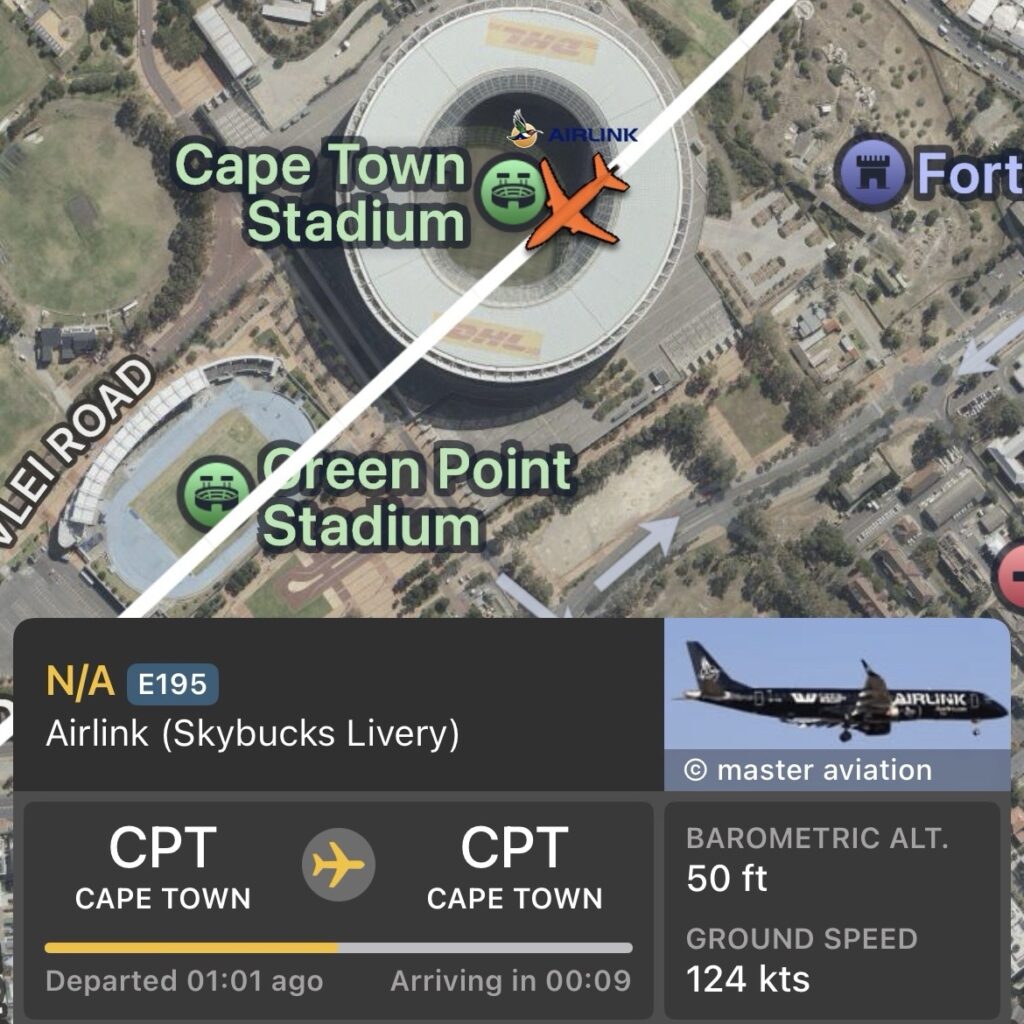
The corrected analysis placed the aircraft at roughly 205–210 feet above mean sea level. With DHL Stadium standing approximately 164 feet (50 metres) high, the lead Embraer is estimated to have cleared the roofline by 41–46 feet, or around 12.5–14 metres.
Although those figures indicate the aircraft maintained clearance, analysts emphasised that camera perspective can significantly exaggerate how close an aircraft appears to nearby structures, particularly during a pitch-up manoeuvre over a large stadium.
Debate across the Aviation Community
The incident rapidly gained traction across South African aviation groups, where experienced pilots, engineers and enthusiasts analysed frame-by-frame footage alongside flight tracking data. Much of the debate centred on operational margins rather than the crews themselves, with many acknowledging the high level of precision required for a formation flypast at low altitude.
One airline captain wrote in an aviation discussion:
“The timing was exceptional, but it leaves very little room for visual error.”
Other commentators argued that the manoeuvre demonstrated the professionalism of the crews, noting that ceremonial flypasts over major sporting events have long formed part of South African rugby tradition.
Airlink responds
On Sunday, Airlink issued an official statement addressing the concerns raised across social media and online aviation forums, confirming that the flypast had been extensively planned and approved before the event.
The airline said the operation demanded careful planning and rehearsal, with both aircraft flying at approximately 150 knots. It added that the South African Civil Aviation Authority (SACAA) and Air Traffic Navigation Services (ATNS) provided guidance, approval and operational support throughout the planning process.
Airlink also revealed that each aircraft was crewed by three senior captains, serving as commander, co-pilot and safety/technical officer during the formation display.
In its statement, the airline said:
“The flight data recorded by both aircraft confirms that the flights were performed within the SACAA’s approved and rehearsed safety altitude and speed limits for the flypast.”
A remarkable display and an important conversation
No incident occurred during the flypast, and neither SACAA nor Airlink has announced an investigation. It is, however, worth noting that these types of ceremonial flypasts require extensive preparation, with every flight profile carefully planned, checked for its feasibility, risk assessed and rehearsed before it is cleared to go ahead.
For many spectators, it was an unforgettable spectacle, however for the aviation industry, it has become a debated case study in the balance between precision flying, public perception and the rigorous planning required to safely execute one of South Africa’s most dramatic pre-match sporting traditions.