
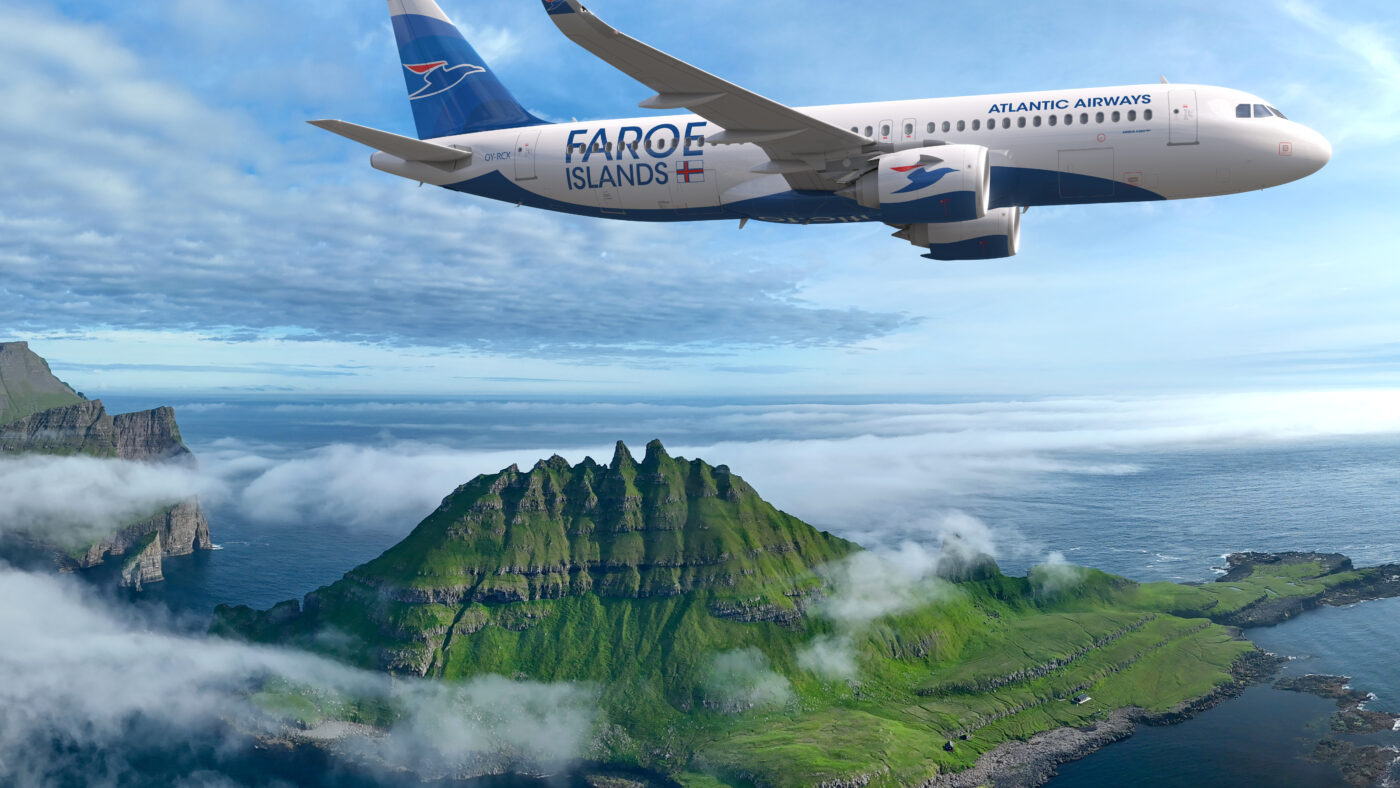
The Faroese airline Atlantic Airways is continuing to modernize its fleet and has placed a firm order for two additional Airbus A320neo aircraft. As the European aircraft manufacturer announced on Tuesday, October 27, 2026, the order is intended to support the gradual transition to a fleet consisting entirely of A320neo aircraft. With this move, the Faroe Islands’ national airline aims to make its flight operations more efficient in the long term and simplify aircraft maintenance.
A Standardized Fleet as a Long-Term Goal
Atlantic Airways currently operates four aircraft from the Airbus A320 family, including two older-generation A320ceo and two more modern A320neo. With this new order, the airline is moving closer to its goal of operating exclusively the modernized variant in the future.
Standardizing the fleet offers economic advantages, particularly for smaller airlines. Having fewer different aircraft variants can simplify maintenance planning, standardize operational processes, and reduce the effort required for spare parts procurement. This is especially relevant for Atlantic Airways, as the airline serves the Faroe Islands’ international air traffic with a comparatively small fleet.
Niels Mortensen, Chairman of the Board of Directors of Atlantic Airways, described the agreement as an important step toward a fleet consisting entirely of A320neo aircraft. The investment is intended to enable continuous fleet renewal while supporting efficient operations.
Airbus also views the order as a continuation of the long-standing partnership. Benoît de Saint-Exupéry, Executive Vice President of Sales for the Commercial Aircraft division, emphasized in the press release the importance of modern aircraft for providing regional connectivity to the Faroese population.
Modern Aircraft for the North Atlantic
The decision regarding the fleet is also linked to the unique demands of Faroese air travel. Atlantic Airways connects the remote archipelago in the North Atlantic with international destinations, thereby playing a vital role in the mobility of the population and in tourism.
Its home airport, Vágar, is located in a geographically challenging environment where changeable weather conditions can affect flight operations. The airline therefore relies on modern navigation procedures. Its Airbus aircraft are equipped, among other things, with RNP AR 0.1 technology, which enables precise satellite-based approach procedures.
In addition to these operational requirements, the aircraft’s fuel efficiency plays a key role. The A320neo family features modernized engines and aerodynamic improvements, including the so-called sharklets at the wingtips. According to Airbus, this new generation of aircraft achieves at least 20 percent lower fuel consumption and correspondingly lower CO₂ emissions compared to older narrow-body aircraft.
Fleet Modernization Has Been Planned for Several Years
The current order is part of a long-term strategy. Back in June 2019, Atlantic Airways had already ordered two A320neo aircraft directly from Airbus. These aircraft were originally scheduled for delivery in 2023 and 2024. However, due to the impact of the COVID-19 pandemic, the delivery schedule was adjusted. In its 2021 annual report, the airline subsequently cited summer 2027 and fall 2028 as the planned delivery dates.
In its 2024 annual report as well, Atlantic Airways reaffirmed its goal of operating exclusively A320neo aircraft by 2030. The order now announced underscores this strategy and demonstrates that the airline continues to rely on the Airbus A320 family as the foundation of its international flight operations.
The current announcement does not specify whether the two newly ordered aircraft are intended to immediately replace older aircraft or to initially provide additional capacity. Likewise, neither Airbus nor Atlantic Airways provided details regarding the planned delivery dates or the financial terms of the contract.
With this latest investment, Atlantic Airways is continuing on its path of modernization. The focus is less on a short-term expansion of the fleet and more on the long-term standardization of operations. For the Faroe Islands, whose international accessibility depends largely on air travel, a reliable and economically viable fleet of aircraft remains of central importance.