
Boeing’s financial recovery is making progress, but the American manufacturer is still struggling to increase aircraft production at the pace it had originally anticipated. Alongside its third-quarter financial results, published on October 27, Boeing confirmed that it expects to miss its target of delivering 500 Boeing 737 aircraft in 2026, with further production increases now pushed into next year.
Despite these setbacks, the company’s financial performance has improved considerably compared to the same period last year. Boeing reported revenue of $24.2 billion, an increase of 4%, while its quarterly net loss narrowed from $5.34 billion in 2025 to just $116 million. Free cash flow reached $464 million, although Boeing remains $359 million cash-flow negative for the first nine months of 2026.
Much of the improvement came from Boeing’s defence and services businesses, which helped offset continuing difficulties within its commercial aircraft division.
Commercial Aircraft Production Remains a Challenge
Between July and September, Boeing delivered 161 commercial aircraft, including 124 Boeing 737s and 22 Boeing 787 Dreamliners. This brought total deliveries for the first nine months of 2026 to 475 aircraft, compared with 440 during the corresponding period last year.
However, Boeing Commercial Airplanes continues to operate at a loss. The division generated $10.7 billion in quarterly revenue, down 3% year-on-year, and recorded an operating loss of $697 million. Boeing attributed the results partly to an unfavourable aircraft delivery mix, rising supply chain costs and additional expenses associated with planned production increases.
The 737 programme remains particularly challenging. Boeing is working to stabilise production at 47 aircraft per month, but chief executive Kelly Ortberg acknowledged that achieving consistent output at this level is taking longer than expected.
Difficulties with wing production and the need to ensure sufficient manufacturing capacity have slowed progress. Consequently, Boeing now expects to reach a stable production rate of 47 aircraft per month in 2027, with a further increase to 52 aircraft targeted for the second half of that year.
Nevertheless, there have been important developments. Both the 737-7 and 737-10 received certification from the Federal Aviation Administration this year, removing significant regulatory obstacles for the two remaining members of the 737 MAX family. Deliveries of these variants are expected to begin in early 2027.
Production of the Boeing 787 remains stable at eight aircraft per month, with the manufacturer still aiming to begin increasing output to ten before the end of 2026. However, Boeing now expects full-year Dreamliner deliveries to finish towards the lower end of its previously announced target of 90–100 aircraft.
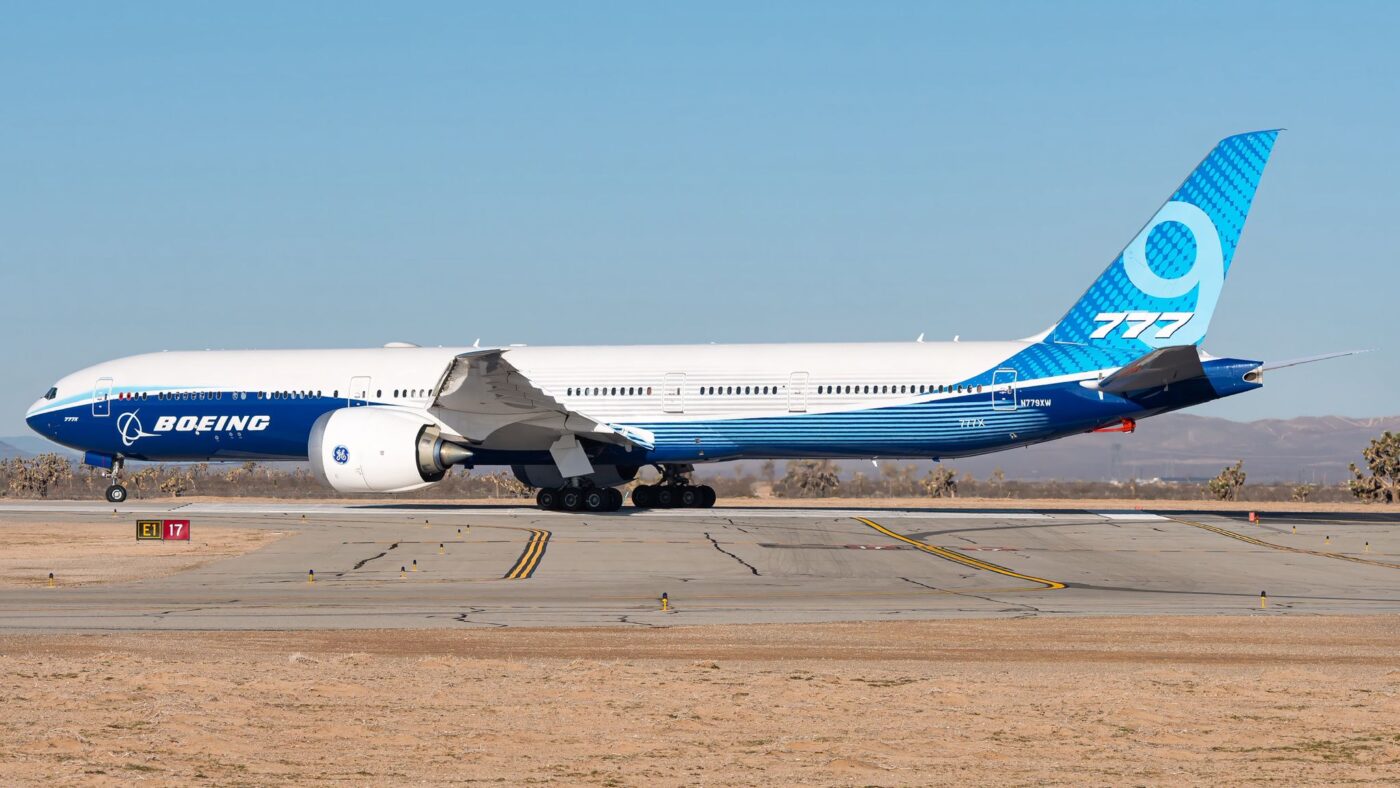
Meanwhile, the 777X programme continues its certification campaign, with the first delivery of the 777-9 still scheduled for 2027.
Strong Order Backlog Supports Longer-Term Outlook
Outside commercial aviation, Boeing’s defence business reported a 15% increase in quarterly revenue to $7.9 billion, while its Global Services division generated $5.6 billion. The company also secured several major military contracts, including selection for the US Navy’s next-generation F/A-XX fighter programme.
Boeing ended September with a record total order backlog of $745 billion, including more than 6,300 commercial aircraft valued at approximately $612 billion.
Despite the manufacturing challenges, management remains confident in the company’s longer-term recovery. Boeing expects to generate approximately $2 billion in free cash flow during 2026, rising to $3 billion in 2027, $6 billion in 2028 and potentially $10 billion by 2029.
Investors nevertheless reacted negatively to the revised production outlook, with Boeing shares falling nearly 11% following the announcement.