
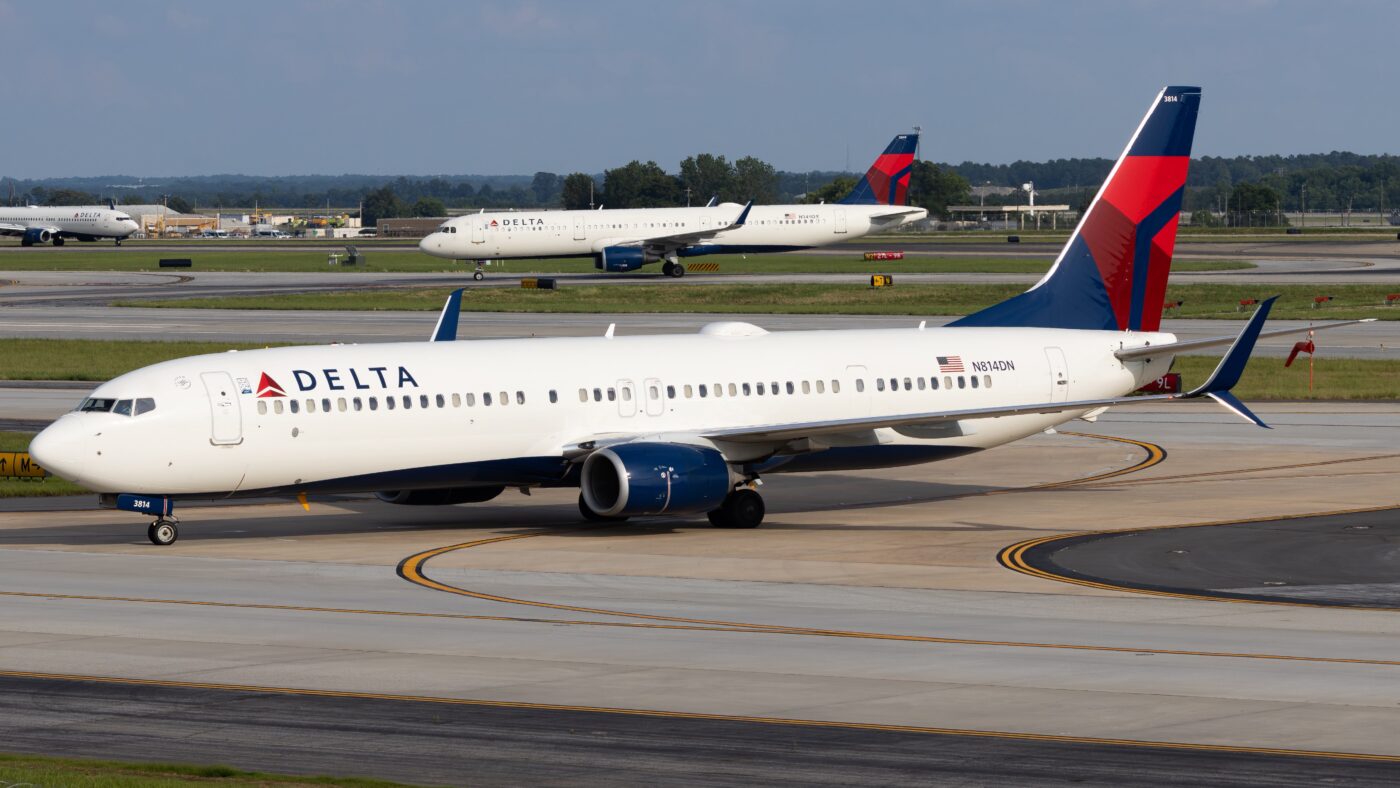
Delta Air Lines has significantly reduced its profit expectations for 2026 as soaring jet fuel prices continue to weigh on the airline’s financial performance.
Despite reporting record third-quarter revenue and continued strong passenger demand, the Atlanta-based carrier now expects considerably lower earnings for the full year, highlighting the growing pressure facing airlines amid rising operating costs.
In its financial results published on 9 October, Delta lowered its adjusted earnings forecast to between $5.10 and $5.60 per share, down from its previous guidance of $6.50 to $7.50. The reduction of approximately 24% at the midpoint reflects the airline’s increasingly expensive operating environment, with fuel expenditure alone expected to be roughly $6 billion higher than in 2025.
Record Revenue Fails to Offset Rising Expenses
Delta’s third-quarter results present a contrasting picture of strong commercial performance and declining profitability. Between July and September, the airline generated $20.2 billion in operating revenue, an increase of 21% compared with the same period last year. However, despite the substantial revenue growth, net income fell by 47% to $756 million, while operating profit declined by 14% to $1.45 billion.
Passenger demand has remained particularly strong in Delta’s premium cabins, which have become an increasingly important part of the airline’s business strategy. Revenue from premium tickets rose by 18% to $6.82 billion during the quarter, narrowly surpassing the $6.80 billion generated by main cabin sales. Corporate travel also continued to perform well, with several business sectors recording double-digit revenue growth.
Nevertheless, these improvements have been overshadowed by a sharp increase in operating expenses, particularly the cost of aviation fuel. Delta’s adjusted fuel expenditure surged by 62% to approximately $4.1 billion during the quarter, with the average price per gallon climbing from $2.25 to $3.61 within a year. The airline expects further increases towards the end of 2026, forecasting average fuel prices of around $4.25 per gallon during the fourth quarter.
The rising costs have been driven largely by disruptions to global energy markets following the conflict involving Iran. Although Delta operates its own refinery near Philadelphia, which Reuters reports could provide more than $700 million in fuel-related benefits this year, the airline has been unable to fully shield itself from the increases.
In response, Delta has raised ticket prices to recover some of its additional expenditure. Chief Executive Officer Ed Bastian indicated that fares have increased by approximately 20% this year, with demand remaining relatively resilient despite higher prices. However, the additional revenue has not been sufficient to compensate for the increase in fuel and other operating costs.
Delta Signals More Cautious Growth Ahead
The financial pressure could also influence Delta’s operational strategy heading into 2027. Bastian suggested that airlines may need to exercise greater restraint when expanding capacity, particularly if elevated fuel prices continue to affect profitability. Limiting the number of additional seats entering the market could help carriers maintain higher fares and protect their operating margins.
For the final quarter of 2026, Delta expects revenue to increase by approximately 20%, despite planned capacity growth of less than 2%. The airline is nevertheless continuing with selected international expansion plans, including new routes from Los Angeles to Manila, Austin to Paris and Seattle to Tokyo Narita, which are scheduled to begin in 2027.
While the revised forecast represents a significant reduction in expected earnings, Delta still anticipates generating a full-year pre-tax profit of approximately $4.5 billion. Its free cash flow outlook has also been adjusted downwards to around $2.5 billion, compared with the previously projected $3 billion to $4 billion.
With demand for air travel remaining strong, Delta’s latest results illustrate a challenge increasingly confronting the airline industry. Although carriers are successfully generating additional revenue through higher fares and premium travel products, rising fuel costs continue to absorb much of those gains, leaving profitability under pressure despite otherwise favourable market conditions.