
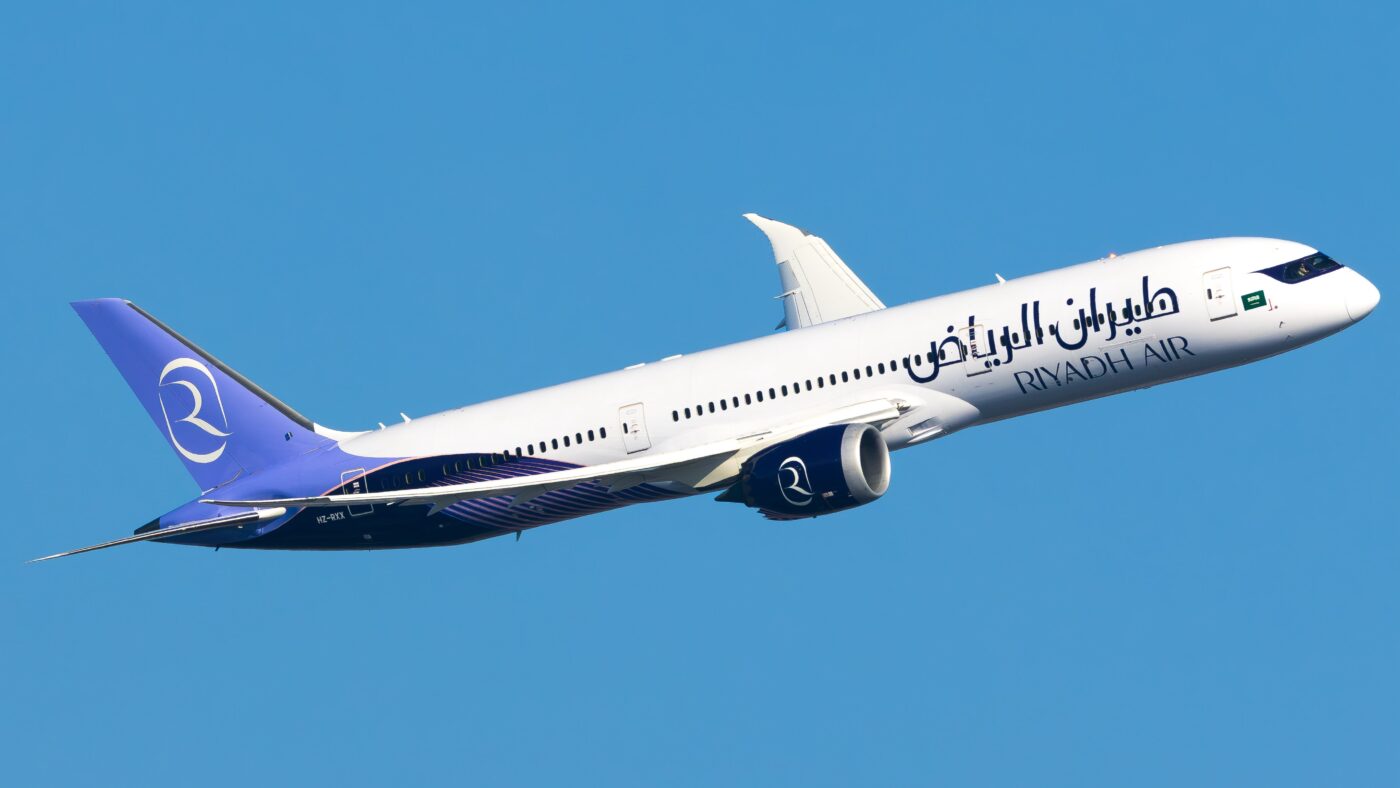
Saudi carrier Riyadh Air (RX) is continuing its expansion by adding another new destination, Jakarta (CGK), and expanding its existing frequency to London (LHR). Jakarta will now be the airline’s 16th destination adding yet another ASEAN destination alongside Bangkok (BKK), Kuala Lumpur (KUL), and Manila (MNL). Additionally, London (LHR) will be seeing more of that signature purple color from November 2nd. The airline will add two additional flights per week on Mondays and Wednesdays increasing the total frequency to nine flights weekly.
Additional Aircraft
Much of this recent growth stems from the pending arrival of three new 787s into the fleet. HZ-RXAH, HZ-RXAJ, and the airline’s first “Indigo” livery, HZ-RXAK have all been spotted at Boeing’s 787 plant in Charleston, North Carolina, -RXAH and -RXAJ have begun flight testing. Soon both of these airframes will join the fleet and will help the airline to continue to expand.
The End Goal
Riyadh Air forms a central part of Saudi Arabia’s aviation strategy, which aims to establish Riyadh as a major international hub while Saudia continues to develop Jeddah as its primary base. The two airlines serve different strategic roles in expanding the Kingdom’s international connectivity. The first step in this goal is to connect the city to over 100 destinations by the end of 2030. With more than 150 aircraft on order, and many of them already trickling in, the airline is making many moves to expand its reach. Many airlines give quite a bit of lead time for new routes to start after announcing them, but not Riyadh Air.
The launch of Jakarta is an example of this as the airline will start service just 6 weeks from when they announced flights would begin. This shows that they mean business and are pushing quite hard to reach that 100 destinations by 2030 goal.
The Short Term
With so much change coming rapidly, the airline in the short term will continue to rapidly expand whether it be doubling down on extra frequencies or adding new destinations. The only thing currently holding them back is the lack of aircraft to fly to all the different places, and the lack of slots to be able to land at these different airports. As time goes on, the airline will rely less on outside partner airlines providing connecting traffic to its network through codeshares and more of that traffic is transferred to its own fleet.
Significant Roadblocks
Recently, Riyadh’s airport experienced a tragic attack involving two missiles, resulting in the loss of several lives, numerous injuries, and significant damage to both an aircraft and the terminal. This led to the ongoing closure of the airport for multiple days. With heighten tensions in the region, this situation is not one that a new airline such as Riyadh Air wants to be in. Many airlines have scaled back or even suspended service to the region altogether, so with the precarious political situation on top of the entrenched competition, the road to 100 destinations by 2030 will not be easy.
Whatever the future holds for Riyadh Air, its rapid increase of aircraft and new routes is certainly being noticed, and it will be interesting to see what the Gulf carriers do in response to its expansion.