
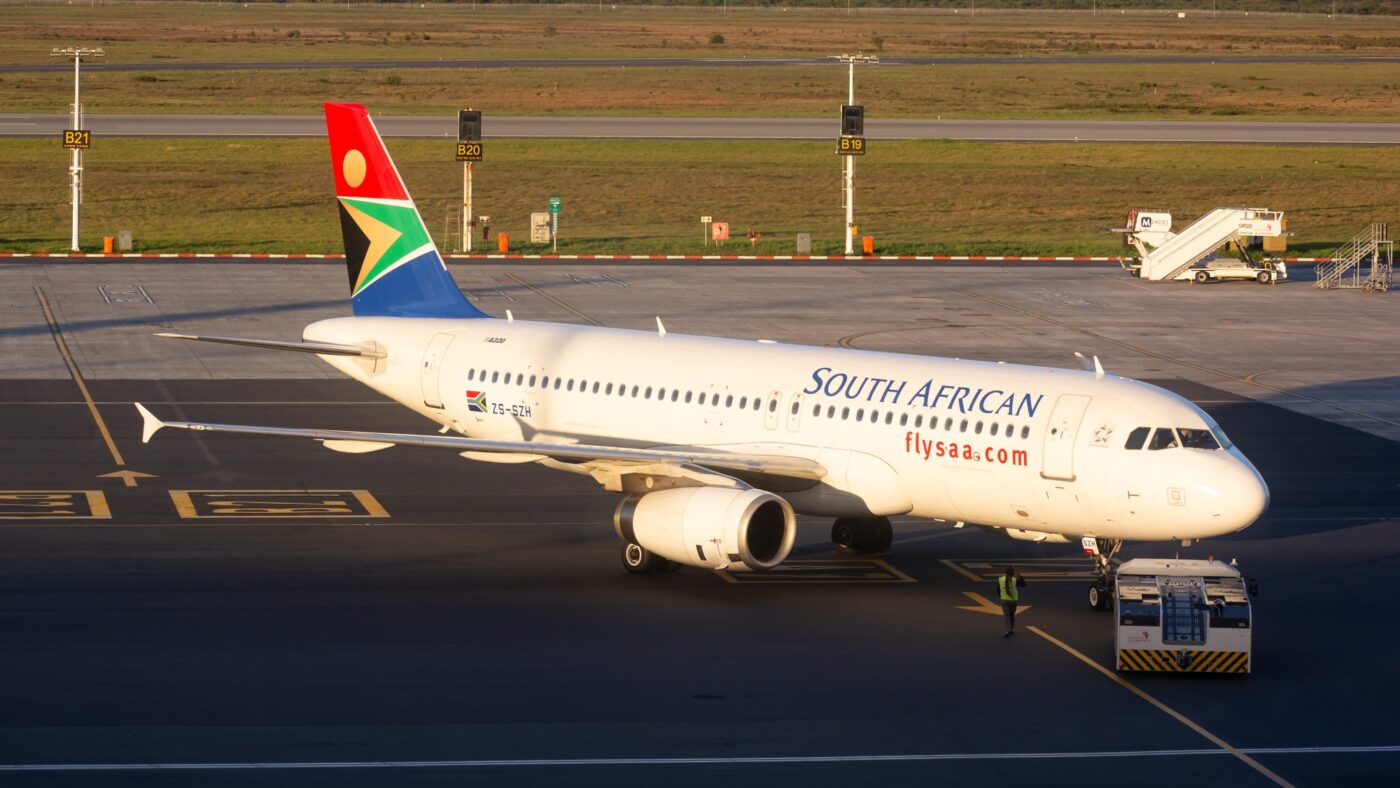
South African Airways (SAA) has found itself dealing with a series of difficult developments over the past few months, with various internal advancements plaguing the carrier.
The national carrier, which spent several years attempting to rebuild following its business rescue process, appeared to be making progress towards restoring its position in the aviation market. A combination of financial pressures, management changes and scrutiny has brought several of those achievements into question.
While the airline has continued operating its services and pursuing expansion ambitions, the developments of recent months has proved difficult for the state-owned carrier.
Here is a closer look at what SAA has been dealing with.
Financial Pressure Returns
One of the most significant concerns surrounding SAA has been its financial position, particularly its ability to maintain sufficient liquidity to support its daily operations.
Despite reporting a small net profit for the 2024/25 financial year, the airline has continued to face challenges associated with its financial structure and access to working capital.
Rising aviation fuel prices, geopolitical disruptions and the considerable costs associated with operating an airline have placed additional pressure on its finances.
The situation became increasingly apparent in September 2026, when SAA began staggering salary payments for certain employee groups. The arrangement was repeated in October, marking a second consecutive month in which some employees did not receive their salaries on the usual payday.
SAA maintained that the majority of its employees continued receiving their salaries on time, with the delays primarily affecting pilots, management, specialists, executives and board members.
Group Executive for Corporate Affairs Mphilo Dlamini attributed the situation to liquidity constraints, explaining that rising fuel costs and challenging operating conditions had affected the airline’s cash flow.
The development raised questions about how comfortably SAA is managing its financial obligations, particularly given previous assurances that the airline was moving towards financial independence.
R1 Billion Government Guarantee
Financial pressure also resulted in SAA receiving renewed backing from the South African government.
In August 2026, National Treasury approved a R1 billion government guarantee to assist the airline with its working capital requirements. The arrangement was disclosed by Finance Minister Enoch Godongwana during his October Medium-Term Budget Policy Statement.
The guarantee does not represent an immediate R1 billion cash injection or a conventional bailout, instead providing SAA with a mechanism to raise capital through financial institutions, with the government ultimately exposed should the airline fail to meet financial obligations.
The support was granted following increased pressure on the airline’s operations and finances, particularly as a result of the aviation fuel price shock.
The development has revived concerns about the carrier’s financial independence. Treasury has also indicated that further government assistance cannot simply be “assumed”.
The Search For A Strategic Equity Partner
The question of private sector participation has once again become an important consideration in SAA’s future.
Following the collapse of the proposed Takatso Consortium transaction in 2024, which would have seen the consortium acquire a 51% stake in the airline, the government has been working towards finding another strategic equity partner.
Cabinet approved the commencement of a renewed search in August 2026, with the intention of bringing additional capital, commercial expertise and operational experience.
The proposed arrangement is expected to strengthen SAA’s balance sheet while reducing the financial exposure carried by the state.
There are considerable questions surrounding what a potential transaction would look like. In particular, the extent of management control afforded to an incoming investor could prove important in attracting a suitable partner.
The government has reportedly set February 2027 as a deadline for securing a buyer, adding further pressure to a process that has already experienced considerable setbacks.
Parliamentary Scrutiny And Financial Reporting Concerns
SAA’s financial position has also attracted attention from Parliament, with questions being raised about the airline’s financial reporting, cash flow and overall governance.
The Standing Committee on Appropriations, chaired by Mmusi Maimane, requested an urgent update from Transport Minister Barbara Creecy following concerns raised about the carrier’s financial position.
Among the matters requiring clarification were allegations concerning executive appointments, the accuracy of financial reporting and the utilisation of proceeds from the sale of SAA’s Heathrow Airport slot, which generated approximately R1.1 billion.
The committee was careful to distinguish between the allegations brought to its attention and established findings, requesting further information rather than reaching conclusions.
There have also been concerns surrounding the airline’s audit outcomes. Earlier in 2026, the Auditor-General highlighted deficiencies in SAA’s financial reporting and internal controls, with the airline and its subsidiary, SAA Technical, receiving disclaimer opinions with findings for the 2024/25 financial year.
The carrier also missed the statutory deadline for submitting its 2025/26 annual report. The audit process still underway.
The Matshela Seshibe Controversy
SAA’s executive leadership has been another source of difficulty, particularly following the departure of former Group Chief Executive Officer Professor John Lamola in April 2026.
Matshela Seshibe, who previously served as Chief Executive Officer of Air Chefs, the airline’s in-flight catering subsidiary, was appointed acting Group CEO.
His time in the position was relatively short-lived.
In August, SAA announced that Seshibe had been placed on special leave with immediate effect pending an internal process. The airline’s Chief Legal Officer, Koekie Mbeki, was appointed acting Group CEO to maintain leadership continuity.
The decision introduced further uncertainty as SAA was preparing to appoint a permanent chief executive.
Seshibe later applied for the permanent position and was initially shortlisted for an interview. SAA withdrew his interview invitation following the disciplinary proceedings initiated against him at Air Chefs.
The former acting chief executive challenged the decision through an urgent court application seeking either an opportunity to participate in the recruitment process or a suspension of the appointment process until his disciplinary proceedings had concluded.
He eventually withdrew the application in October, maintaining that the withdrawal did not amount to a concession on the merits of his concerns.
The controversy took another turn on 27 October, when the outcome of his disciplinary proceedings became public.
According to the findings, Seshibe was found guilty on four of the six charges brought against him. These included approving remuneration adjustments without the necessary board approval, exceeding prescribed limits on acting allowances and failing to formally disclose a relationship that raised potential conflict of interest concerns.
The disciplinary findings also identified irregular expenditure and breaches of Air Chefs’ internal governance requirements.
Seshibe was cleared of two other allegations relating to the creation of a management position and changes to an executive’s responsibilities.
The findings did not establish fraud, theft or personal financial enrichment.
On 30 October, it emerged that Seshibe had proposed a mutual separation agreement with Air Chefs following the disciplinary outcome. Although the proceedings concerned his tenure at Air Chefs rather than SAA directly, the controversy has corrrelated with the carrier’s leadership and its search for a permanent Group CEO.
Questions Over SAA’s Operational Position
During October, concerns were raised about the regularity of some SAA services, with Parliament’s Standing Committee on Appropriations seeking clarity on SAA’s financial and operational position.
The airline has faced the difficult task of managing increasing operating costs while maintaining existing network and pursuing its longer-term expansion plans.
The combination of fuel price increases, liquidity constraints and the costs associated with international operations has made the operating environment particularly challenging.