
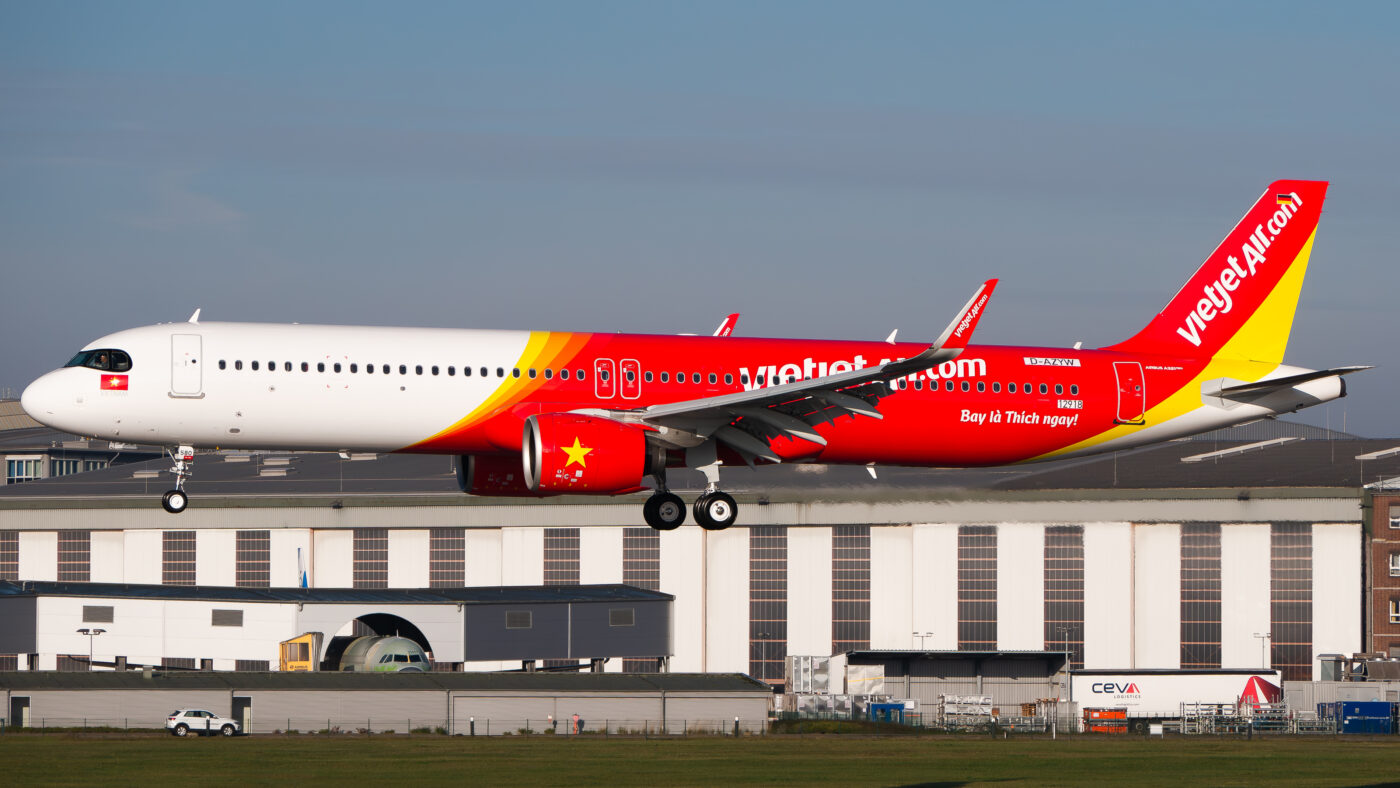
Nine VietJet aircraft faced seizure if they returned to Singapore. Rather than risk losing them, the airline stopped sending those particular jets to the country.
The decision followed a seizure order obtained by aircraft leasing company FW Aviation on 5 May 2026. According to court documents, VietJet initially reduced flights operated by the affected aircraft to Singapore before apparently withdrawing them from those services altogether.
VietJet acknowledged that keeping the aircraft away prevented enforcement of the order, but argued that their mortgage agreements required such action.
It was one of several unsuccessful attempts to recover money from the Vietnamese carrier that ultimately brought the dispute before London’s High Court again this month.
On 15 October, Mr Justice Saini granted a worldwide freezing order against VietJet, which owes approximately $250 million to FW Aviation under a series of earlier judgments.
From Four Aircraft to a $250 Million Debt
The dispute began with unpaid lease obligations involving four Airbus A321s, two A321neos and two earlier-generation A321s. The aircraft had been operated under Japanese Operating Lease with Call Option (JOLCO) financing arrangements.
Following multiple trials and an unsuccessful appeal, VietJet was ordered to pay substantial damages, termination payments and associated costs.
Collecting that money has proved considerably more difficult.
Vietnamese courts refused to recognise the English judgments, finding that allowing the lessor to retain the aircraft while also recovering termination payments conflicted with domestic principles of fairness.
Attempts to pursue VietJet’s assets elsewhere encountered further obstacles, including the withdrawal of the nine aircraft from Singapore.
The airline has paid just $2 million towards the outstanding debt, despite its substantial aircraft commitments and reported financial position.
In his judgment, Saini endorsed the claimant’s description of VietJet as a “won’t pay” debtor rather than a “can’t pay” debtor, noting the airline’s extensive efforts to resist enforcement across multiple jurisdictions.
The Value Behind 300 Aircraft Orders
The latest proceedings, however, centred on something considerably less visible than aircraft movements.
VietJet has an order book of approximately 300 Airbus and Boeing aircraft. The rights associated with those future deliveries, including pre-delivery payments and potential profits from aircraft financing transactions, can represent substantial financial value long before an aircraft enters service.
Court documents revealed arrangements under which valuable rights linked to those orders had been transferred to Angelica Holding Limited, a related company registered in the Cayman Islands.
The judge raised serious questions about the company’s financial substance. Angelica appeared to have no staff or physical offices, while VietJet’s 2025 accounts recorded approximately $331 million owed by the company.
VietJet defended the transactions as legitimate financing arrangements. Its lawyers explained that aircraft delivery delays had created additional funding requirements and pressure on existing credit facilities.
The court was unconvinced.
Saini described the transactions as “a bizarre set of arrangements”, questioning the financial substance of agreements that appeared to transfer considerable value away from VietJet.
He also challenged the suggestion that the arrangements served legitimate tax purposes, stating that he “struggled to find any cogent explanation” in the evidence presented.
The court found sufficient evidence of a genuine risk that valuable assets could be placed beyond creditors’ reach, justifying the freezing order.
What the Ruling Means for VietJet
Despite its worldwide scope, the order does not automatically ground VietJet’s aircraft or prohibit normal airline operations.
The court included allowances for ordinary business activities involving Vietnamese assets and operational assets elsewhere. A separate ruling on 15 October also authorised the appointment of receivers over a broad range of assets, providing another means of pursuing the outstanding debt.
Saini distinguished between the different actions examined during the proceedings. Although he considered the Singapore aircraft withdrawals an attempt to obstruct enforcement, he did not regard that conduct alone as the type of asset dissipation needed to justify a freezing order.
Instead, the transfer of economic rights associated with VietJet’s aircraft orders proved decisive.
The airline had argued that further enforcement measures risked disrupting its operations. That argument received little sympathy from the court.
In an earlier judgment, Mr Justice Butcher addressed the airline’s position directly:
“If VietJet wishes to preserve its business from disruption, it should pay the debt.”