
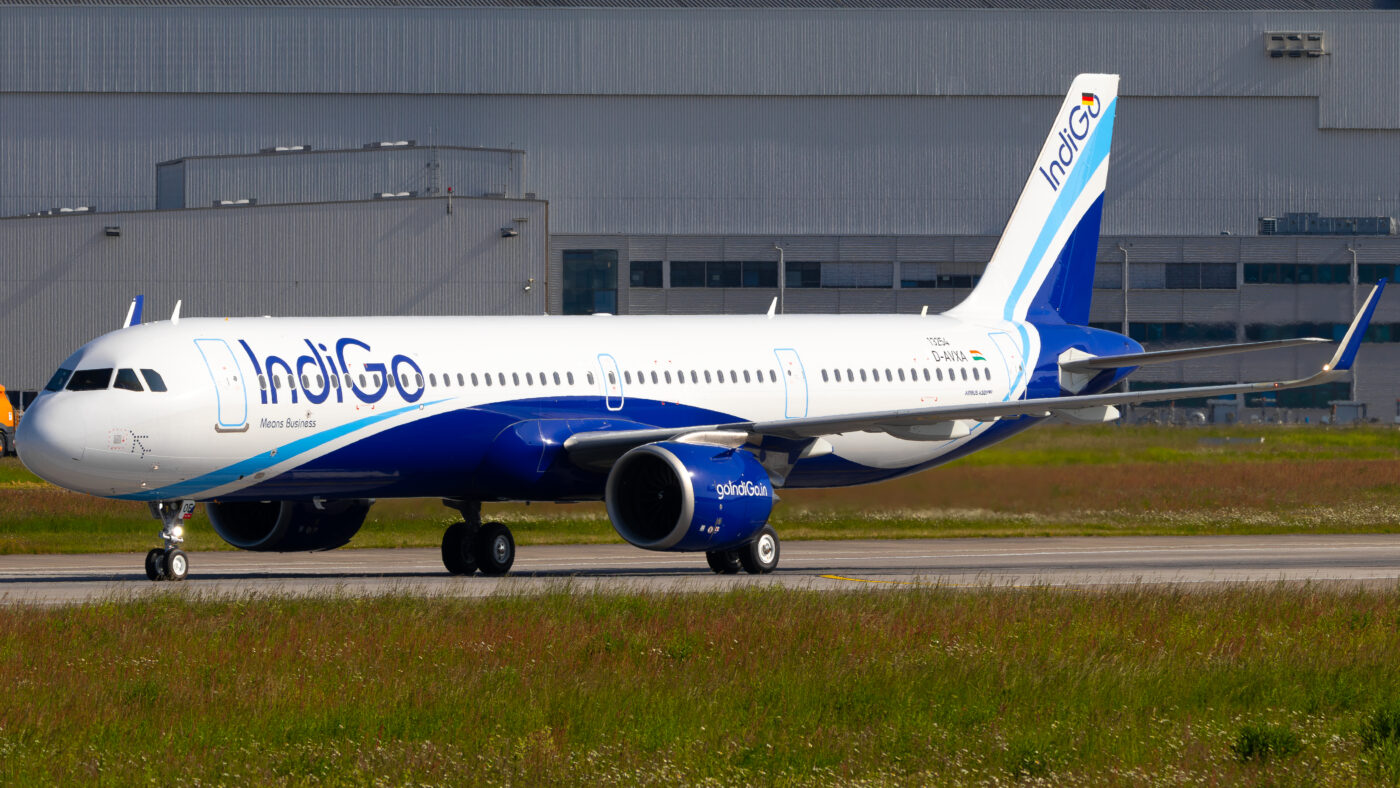
Dehli, India, 11 October 2026 — IndiGo flight 6E6115, operating from Indira Gandhi International Airport in Delhi to Chennai, was forced to make an emergency diversion after thick smoke and visible flames began filling the aircraft. The incident triggered brief panic among the more than 180 passengers onboard before the crew successfully brought the situation under control.
The Flight
The flight was operated with an Airbus A321neo aircraft, registered as VT-NOE, a highly modern and high-capacity narrow-body jet prominent in IndiGo’s fleet. Flight 6E6115 pushed back from Delhi at approximately 1:30 PM local time and was scheduled for a routine two-and-a-half-hour journey southward to Chennai, with an expected arrival time of 4:00 PM. The aircraft was cruising at altitude with approximately 180 passengers and seven crew members onboard when the unexpected technological failure manifested in the upper areas of the cabin seating area.
Cabin Crisis: The Fire and Crew Action
The emergency unfolded unexpectedly when passengers noticed an acrid, burning smell, quickly followed by thick smoke billowing out from one of the overhead luggage compartments. It was discovered that a portable lithium-ion power bank, mistakenly stored inside a passenger’s carry-on bag within the overhead bin, had experienced a severe malfunction. Video footage later circulated on social media showed a visible orange glow and sparks emanating from the closed compartment as smoke began circulating through the pressurized cabin.
The IndiGo cabin crew reacted quickly to the developing threat. Trained extensively for lithium-ion battery thermal runaway events, the flight attendants retrieved onboard fire extinguishers and directly confronted the flames inside the luggage locker. Thanks to their decisive actions, the blaze was completely suppressed and contained within seconds, preventing the fire from breaching the structural lining of the overhead locker or spreading to neighboring luggage.
Safe Diversion and Emergency Landing
Despite the fire being extinguished, standard aviation safety protocols regarding onboard smoke and potential internal thermal damage dictated an immediate landing. The pilots declared an emergency and coordinated with air traffic control to divert the Airbus A321neo to the nearest suitable facility.
The aircraft initiated a rapid descent toward Rajiv Gandhi International Airport in Hyderabad. Emergency ground services, including airport fire brigades and medical teams, were placed on standby along the runway as the plane approached. The aircraft executed a safe and successful emergency touchdown in Hyderabad. All passengers and crew members were safely deboarded without further incident. Airline officials later confirmed that no injuries or casualties resulted from either the fire or the sudden diversion.
Strict Regulations on Lithium-ion Batteries
In an official public statement released shortly after the landing, an IndiGo spokesperson commended the flight team, stating:
“The cabin crew responded promptly, and the situation was brought under control. In line with established protocols, the pilots diverted the flight and landed safely”.
The airline arranged a replacement aircraft to transport the stranded travelers from Hyderabad to their original destination of Chennai later that evening.
This critical incident highlights the severe dangers associated with lithium-ion batteries in aviation safety. Global regulatory bodies, including the International Air Transport Association (IATA) and the Directorate General of Civil Aviation (DGCA), strictly prohibit power banks inside checked baggage. Instead, they must be kept in cabin baggage, where crew members can immediately access them if an emergency occurs. Furthermore, IndiGo’s specific guidelines dictate that power banks must remain easily within a passenger’s personal reach—not tucked away in overhead storage or charged mid-flight to reduce the widespread risks of unmonitored overheating.