
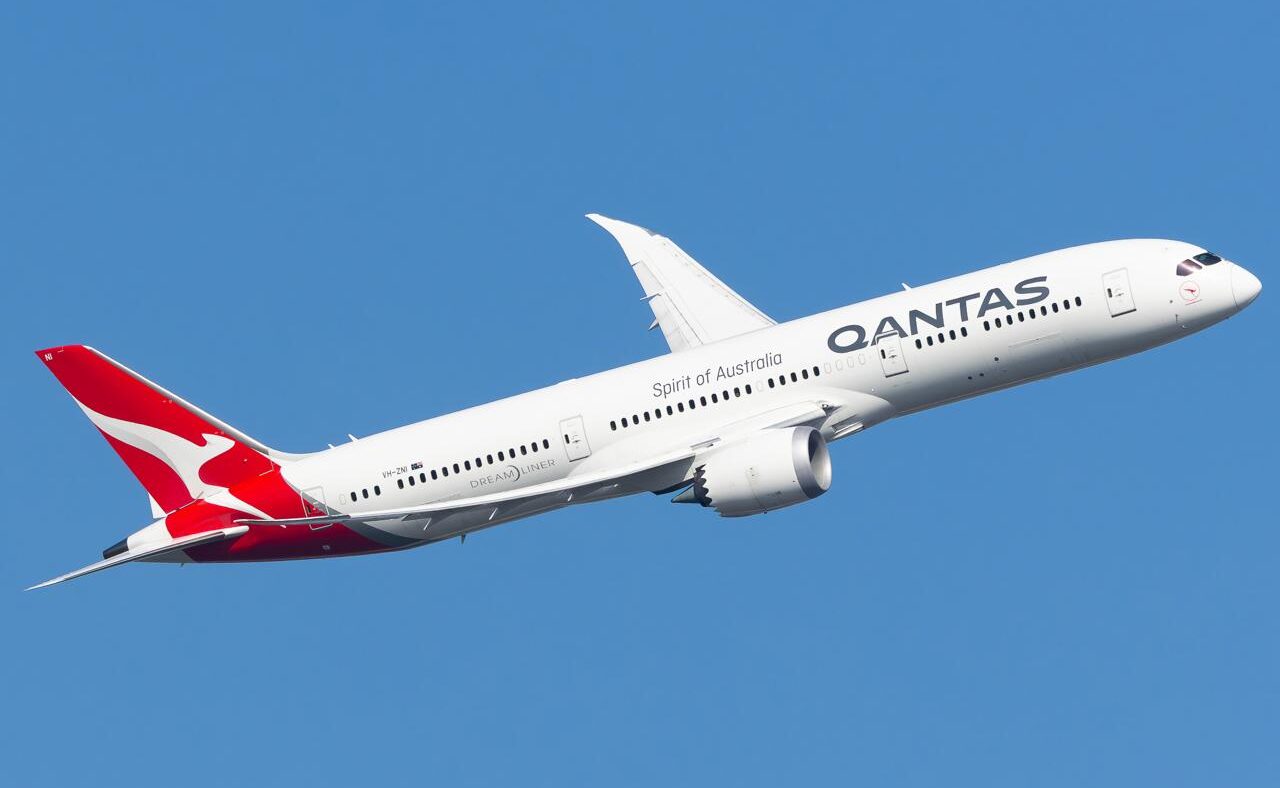
Qantas was forced to cancel a flight from Rome to Perth after bedbugs were discovered aboard one of its Boeing 787-9 Dreamliners. The aircraft, registered VH-ZNI, was withdrawn from service for extensive cleaning after passengers reported being bitten during the long-haul journey from Australia to Italy. The incident left travellers facing delays of up to 48 hours.
Passengers aboard Qantas flight QF5 from Perth to Rome on 9 October reportedly began complaining of insect bites during the approximately 16-hour journey. According to Australian media reports, bedbugs were discovered in the forward section of the aircraft’s economy cabin, affecting passengers across several rows. Cabin crew reportedly distributed antihistamines to those experiencing symptoms, although supplies of the medication eventually ran out.
The aircraft involved was a Boeing 787-9 Dreamliner registered VH-ZNI, as confirmed by flight tracking records. Following its arrival at Rome Fiumicino Airport on 10 October, Qantas withdrew the aircraft from service to allow maintenance personnel to conduct a thorough cleaning of the cabin. Consequently, the airline cancelled flight QF6 from Rome to Perth, which had been scheduled to depart later that day. The cancellation disrupted passengers’ travel arrangements, with some facing delays of up to two days before continuing their journeys.
Qantas Responds to the Incident
In a statement addressing the disruption, Qantas confirmed that the problem had been identified in a relatively limited area of the economy cabin. The airline explained that its engineers and maintenance teams required additional time to perform a deep clean of the aircraft before returning it to passenger service.
Qantas apologised to affected travellers and confirmed that passengers whose flights were cancelled had been provided with accommodation and rebooked onto alternative services within 48 hours of their originally scheduled departure.
The Australian flag carrier also emphasised its existing aircraft cleaning procedures, explaining that cabins undergo regular cleaning and precautionary disinfectant treatments approximately every 50 days. Nevertheless, eliminating bedbugs requires particular attention, as the insects can conceal themselves in upholstery, seat structures and other confined spaces that are difficult to access during routine cleaning.
How Did Bedbugs End Up on the Aircraft?
Although the precise origin of the insects has not been established, experts suggest that they may have entered the aircraft through passenger luggage or clothing. Bedbugs are commonly associated with hotels and other accommodation facilities, where they can attach themselves to personal belongings before being transported elsewhere.
Unlike many other insects, bedbugs cannot fly. They feed on blood and typically remain hidden in small crevices between feeding periods, making infestations particularly difficult to detect. While their bites can cause itching, irritation and swelling, bedbugs are not known to transmit diseases to humans.
Although such incidents are relatively uncommon in commercial aviation, they are not unprecedented. In 2017, passengers travelling on a British Airways flight from Vancouver to London reported being bitten by bedbugs, highlighting the challenges airlines face in preventing insects from entering passenger cabins.
The affected Qantas service operates between Perth and Rome using Boeing 787-9 Dreamliners. The seasonal connection forms part of the airline’s European network from Western Australia, providing passengers with a nonstop connection between the two continents.