
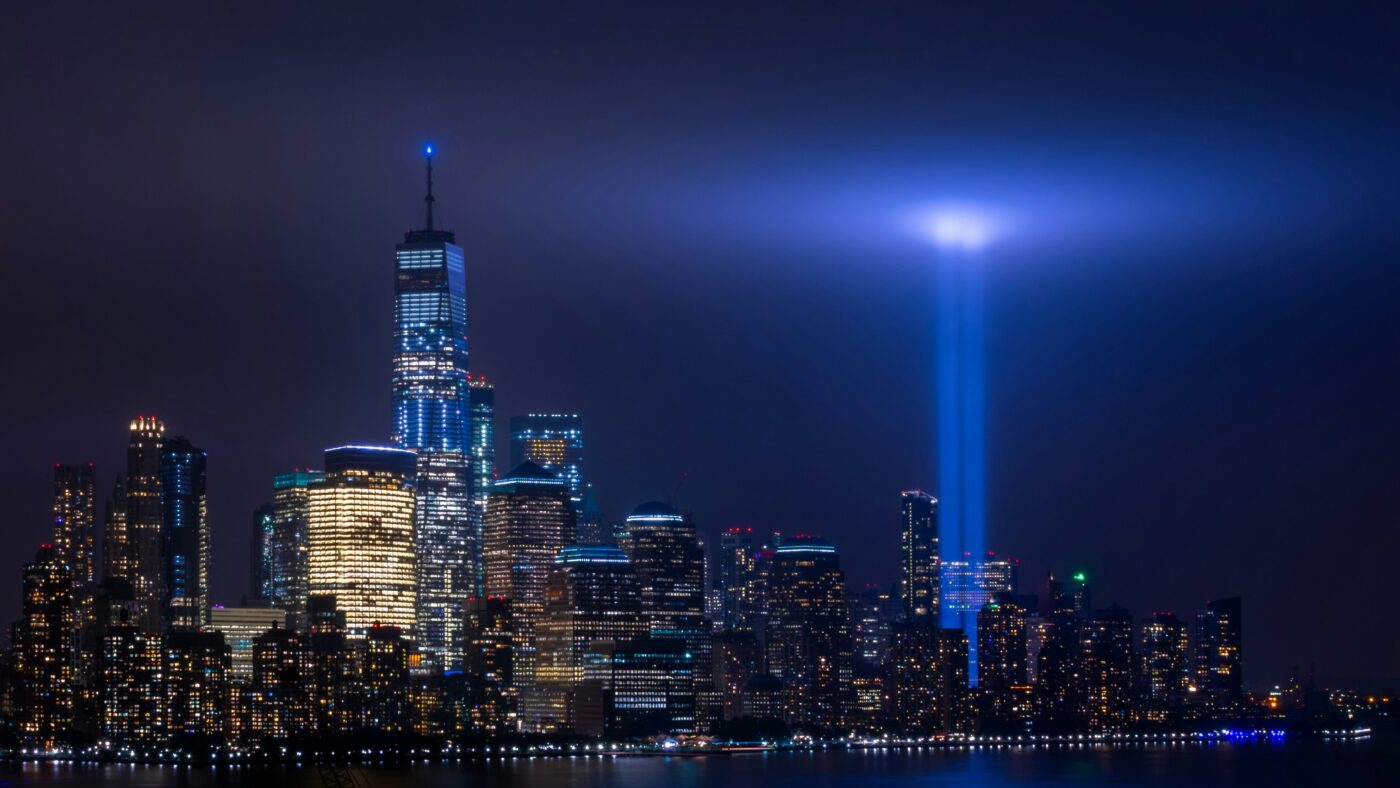
The attacks of September 11, 2001, were a turning point in world history, and marked the beginning of a new era for civil aviation. Twenty-five years later, many of the decisions made in response to the attacks remain part of almost every flight.
Few events have had such a lasting impact on civil aviation as September 11, 2001. Within a matter of hours, it became clear that existing security concepts had not adequately accounted for a new form of aviation terrorism.
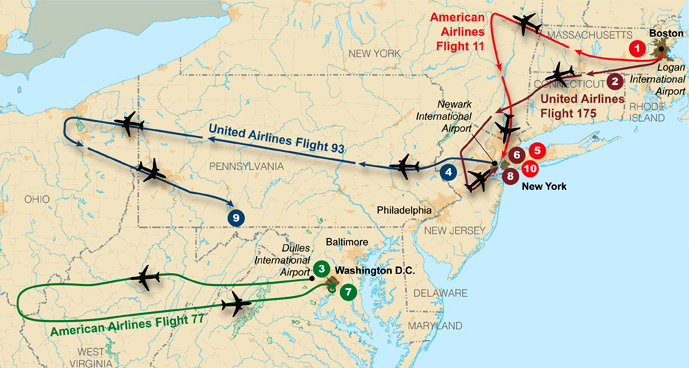
Four commercial aircraft were hijacked. American Airlines Flight 11 and United Airlines Flight 175 were flown into the World Trade Center towers in New York City, while American Airlines Flight 77 struck the Pentagon. United Airlines Flight 93 crashed in Pennsylvania after passengers and crew attempted to regain control of the aircraft. In total, 2,977 people were killed, excluding the 19 hijackers.
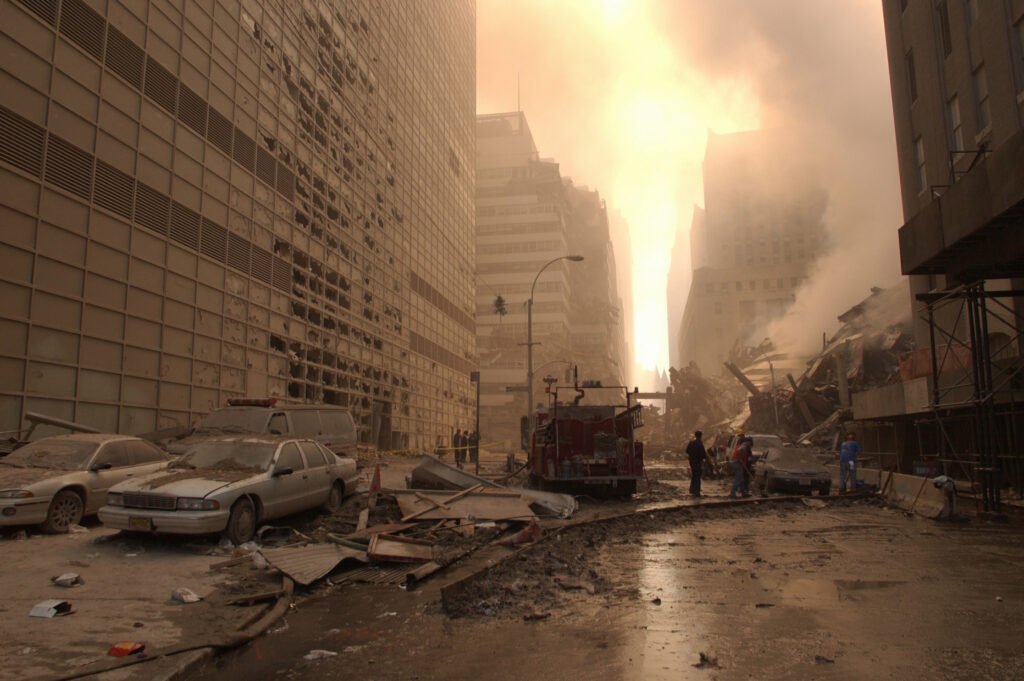
For aviation, this was only the beginning of a much broader transformation. Airports, aircraft, air traffic control and airlines were reassessed, along with the question of how a global transportation system could remain secure in the face of an evolving threat.
A Security System Designed for a Different Threat
To understand the consequences of 9/11, it is important to consider how aviation security worked before the attacks.
Aircraft hijackings were by no means unknown in 2001. What changed was the assumption about how a hijacking would unfold. Security and crisis-management procedures were largely designed around a different scenario: a hijacked aircraft would remain under the control of the perpetrators and be taken to a specific destination. Authorities could then attempt to resolve the situation through negotiations.
The possibility that hijackers might have no intention of landing safely, but instead use the aircraft itself as a weapon, had not been adequately incorporated into existing procedures. Cockpit doors were also not comparable to today’s reinforced flight-deck barriers.
9/11 therefore exposed a fundamental weakness: Aviation had developed security measures against known forms of hijacking, but not against the threat that materialized on September 11.
The American Airspace Comes to a Halt
The response to the attacks, however, had to unfold within minutes.
The U.S. Federal Aviation Administration (FAA) ordered civil aircraft across the United States to land. At the time, more than 4,500 aircraft were operating within the American air traffic system.
For air traffic control, this was an unprecedented challenge. Aircraft did not simply have to land as quickly as possible. They had to be brought out of an almost entirely closed airspace in a controlled and safe manner.
Around 4,500 aircraft were ultimately landed safely. Shortly after noon, the U.S. civil airspace was, with limited exceptions, virtually empty. The attacks therefore exposed weaknesses in the security system of the time. At the same time, the response demonstrated that an extremely complex air traffic system could be brought to an orderly halt even under extraordinary pressure.
But the consequences extended far beyond the United States.
Operation Yellow Ribbon: When an Entire Continent Steps In
With U.S. airspace closed, hundreds of aircraft and tens of thousands of passengers suddenly needed alternative destinations. Canada played a crucial role.
Under Operation Yellow Ribbon, 224 flights carrying more than 33,000 passengers were diverted to Canadian airports. One of the best-known examples was Gander in Newfoundland. The airport accepted 38 additional aircraft carrying more than 6,500 people – in a community that at the time had fewer than 10,000 residents.
For the airports involved, this created an extraordinary logistical challenge. Aircraft had to be accommodated, passengers provided with shelter and crews supported, while there was initially no clear indication of when normal operations would resume.
The Skies Reopen – But Confidence Does Not
Flight operations returned relatively quickly. On September 10, 2001, around 38,000 flights were recorded in the United States. On September 12, only a few hundred commercial flights operated. A week later, traffic was approaching its previous level. Passenger demand recovered much more slowly.
According to the U.S. Bureau of Transportation Statistics, passenger traffic did not return to its August 2001 level until March 2004.
Flight operations could return within days. Passenger confidence took years. For airlines, this meant not only weaker demand, but a crisis hitting an industry that was already under considerable economic pressure.
A New Security Architecture
The most visible changes for passengers took place at airports. In the United States, the Aviation and Transportation Security Act established the Transportation Security Administration (TSA) in November 2001. Passenger and baggage screening subsequently became much more centralized under federal responsibility.
Airports increasingly separated public areas from secure zones. Access controls, passenger screening, baggage screening and the protection of critical airport facilities became permanent parts of airport operations.
At the same time, the aircraft itself was strengthened against unauthorized access. Reinforced cockpit doors and stricter procedures for accessing the flight deck were introduced to ensure that breaching airport security would not automatically mean gaining control of an aircraft.
The key change was not a single measure, but the principle of multiple layers of security. Security could no longer depend on one checkpoint or one barrier.
This approach was also reflected internationally. The International Civil Aviation Organization (ICAO) strengthened its aviation-security standards, while the European Union established a common regulatory framework through Regulation 2320/2002. What initially appeared to be an American response therefore became part of a global security system.
The Industry Comes Under Additional Pressure
Greater security also came at a cost. Airports had to redesign infrastructure and procedures, airlines had to adapt their operations, and governments had to allocate additional resources. At the same time, aviation entered a serious economic crisis.
Many airlines were already struggling before September 11 with overcapacity, a weak economy and structural problems. The attacks therefore struck the industry at a particularly difficult moment.
Global airline revenues declined significantly in 2001. U.S. passenger airlines recorded losses of around $8 billion, prompting the U.S. government to provide substantial financial assistance to the industry.
The consequences became visible among individual airlines in the following years. US Airways and United Airlines filed for Chapter 11 bankruptcy protection in 2002. Delta Air Lines and Northwest Airlines followed in 2005. In Europe, Sabena ceased operations at the end of 2001.
9/11 was not the sole cause of these failures. Rather, the attacks accelerated an existing structural crisis within the airline industry.
A Different Crisis Shows Aviation’s Resilience
The scale of the impact of 9/11 becomes particularly apparent when compared with later crises.
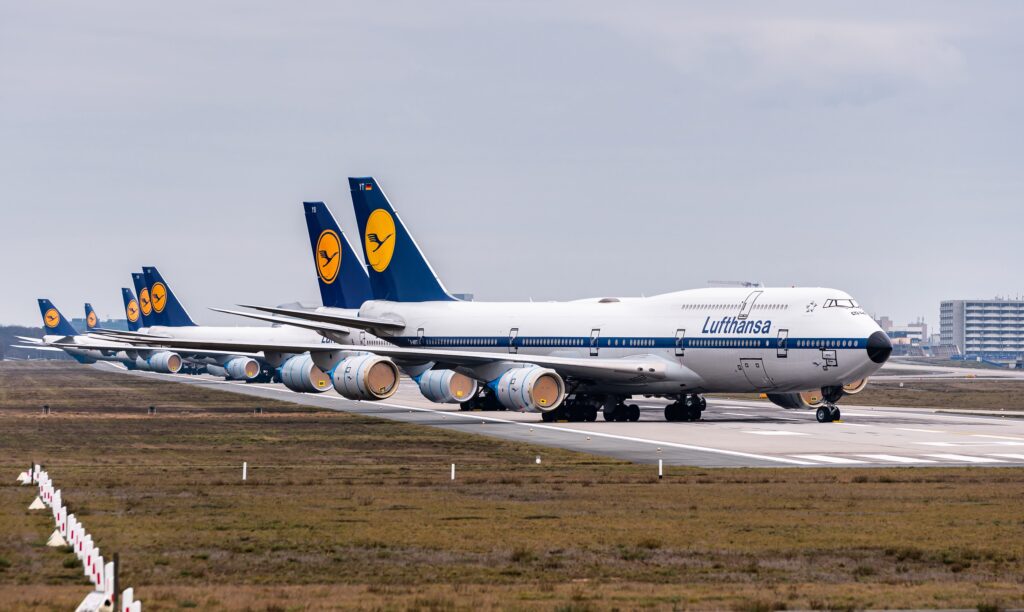
During the COVID-19 pandemic, global air travel demand fell by far more in 2020 than it did after 9/11. Global revenue passenger kilometres declined by almost two-thirds. The nature of the crises, however, was fundamentally different.
COVID-19 caused an unprecedented collapse in demand through travel restrictions and a global health emergency. 9/11, by contrast, was primarily a shock to aviation security and passenger confidence while simultaneously forcing the industry to fundamentally reassess its security architecture.
Both events changed aviation. They also demonstrated the resilience of the system: even after an extraordinary disruption, global air transport was able to rebuild and adapt to a new operating environment.
What Became Normal
Anyone entering a major international airport today moves through a system that did not exist in its current form before 2001.
The reinforced cockpit door is taken for granted. Security screening is an established part of every journey. Access to sensitive areas is strictly controlled. Passengers, baggage and crew members are subject to multiple layers of security.
Cooperation between airlines, airports, air traffic control, security authorities and international organizations has also become far more integrated.
25 Years Later
On September 11, 2026, the attacks will be remembered 25 years after they changed the course of modern history.
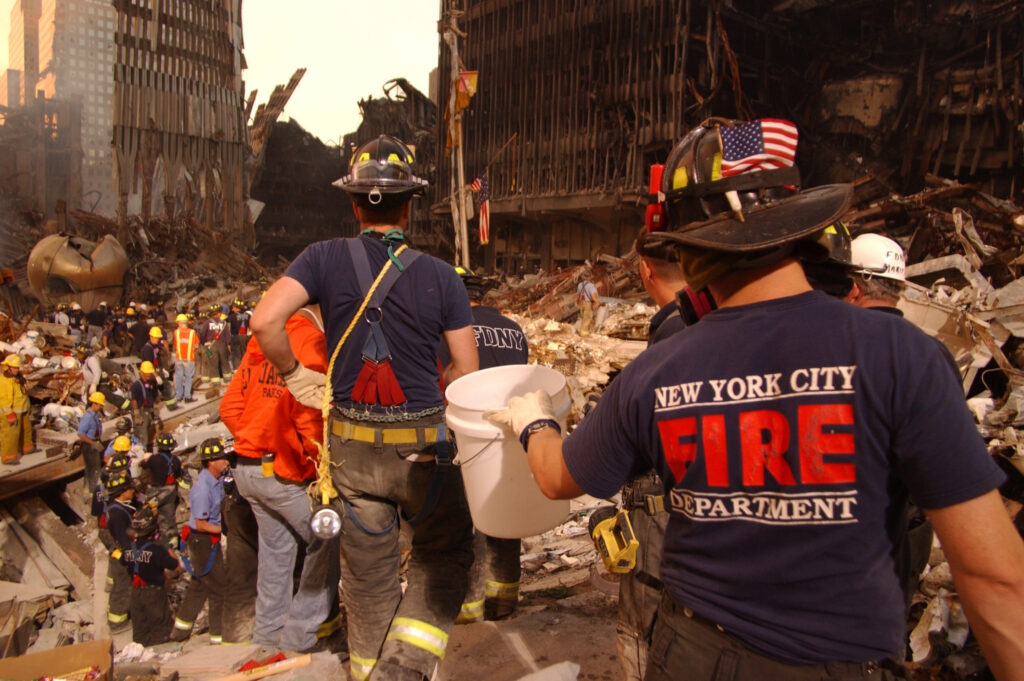
For the families of the victims, the day remains above all a personal loss. Historically, it represents a profound turning point. For aviation, it also marks the moment when fundamental assumptions about security, risk and the operation of a global transportation system had to be reassessed.
Four hijacked aircraft triggered changes that extended far beyond September 11 itself.
They changed airports and aircraft. They changed the work of crews and air traffic controllers. They changed the economic environment in which airlines operated. And they changed the way millions of people experience the beginning of a journey.
September 11, 2001, did not permanently bring global aviation to a halt. It forced the industry to fundamentally rethink how it approaches security.
Twenty-five years later, that transformation is still visible in every flight.