
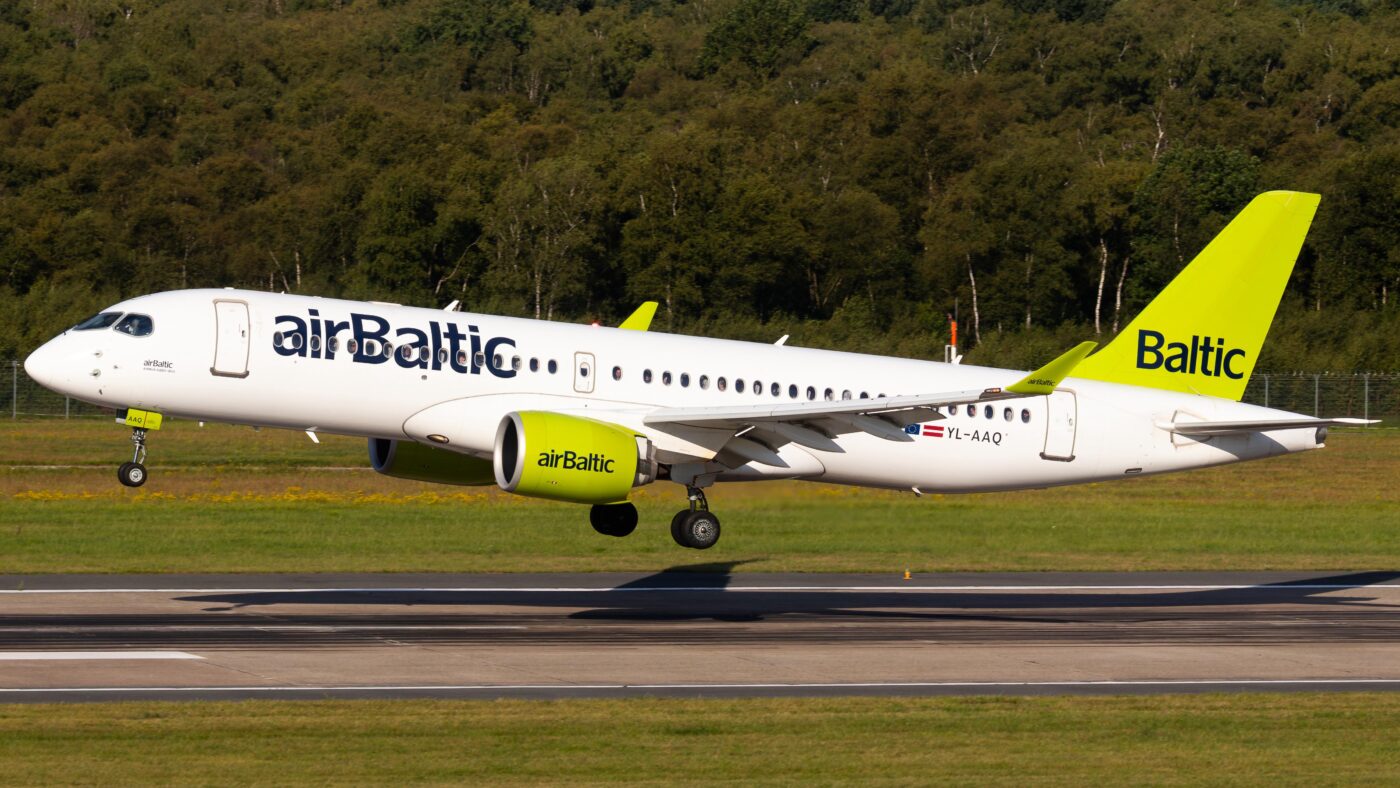
airBaltic’s summer 2027 timetable has put the airline’s financial restructuring targets into view, even for passengers. The Latvian carrier will fly to fewer cities from all three Baltic capitals, concentrate more of its network around Riga, and add frequencies on routes it believes can produce stronger returns.
The result of these changes is not a regular seasonal adjustment. It is the clearest view yet of what airBaltic will look like after abandoning its former expansion strategy, which envisioned a fleet of as many as 100 aircraft by 2030. The airline now intends to reduce its Airbus A220-300 fleet by one third, from 54 aircraft to around 36 by the end of 2026, before returning to only modest growth later in the decade.
From late March until late October 2027, airBaltic plans to offer 57 direct destinations from Riga, 13 from Tallinn, and eight from Vilnius. Behind those headline figures is a decisive change in philosophy: destination count is giving way to frequency, hub connectivity, and aircraft utilisation.
The timetable may therefore be smaller, but airBaltic wants each remaining part of it to work harder and more efficiently.
Riga becomes the unquestioned center of the network
Riga remains by far the largest airBaltic base, but it is not escaping the cuts. The airline offered 71 direct destinations from the Latvian capital during summer 2026. Its published summer 2027 programme lists 57, a reduction of almost 20%.
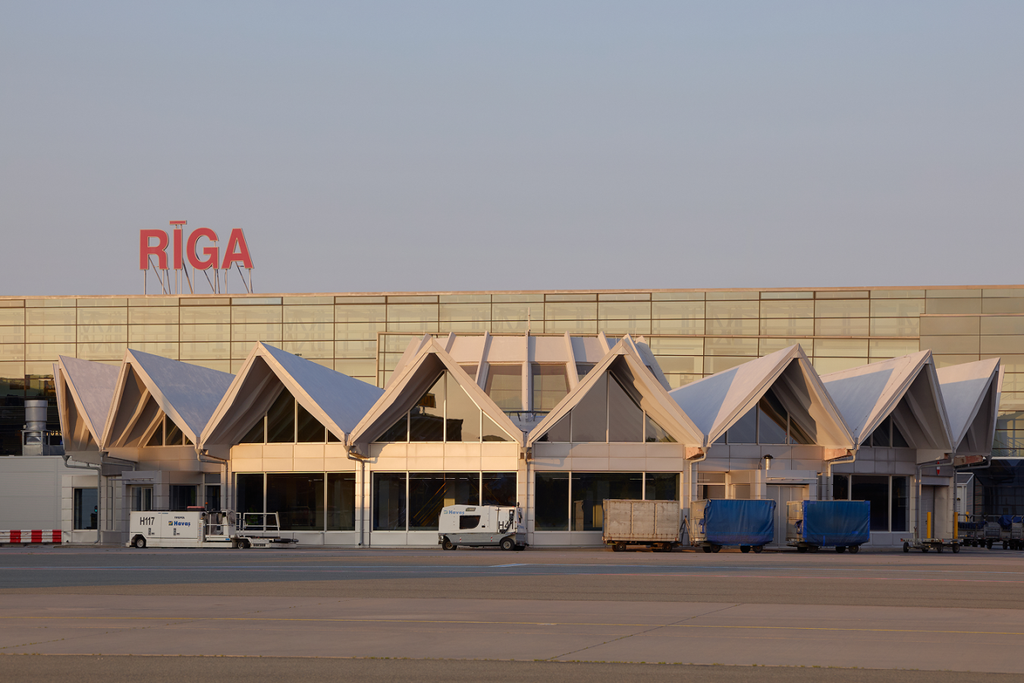
Even that figure slightly overstates the size of the network across the main summer period. Madeira and Sharm el-Sheikh are scheduled only during April, bridging the end of the winter programme. Once those services finish, Riga will have 55 direct airBaltic destinations.
Routes absent from the new summer schedule include Aberdeen, Antalya, Batumi, Bergen, Dublin, Yerevan, Faro, Gothenburg, Malta, Olbia, and Valencia. These cuts remove a mixture of thinner regional links and leisure services, which means significant cuts across the board.
At the same time, airBaltic is reinforcing several major markets. London Gatwick will receive up to 14 weekly flights from Riga, creating a twice-daily service. Paris and Vienna rise to 12 flights per week. Barcelona, Rome, Hamburg and Düsseldorf will each be served daily, while Milan increases to six weekly flights. Athens and Nice are planned four times per week, with Alicante and Split operating three times weekly.
This concentration matters more than the number of destinations. Additional frequencies make a route more useful to business travellers, provide passengers with greater choice, and create more possible connections over Riga. airBaltic is also redesigning its schedule at the hub to improve transfer times between arriving and departing flights.
For a connecting airline, a destination served at the wrong time or only a few times per week may add less value than the route map suggests. A denser schedule can funnel passengers from several smaller markets onto the same outbound flight, spreading the cost of that service across more connecting flows. That is the underlying logic of the new Riga operation: fewer destinations, but a network with greater depth of service.
Tallinn and Vilnius face much sharper reductions
The retreat is more pronounced outside Latvia. airBaltic’s Tallinn network will fall from 24 destinations to 13, a reduction of almost 46%. The remaining routes will connect the Estonian capital with Amsterdam, Barcelona, Berlin, Brussels, Heraklion, London Gatwick, Málaga, Munich, Nice, Paris, Riga, Vienna, and Vilnius.
Athens, Billund, Burgas, Copenhagen, Hamburg, Malta, Oslo, Palma de Mallorca, Rhodes, Split and Tirana are all absent from the 2027 programme. The change removes both holiday routes and some short-haul links within Northern Europe.
Vilnius will have an even smaller airBaltic operation. Its network falls from 14 destinations to eight: Amsterdam, Düsseldorf, Hamburg, Lisbon, Munich, Paris, Riga and Tallinn. Berlin, Heraklion, Nice, Palma de Mallorca, Prague and Zurich are among the services removed. Across Lithuania, the airline is also expected to retain two routes from Palanga.
For passengers in Estonia and Lithuania, the trade-off is clear. Travellers on the routes that survive may benefit from a more dependable schedule, but many others will lose a nonstop airBaltic option and will need to use a competitor or connect through Riga. Tallinn and Vilnius remain part of the carrier’s strategy, although increasingly as selected point-to-point bases and sources of feed for the main hub rather than broad networks in their own right.
This carries commercial risk. airBaltic held a leading 28% capacity share at Tallinn in the first quarter of 2026 and ranked second at Vilnius with 15%, according to its own results presentation. Large route withdrawals create room for competitors and may weaken the idea of airBaltic as an equally Baltic carrier. Yet operating three broad networks with a much smaller fleet would also dilute frequencies and recreate the complexity the restructuring is supposed to remove.
A one-third fleet cut changes the equation
The route changes follow directly from airBaltic’s revised business plan, built around what the airline calls “financial stability first, growth second.” Its operational fleet is expected to fall from 54 A220-300s to approximately 36 by the end of 2026, then grow gradually to around 40 aircraft by 2031.
That is a dramatic reversal. airBaltic’s previous strategy was designed around rising passenger numbers, an eventual initial public offering and a fleet of up to 100 A220s. The new plan accepts that the operating environment no longer supports that scale of expansion.
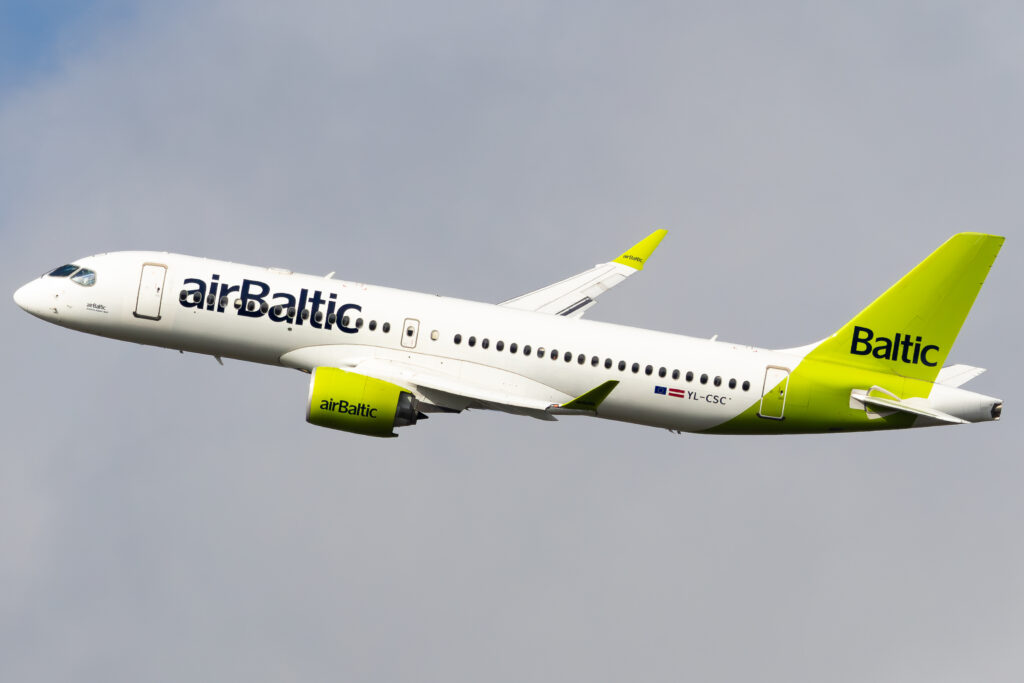
The company has cited moderating demand and revenue growth, higher costs, the wars affecting Ukraine and the Middle East, and Pratt & Whitney engine availability as pressures behind the reset. Engine-related disruption was especially damaging in 2024 and 2025, when unavailable powerplants forced cancellations and the use of replacement aircraft.
There is an important nuance, however. By the first quarter of 2026, airBaltic reported that no aircraft were grounded because of engine shortages, compared with an average of 13 a year earlier. The engine situation had improved, but the financial strain had not disappeared. That suggests the restructuring is addressing a broader imbalance in the airline’s costs, debt and seasonal capacity, not merely a temporary maintenance problem.
Management expects a 33% reduction in aircraft to translate into a capacity decline of only around 10%. The airline believes it can close much of that gap by using the remaining fleet more intensively, removing marginal routes and reducing the difference between its busy summer and weak winter seasons. It is targeting approximately €45 million in recurring annual benefits from lower costs and greater efficiency.
airBaltic has not publicly explained how each of the 18 aircraft will leave its operating fleet. The eventual mixture of lease returns, transfers or other transactions will matter because reducing aircraft only improves cash flow if the airline can also remove the associated obligations on acceptable terms.
Lufthansa is a crucial customer, but not a rescuer
The second pillar of the plan is ACMI flying. Under an ACMI or wet-lease agreement, airBaltic supplies an aircraft together with its crew, maintenance and insurance, while another airline sells the seats and controls the route. This allows airBaltic to earn revenue from aircraft that might otherwise be difficult to deploy profitably in its own highly seasonal network.
No relationship is more important here than Lufthansa Group. The companies have worked together since 2019, and their current agreement allows Lufthansa Group airlines to deploy up to 21 airBaltic A220-300s during summer and five during winter through 2028. The exact number planned for summer 2027 has not been disclosed, although Lufthansa says the required capacity was agreed early.
ACMI is already a substantial business for airBaltic. In 2025, it generated €157 million in revenue as the airline operated as many as 20 aircraft for other carriers at the seasonal peak. During the first quarter of 2026, ACMI revenue rose 28.7% year on year to €21.3 million and accounted for 14.3% of group revenue.
The attraction is not simply growth. Long-term contracts can make fleet deployment more predictable and reduce exposure to weak winter demand in the Baltics. But the model also creates a delicate balance. Every aircraft committed to another airline is unavailable for airBaltic’s own network, where the carrier controls pricing, customer relationships and the long-term value of its Riga hub.
Lufthansa’s role is complicated further by its ownership stake. The German group invested €14 million in 2025 for convertible shares carrying 10% of the voting rights and a seat on airBaltic’s supervisory board. Latvia continues to hold roughly 88%.
Despite that strategic link, Lufthansa has ruled out contributing more capital to the current rescue. It wants airBaltic to remain a reliable wet-lease partner, but it does not intend to underwrite the airline’s balance sheet. In practical terms, Lufthansa is a shareholder and vital customer, but Latvia, new investors and creditors still have to finance the turnaround.
The financial rescue remains incomplete
The urgency becomes clearer in airBaltic’s accounts. The airline recorded a 2025 revenue high of €779.3 million and carried 8.7 million passengers across its scheduled and ACMI operations, yet still finished the year with a net loss of €44.3 million.
In the first quarter of 2026, revenue increased 12.3% to €149.1 million, and adjusted EBITDAR improved from a €4.3 million loss to a €7 million profit. Nevertheless, the net loss widened sharply to €70.1 million, partly because of foreign-exchange movements and lower commercial support related to the engine disruption. At the end of March, the group reported negative equity of €249 million and only €16 million in unrestricted cash, alongside €17 million of restricted cash.
Latvia subsequently provided a short-term loan of up to €30 million, but the new plan requires far more. airBaltic is seeking €225 million of interim financing to bridge it toward a permanent recapitalization. That longer-term package is expected to include up to €225 million in new debt, €100 million in new equity, and the conversion of part of its existing debt into shares.
The airline’s €380 million senior secured bonds, issued with a steep 14.5% coupon and due in 2029, sit at the center of the negotiations. On 17 August, bondholders agreed to add the interest payments due in August and November to the principal instead of taking cash immediately. The decision preserved short-term liquidity but did not approve the €225 million bridge financing. Its terms were still being finalized.
Three days later, Latvia’s parliament passed legislation enabling the government to participate in the stabilisation, including the possible purchase of around €30 million in newly issued bonds and the restructuring of existing state claims. That provides room to negotiate; it does not by itself complete the rescue.
The distinction is essential. airBaltic has secured time, and it now has an operating plan designed to convince lenders and investors that the business can become sustainable. It has not yet secured every part of the capital required to implement that plan.
A smaller airline may have a stronger core
The summer 2027 schedule is therefore both a network announcement and a statement of intent. airBaltic is no longer trying to maximise the number of aircraft or destinations it can claim. It is concentrating on the routes, frequencies and contracts it believes can generate cash.
For Riga, the strategy could produce a more useful hub despite a smaller map. Twice-daily London flights, near-twice-daily links to Paris and Vienna, and daily services to several major European cities give the airline more opportunities to combine local and connecting demand. Tallinn and Vilnius, by contrast, will carry much more selective networks and lose a considerable amount of direct connectivity.
The plan is commercially coherent, but coherence is not the same as success. Higher frequencies must translate into better yields and stronger load factors. Improved schedules must attract connecting passengers without creating excessive discounting. ACMI contracts must deliver dependable margins without hollowing out airBaltic’s own network. Above all, the airline still needs to complete its financing and lower a debt burden that has left little room for further shocks.
airBaltic’s future will not be decided by whether its route map contains 57 destinations or 71. It will be decided by whether the smaller network earns enough money to support the aircraft, people and debt behind it. Summer 2027 is the first full test of that proposition.