

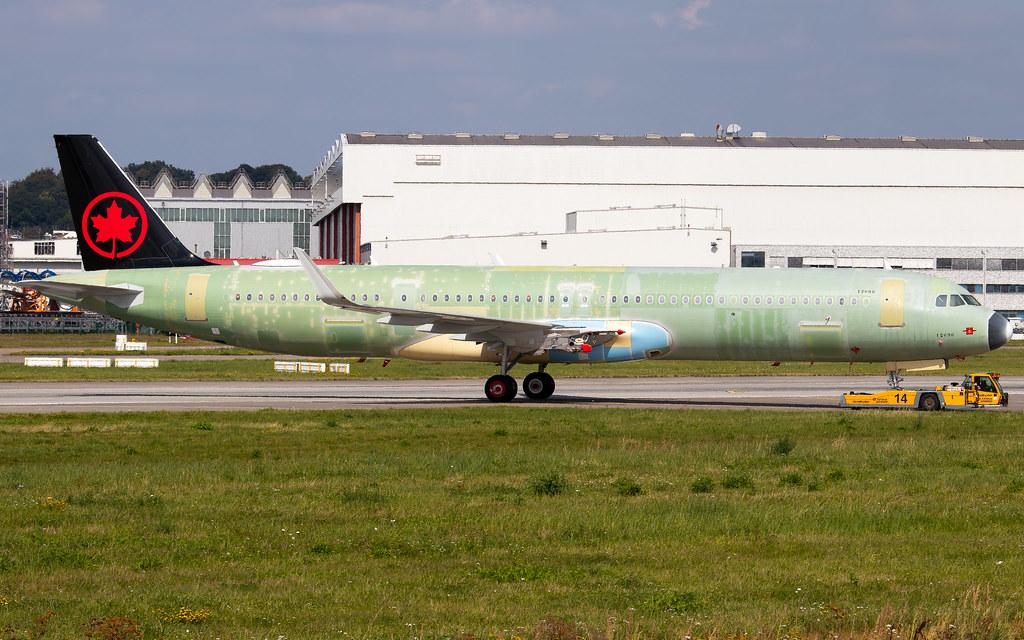
Airbus delivered approximately 72 commercial aircraft in September, Reuters reported on 2 October, citing industry sources. The figure remains provisional, with Airbus declining comment ahead of its official monthly bulletin on 8 October.
A demanding final quarter
The manufacturer’s latest confirmed figures cover August, when it handed over 57 aircraft to 31 customers. That brought deliveries for the first eight months of 2026 to 475 aircraft, distributed across 83 customers.
Combining that total with September’s estimate would put deliveries at approximately 547, leaving around 323 to reach the annual target of 870. That would require an average of roughly 108 handovers per month between October and December.
Airbus’s ambition represents a further increase over the 793 commercial aircraft it delivered in 2025. Reaching 870 would mean handing over 77 additional jets, equivalent to growth of almost 10% over the previous year.
The company retained its annual target in its half-year results, with guidance based on the assumption that there would be no additional disruptions to supply chains, internal operations or its ability to deliver aircraft. Those conditions leave limited room for manufacturing problems that require extra work before customers can accept their jets.
A321neo repair work adds pressure
As Aviation24news previously reported, Airbus is investigating inadequate corrosion protection affecting around 500 A321neo aircraft. The issue covers jets already delivered to airlines as well as others still in production.
The defect concerns protective coatings on internal fuselage reinforcements known as stringers. Airbus says the aircraft can continue operating and that a repair has been developed. The affected stringers do not need to be removed during the corrective work.
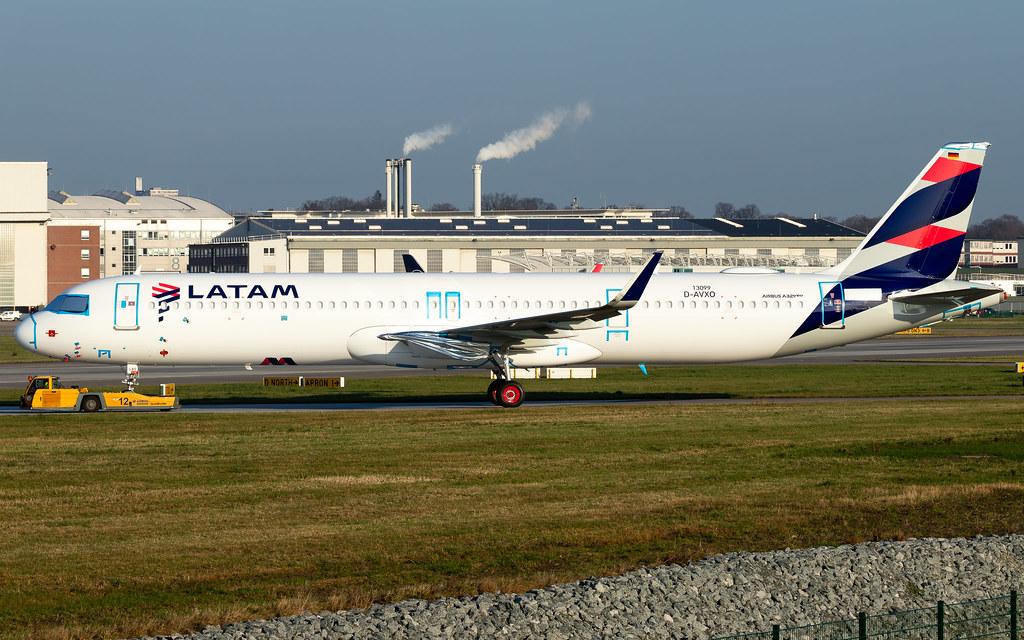
However, the availability of a repair does not eliminate the demands on production and maintenance resources. Aircraft awaiting delivery must be managed through the factory process, while work on jets already in service requires coordination with airline maintenance schedules.
Airbus maintained its delivery guidance after confirming the problem. The key question for the final quarter is how effectively it can accommodate this additional work alongside its existing delivery commitments.
Production expansion continues
The A320 family remains central to Airbus’s commercial aircraft business. Of the 351 aircraft delivered during the first half of 2026, 271 belonged to the single-aisle family, accounting for more than three-quarters of the total.
In July, Airbus reaffirmed plans to reach an A320-family production rate of between 70 and 75 aircraft per month by the end of 2027, stabilising at 75 thereafter. Its wider plans include monthly rates of 13 A220s and 12 A350s in 2028, alongside five A330s in 2029.
The commercial importance of completing deliveries was evident in the first-half results. Revenue from Airbus’s commercial aircraft activities increased 15% to €23.9 billion, with higher deliveries and services activity contributing to the improvement.
For the remainder of 2026, the immediate task is converting aircraft moving through that expanding production system into completed customer handovers, while containing the disruption from additional corrective work.
![Airbus A350F Completes First Flight as New Freighter Returns to Toulouse The Airbus A350F has completed its maiden flight, returning to Toulouse-Blagnac on 29 September and beginning the flight-test programme for the manufacturer’s new long-haul freighter. The first prototype, MSN700, registered F-WXLD, departed Toulouse earlier in the day. The milestone brings Airbus closer to certification and customer deliveries, currently targeted for the second half of 2027. Two aircraft for the test campaign Airbus plans a campaign involving two aircraft, approximately 400 flight hours and around nine months of testing. MSN700 will focus on aerodynamics, handling and autopilot performance, while MSN701 will cover systems testing and operations in hot and cold conditions. Although based on the passenger A350, the freighter has a distinct configuration. Its fuselage length falls between the A350-900 and A350-1000, while its wing comes from the larger variant. These differences require Airbus to validate the aircraft’s handling and flight-control characteristics. Before taking to the skies, crews rehearsed using a development simulator connected to real aircraft avionics. The prototype also completed high-speed rejected-takeoff tests on 24 September. Before its maiden flight, the A350F prototype completed high-speed rejected-takeoff tests at Toulouse on 24 September. Image Credit: [Photographer] Capacity for 111 tonnes of cargo Powered by two Rolls-Royce Trent XWB-97 engines, the A350F is designed to carry up to 111 tonnes of payload. Its main deck accommodates 30 containers, with further capacity below. A defining feature is its rear main-deck cargo door, which has a clear opening 4.3 metres wide and 3.15 metres high. Airbus describes it as the largest in the industry, designed to simplify loading standard containers and oversized freight. MSN700 carries a packaging-inspired livery developed from winning entries in Airbus’s public design competition, giving the prototype the appearance of a giant parcel. Deliveries targeted for 2027 The programme entered its first-flight campaign with 115 firm orders. Launched in 2021, the A350F was originally intended to enter service in 2025 before development delays pushed deliveries back. Atlas Air ordered 20 aircraft in March 2026, becoming the largest customer at that announcement. The maiden flight now shifts attention to certification. Airbus must demonstrate the aircraft’s performance, systems and cargo-handling capabilities before the freighter can begin commercial operations.](https://aviation24news.com/wp-content/uploads/2026/09/WhatsApp-Image-2026-09-29-at-11.40.42-720x405.jpeg)