
Leipzig – In the future, Leipzig/Halle Airport will do more than just handle and maintain aircraft. It will also build them and then deliver them to customers around the world.
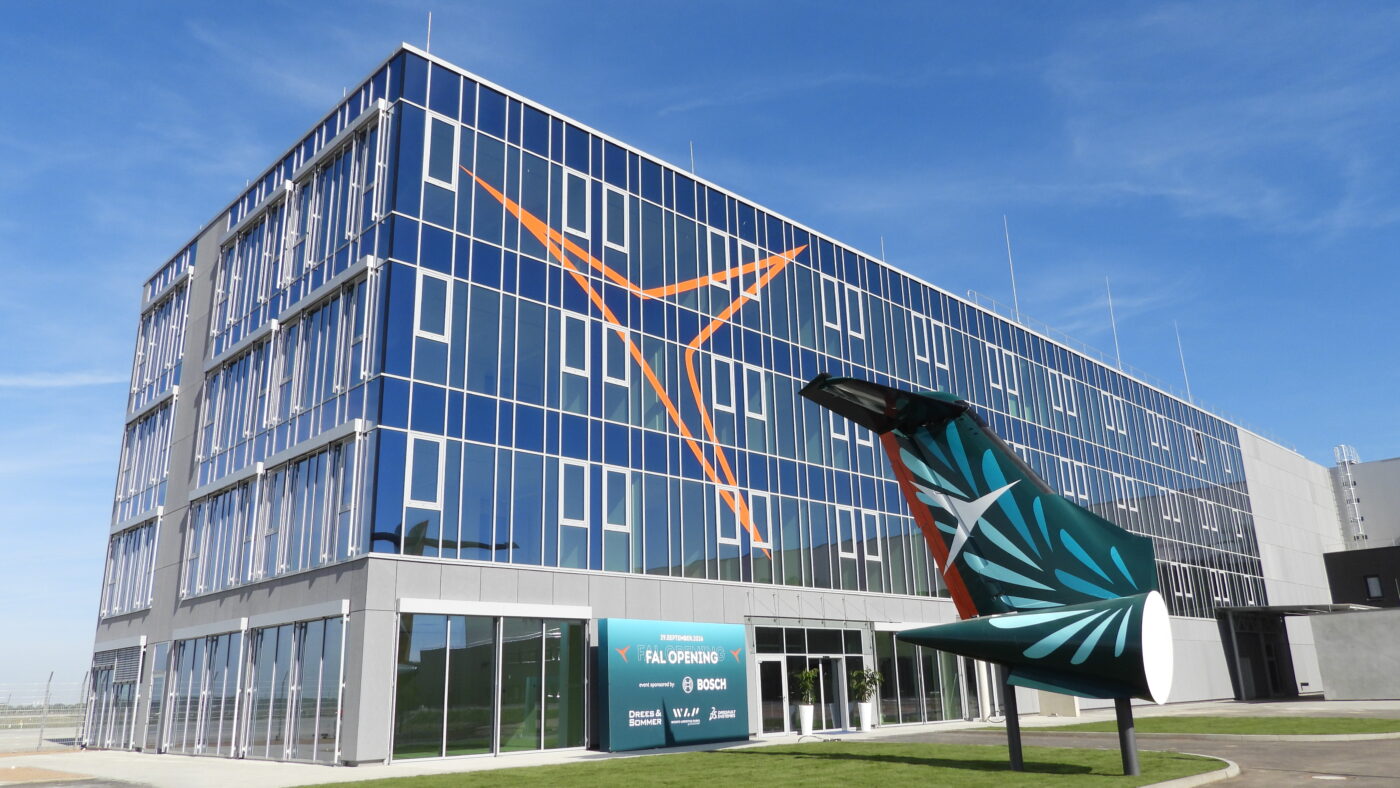
On Tuesday, September 29, 2026, Deutsche Aircraft officially opened its new Final Assembly Line (FAL) for the D328eco, marking an important milestone in the regional aircraft program that has been underway for several years. The opening ceremony brought together representatives from the federal government, the Free State of Saxony, the aviation industry, supplier companies, and the airport, among others. Saxony’s Minister President Michael Kretschmer also addressed the guests via a video message.
For Deutsche Aircraft, this occasion represents more than just the completion of a new building complex. With the FAL, the D328eco program is visibly transitioning from the development phase to the industrialization and production phase. CEO Nico Neumann described the opening as the return of aircraft manufacturing to Saxony and as an important step toward once again integrating the development, certification, flight testing, manufacturing, and support of a complete aircraft within a German industrial structure.
100 million euros for a new German aircraft manufacturing site
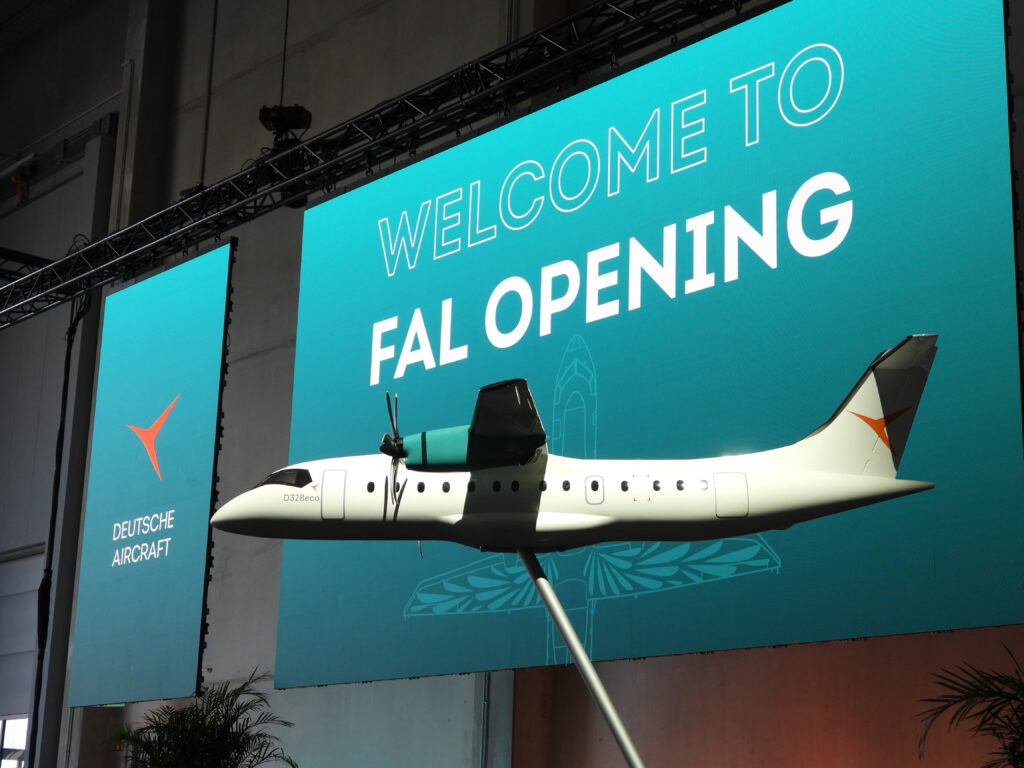
The scale of the project is already evident from the figures. According to the company, Deutsche Aircraft has invested more than 100 million euros in its Leipzig facility. The site covers approximately 60,500 square meters and, in addition to the actual final assembly line, includes a flight readiness hangar, a logistics center, and an administrative building. The production facility is initially designed for a capacity of up to 48 D328eco aircraft per year.
The Free State of Saxony is supporting the investment with approximately 3.2 million euros from the joint program “Improvement of the Regional Economic Structure” (GRW). This means that not only are private funds flowing into the new facility, but the project is also part of a regional industrial policy aimed at attracting and securing technology-intensive value creation.
The ramp-up of production is expected to create approximately 250 direct jobs. Although Deutsche Aircraft FAL is not a large facility with several thousand employees, its significance extends beyond the number of people directly employed there. Among others, the company will need engineers, technicians, manufacturing specialists, and apprentices. At the same time, this will generate demand and long-term opportunities for suppliers, logistics companies, and other service providers within the aviation industry.
It is precisely this industrial network that is crucial for Saxony. The Leipzig/Halle region already has a strong logistics and aviation sector. With the D328eco, a complete aircraft program is now being added. Deutsche Aircraft sees this as a contribution to the economic dynamism of Central Germany and to strengthening Saxony’s position within the German aviation industry.
Saxony’s Minister of Economic Affairs, Dirk Panter, described the opening as a significant milestone for the Free State as a hub for innovation and modern industry. In his message, Minister President Michael Kretschmer highlighted the highly skilled jobs and Saxony’s increased appeal for international industrial projects. From the federal government’s perspective as well, the project is viewed primarily through the lens of industrial expertise. Christian Hirte, Parliamentary State Secretary to the Federal Minister of Transportation, spoke of it as a signal for Germany as an industrial and aviation hub and emphasized the importance of securing aviation expertise and regional value creation.
Bavaria and Saxony will each take on half of an aircraft program
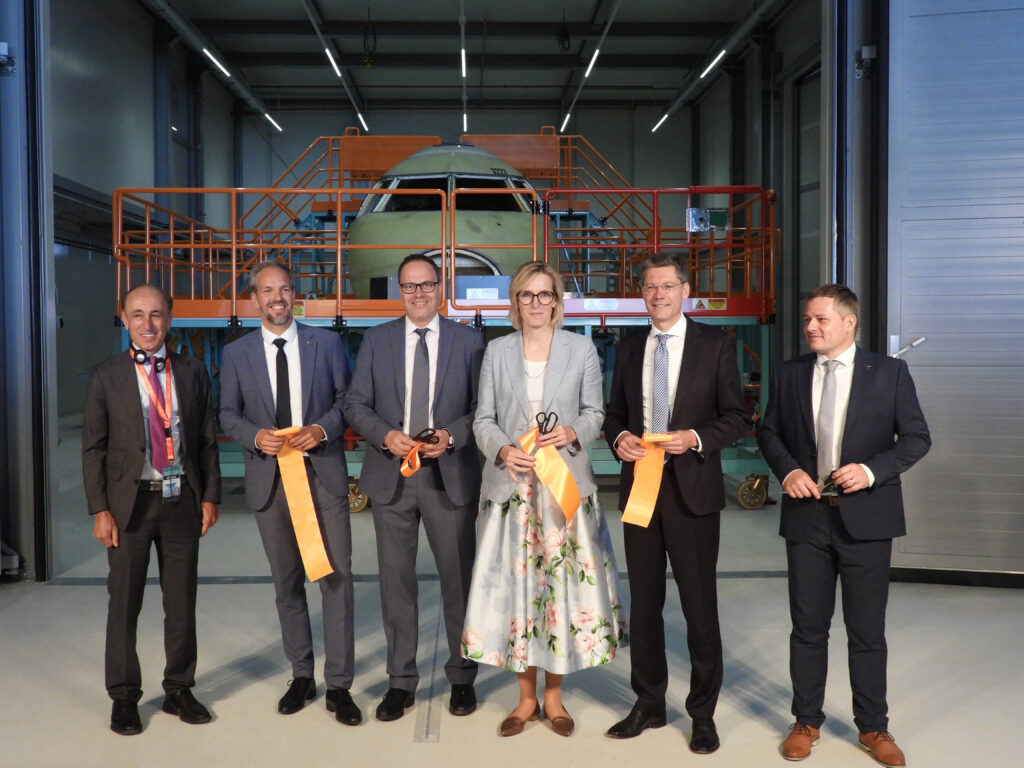
However, the economic significance of the location can only be fully understood if Leipzig is not viewed in isolation. Deutsche Aircraft divides the key tasks of the D328eco program between two German locations.
Development, certification, and flight testing will remain based in Oberpfaffenhofen, Upper Bavaria. Leipzig/Halle, on the other hand, will in the future handle industrialization, final assembly, flight readiness activities, and delivery to international customers. This creates a link between Bavaria and Saxony that covers various stages of a complete aircraft program.
For Marie-Christine von Hahn, CEO of the German Aerospace Industries Association (BDLI), it is precisely this connection that is of particular importance. She noted that Germany is once again developing and building a complete aircraft, with Bavaria and Saxony pooling their respective expertise. She also highlighted the long-term value creation and the importance of modern manufacturing technologies for the international competitiveness of the German aerospace industry.
Airport CEO Götz Ahmelmann also highlighted Leipzig/Halle’s new role during the opening ceremony. In his words, aircraft will not only take off and land at the site in the future, but will also be built there and shipped out to the rest of the world. For an airport whose economic profile is heavily influenced by cargo, logistics, and industrial services, this directly expands the value chain right at the site.
Deutsche Aircraft itself refers to a seamless value chain. This is an important point: The FAL does not simply produce an aircraft whose core industrial capabilities are located entirely outside Germany. Rather, Leipzig and Oberpfaffenhofen are intended to form a joint German development, certification, and production network. For the German aerospace industry, this means preserving expertise that must be built up over decades in complex aircraft programs.
A factory that is itself part of the D328eco concept
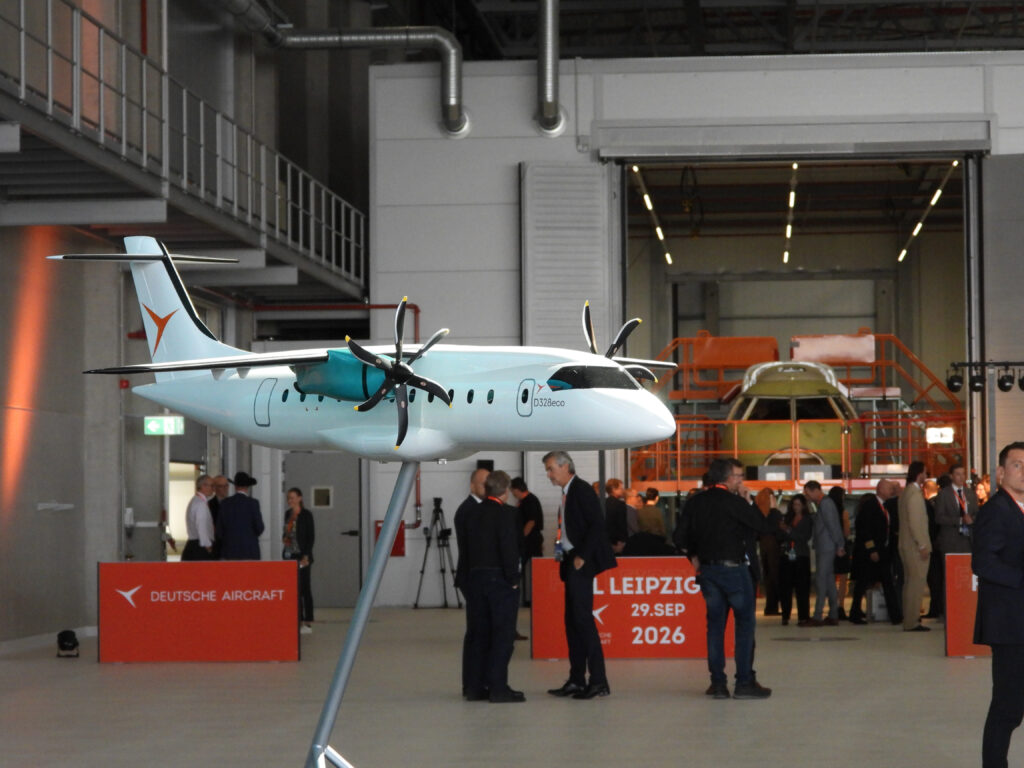
Production itself was also designed around a modern manufacturing concept. Deutsche Aircraft refers to the FAL as a digital Industry 4.0 facility. Paperless production processes, automated logistics, and digital production data are intended to make assembly more efficient and transparent. In addition, the facility features photovoltaic systems, heat pump technology, and an energy-efficient building infrastructure. The company describes the facility as a carbon-neutral production environment.
Internal logistics play a central role in this process. An automated warehouse concept was developed in collaboration with Jungheinrich even during the construction of the FAL. This includes a PowerCube compact warehouse and an automated narrow-aisle warehouse. The concept is designed to ensure the most efficient possible material flow within production and is intended to be scalable for future series production.
Sebastian Böhnl, Vice President of Operations & Production at Deutsche Aircraft, emphasizes that efficiency, quality, and sustainability were central to the facility’s planning from the outset. As production ramps up, additional highly qualified employees will be hired to oversee the aircraft from final assembly through delivery.
The D328eco: Small enough for low demand routes, modern enough for a new generation
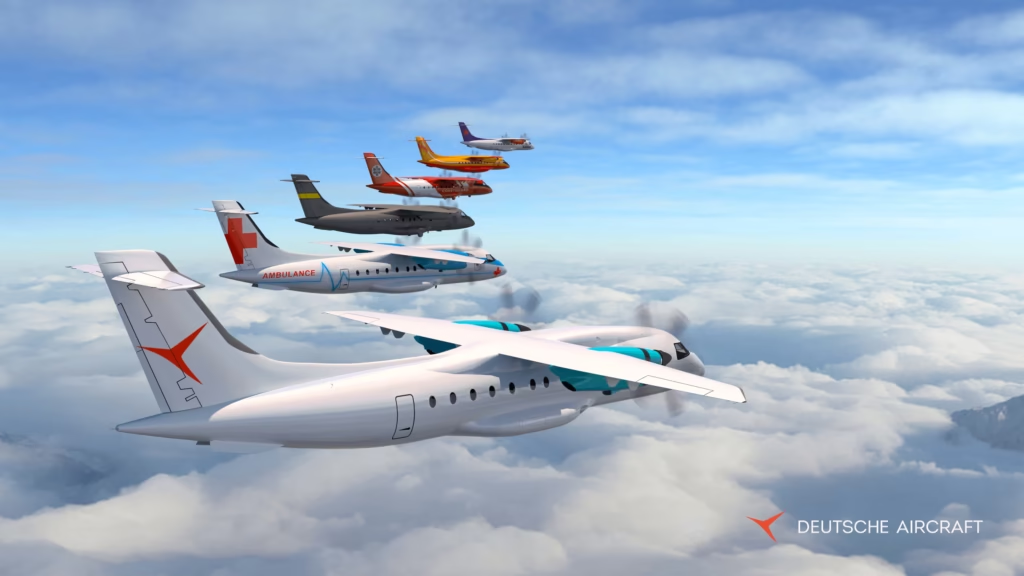
At the heart of the new factory is an aircraft whose design differs significantly from the regional jets that dominate the market today. The D328eco is a 40-seat turboprop aircraft and is thus aimed at a market segment below that of larger regional jets and many of today’s regional aircraft.
It is powered by Pratt & Whitney Canada PW127XT-S engines. The planned cruising speed is up to 324 knots true airspeed, or about 600 km/h. The maximum range is specified as 655 nautical miles with a full passenger load. Of particular interest is the short takeoff distance: Deutsche Aircraft cites 800 meters at a load factor of 70 percent. This is intended to make the D328eco suitable for routes where larger aircraft would be less practical from an economic or infrastructural standpoint.
The approach is deliberately geared toward the so-called “right size” concept. Rather than fitting as many seats as possible into an aircraft, the D328eco—with its approximately 40 seats—is designed to serve routes where it is difficult to operate larger aircraft at a profit. Especially on less-traveled regional routes, a smaller aircraft can therefore enable more frequent service or, in some cases, provide a direct connection for the first time.
This is not limited exclusively to traditional airline routes. The D328eco was designed from the outset as a versatile platform. Deutsche Aircraft envisions applications in passenger transport, charter and business flights, as well as special missions. Thanks to a large door that can be operated in flight and a modular cabin configuration, the aircraft is also intended for medical evacuations, humanitarian missions, and firefighting operations.
Another feature is its design for sustainable fuels. The D328eco is designed to be capable of operating entirely on Power-to-Liquid Sustainable Aviation Fuel (PtL-SAF). Deutsche Aircraft states that operating with 100 percent PtL could result in a CO₂ reduction of up to 95 percent. This figure is based on the company’s stated emissions balance and, accordingly, should not be equated with zero-emission aircraft technology.
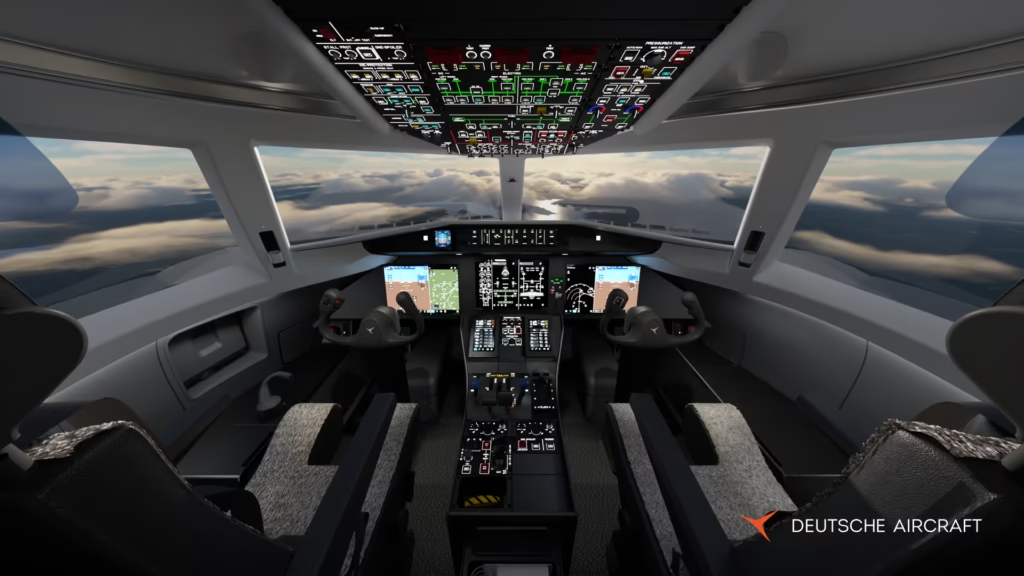
Deutsche Aircraft is also relying on a new generation of technology for the cockpit. An integrated Garmin G5000 PRIME flight deck is planned. This is intended to not only make the D328eco fly more efficiently but also provide modern controls and automation.
Private Wings as a Launch Customer
When considering the program’s commercial success, it is important to make a distinction. Deutsche Aircraft has generated market interest and secured several agreements, but not all of them constitute firm orders.
The only launch customer publicly known to date is Private Wings. The German company signed a letter of intent (LOI) in 2023 for five D328eco aircraft. Private Wings already operates the Dornier 328 and views the D328eco as a potential next step for its fleet. However, the agreement is a letter of intent and not a publicly disclosed firm order. In addition, Deutsche Aircraft announced another LOI at the end of 2023 for up to four D328ecos with an unnamed customer. This, too, is a letter of intent.
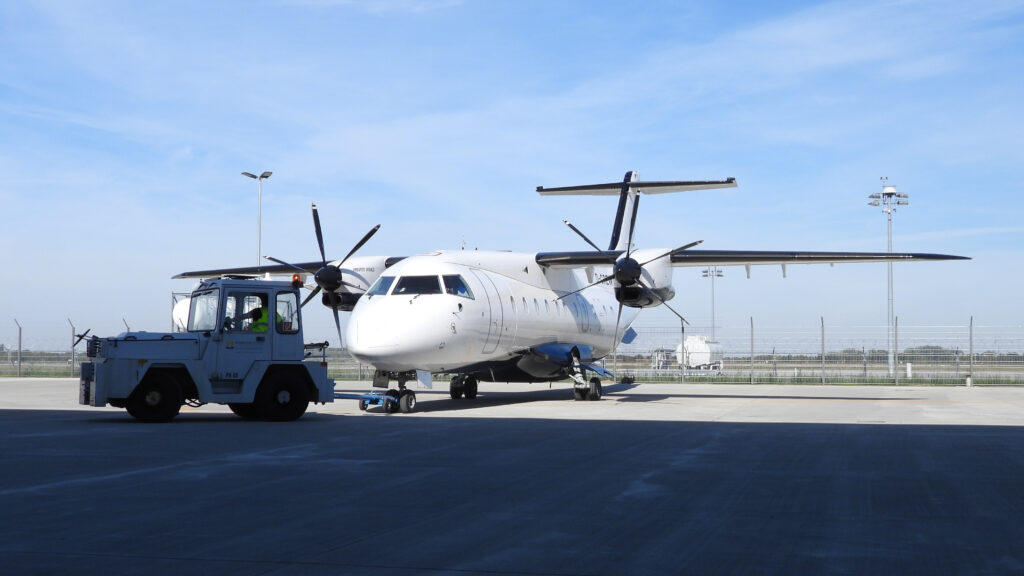
This also highlights the challenge facing the program: Building a FAL creates the industrial foundation for series production, but it does not eliminate the need to secure a sufficient number of firm customer orders. For a new aircraft manufacturer, the transition from the prototype phase through certification to economically viable series production is one of the most critical phases.
The Transition from Prototype to Mass Production
With today’s unveiling, the D328eco has not yet reached the end of its development. On the contrary: development and certification are continuing in parallel with the establishment of the industrial infrastructure.
A major milestone was reached in August and September 2026 with the first flight tests of a modified D328 flying testbed for the new landing gear. According to Deutsche Aircraft, low-speed and high-speed taxi tests were conducted first, before the test aircraft took off on its first development flights on August 5. By early September, more than 15 flight hours had been logged with the new landing gear.
The FAL thus becomes a crucial link between development and subsequent customer operations. The first D328eco to be assembled in Leipzig will initially serve as a test aircraft. According to current information, this aircraft is scheduled to be completed in the first quarter of 2027; series production is planned to begin in 2028. The FAL is designed to produce up to 48 aircraft per year.
Leipzig is becoming the visible face of a new German aircraft industry
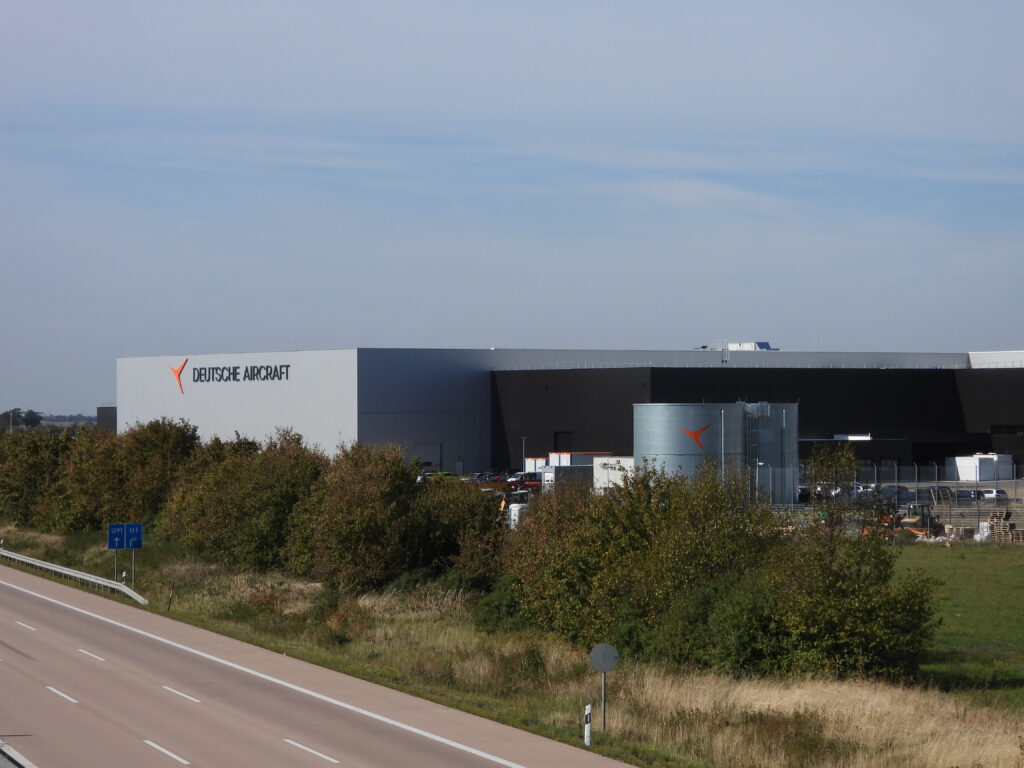
The perhaps most important impact of the new FAL cannot, therefore, be measured solely by its production volume. Forty-eight aircraft per year is a small number compared to the production rates of Airbus or Boeing. For a German regional aircraft manufacturer, however, the ability to produce its own aircraft in industrial series is of strategic importance.
In doing so, Deutsche Aircraft is deliberately building on the legacy of the Dornier 328. The D328eco builds technically and conceptually on the experience gained with the Dornier 328 family, but is being transformed into a new generation with new engines, modern avionics, and a structure designed for more sustainable fuels.
For Leipzig, this also means an expansion of its existing aviation hub. An airport that plays a major role in logistics and transportation is becoming a facility where a German commercial aircraft can go through the entire process, from final assembly to delivery.
“Airplanes are coming home,” Götz Ahmelmann had already said at the groundbreaking ceremony. At today’s opening, Ahmelmann noted, the aircraft have now actually arrived.
For Deutsche Aircraft, this has evolved into a greater mission: “Developed in Germany. Built in Saxony. Connecting the world.”
Whether this will lead to a major industrial success story in the long term will not be determined solely by today’s opening. The decisive factors will be the certification of the D328eco, the maiden flight, the establishment of a stable supply chain, firm customer orders, and, finally, the ability to reliably ramp up production. The new final assembly line (FAL) in Leipzig provides the industrial foundation for this for the first time.
And that is precisely where its significance lies: Saxony gains a new aircraft manufacturing site, Leipzig gains an additional industrial anchor—and Germany gains the opportunity to once again establish a complete chain—from development and certification through final assembly and delivery—for a modern regional aircraft within its own borders.