
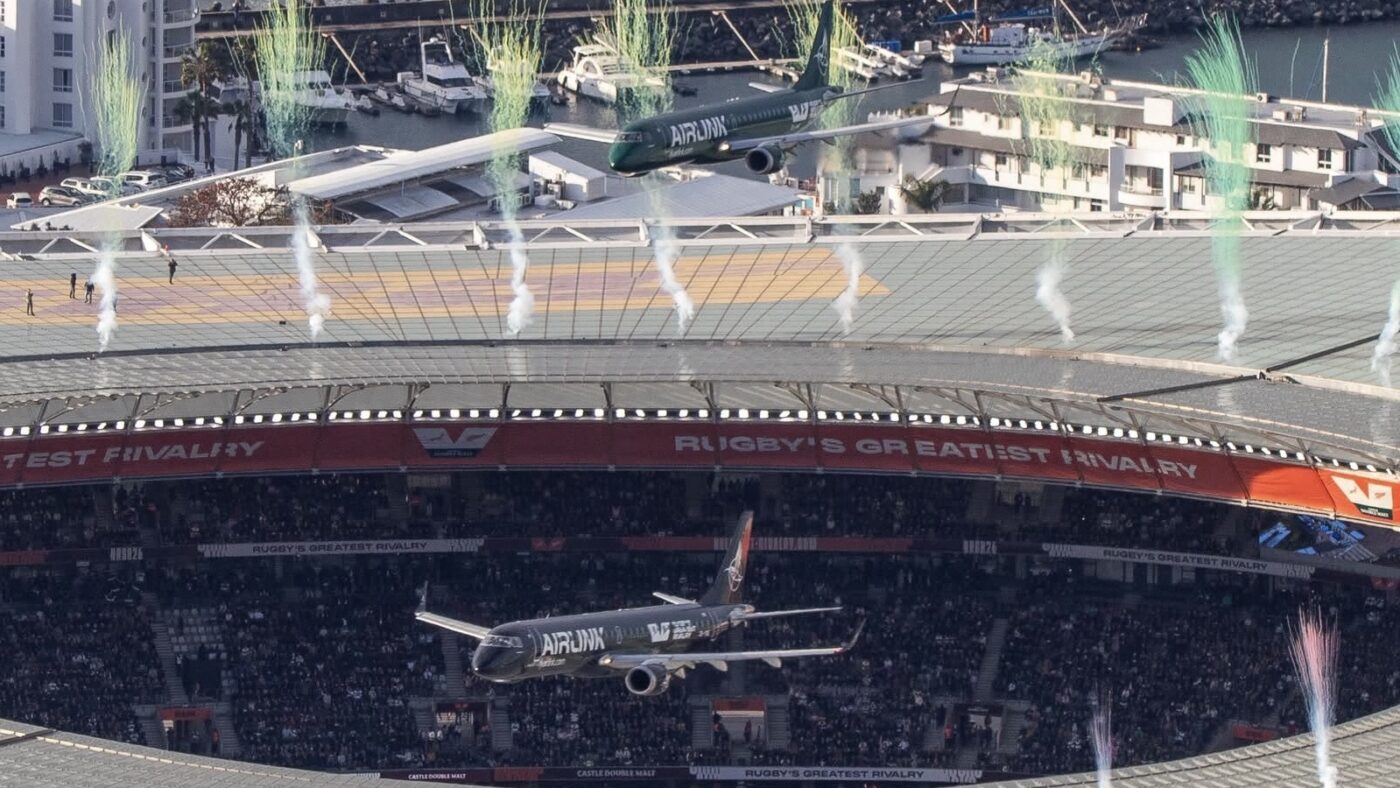
Airlink has until Thursday, 15 October, to respond to the South African Civil Aviation Authority (SACAA) over its controversial flypast above Cape Town’s DHL Stadium in August.
The regulator has completed its compliance review and handed its report to the airline, with possible enforcement action still on the table.
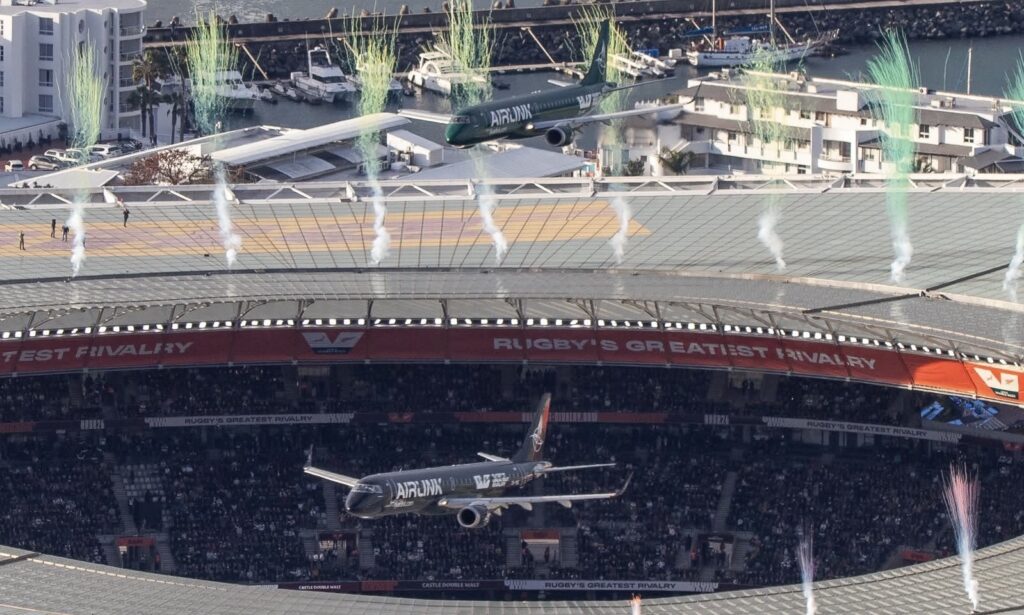
The deadline follows weeks of scrutiny after two Airlink aircraft passed over the stadium ahead of the Springboks’ Rugby’s Greatest Rivalry match against New Zealand on 29 August. The footage travelled well beyond South Africa, putting the airline’s operation under the spotlight, prompting questions about the aircraft’s proximity to the stadium roof.
SACAA has not released the report’s detailed findings.
Commissioner of South Africa’s Civil Aviation Authority, Poppy Khoza, confirmed on 13 October that the authority had completed its verification process and provided the report to Airlink. The airline was initially given 15 days to respond before requesting an extension, which the regulator granted.
There is another detail to the deadline. Airlink chief executive de Villiers Engelbrecht has said the original notification gave the airline 15 days to respond, rather than the 30 days he says were stipulated in the regulations.
According to reports, SACAA agreed to extend the period after the discrepancy was raised. The regulator has yet to publish the full report or its recommendations.
SACAA Leaves The Door Open To Enforcement
Khoza has made it clear that the completion of the review does not mean the matter is over. SACAA will assess Airlink’s response before deciding what action, if any, should follow.
“We would like to assure the public that if any wrongdoing is identified when this process is concluded, the SACAA will not hesitate to take enforcement action,”
Khoza said, according to TimesLIVE.
That leaves the airline with an opportunity to address the regulator’s findings before a decision is made. It also means that the public reaction to the flight, however intense, cannot on its own establish whether Airlink breached any requirements.
SACAA has not disclosed enough detail to determine what specific concerns its report raises. Until the response has been considered, it would be premature to conclude that the airline will face a penalty.
Airlink Stands By The Flight
Airlink has defended the operation from the outset, maintaining that safety was central to its planning and that the aircraft remained within the approved altitude and speed limits.
The airline said the flypast required careful preparation and rehearsal, with guidance, approval and support from SACAA and Air Traffic Navigation Services. Each aircraft carried three senior captains, Airlink said, representing more than 75,000 combined flight hours across the crews involved.
Airlink also volunteered the aircraft’s digital flight data recordings to assist the regulator.
The recordings capture far more than the position information available through public flight tracking applications, including parameters such as altitude, speed and aircraft control inputs.
The airline has, on numerous occasion, said the data supports its position that the flypast was conducted within the approved limits. Those are Airlink’s findings from its own data. SACAA’s independent assessment is central to the process, and the authority has not yet made its detailed conclusions public.
In a statement reported by IOL on Wednesday, Engelbrecht said the airline was cooperating with SACAA and had provided the flight recordings alongside other relevant records, including documentation relating to the approval it received for the flypast.
He also said Airlink would subject itself to any further investigation or action recommended by the regulator within the applicable legal framework.
The Flight That Started It All
The two aircraft flew over DHL Stadium shortly before the Springboks faced the All Blacks on 29 August. The display was intended to form part of the build-up to one of South African rugby’s biggest fixtures, but attention quickly shifted to the height at which the aircraft passed the venue.
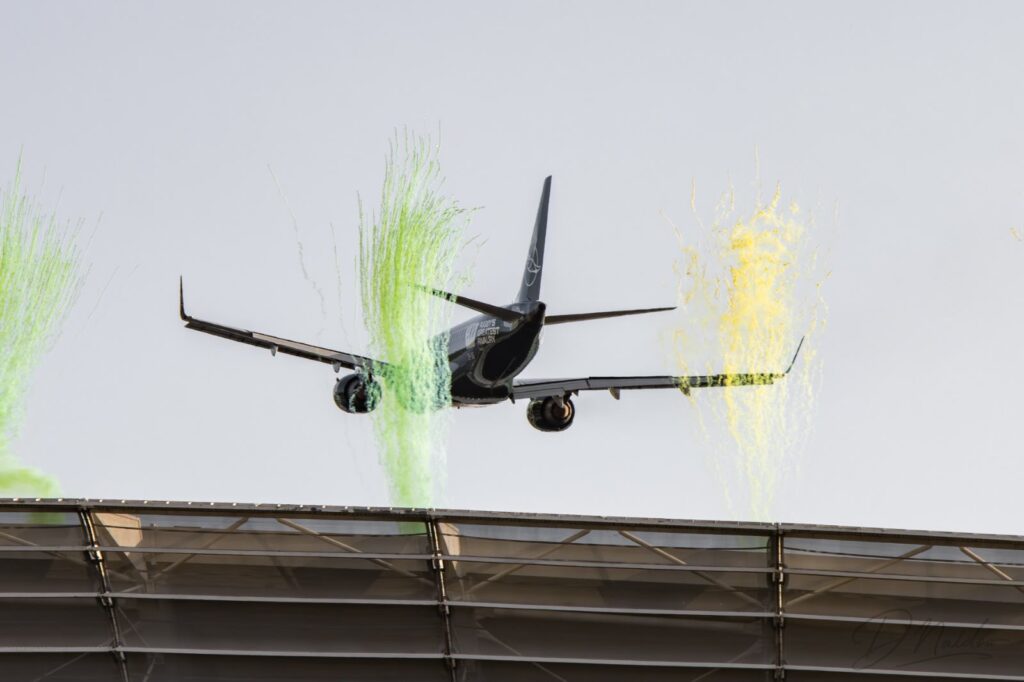
Flight-tracking data placed one aircraft roughly 12.5 to 14 metres above the stadium roof. That figure helped fuel the debate, although publicly available tracking data does not, by itself, establish whether the flight breached aviation regulations. The aircraft had flown through the stadium’s pyrotechnics as it was discharged, providing an initial indication as to how low the aircraft were.
A further planned flypast at FNB Stadium in Johannesburg was withdrawn the following week. Airlink cited unfavourable weather conditions, saying that safety considerations had informed the decision.
The Cape Town operation is now being assessed through SACAA’s compliance process. The distinction is important: the flypast had received approval, but the regulator can still examine whether the operation was conducted in accordance with the relevant requirements.
Thursday’s Deadline
Airlink’s response is the next step. SACAA must consider what the airline says before deciding whether the matter requires corrective measures, enforcement action or no further regulatory intervention.
The authority has not announced a final finding against Airlink, and there is no confirmed penalty at this stage.
As of publication, Airlink has not publicly confirmed that its formal response to the report has been submitted.
Its public comments on the matter and its cooperation with SACAA are already on record, but neither establishes whether the regulator has received the specific response requested by Thursday.
The deadline is therefore approaching, with the final outcome still to be determined.
SACAA’s assessment of the airline’s response will decide whether the controversy ends with the completed review or leads to further regulatory action.