
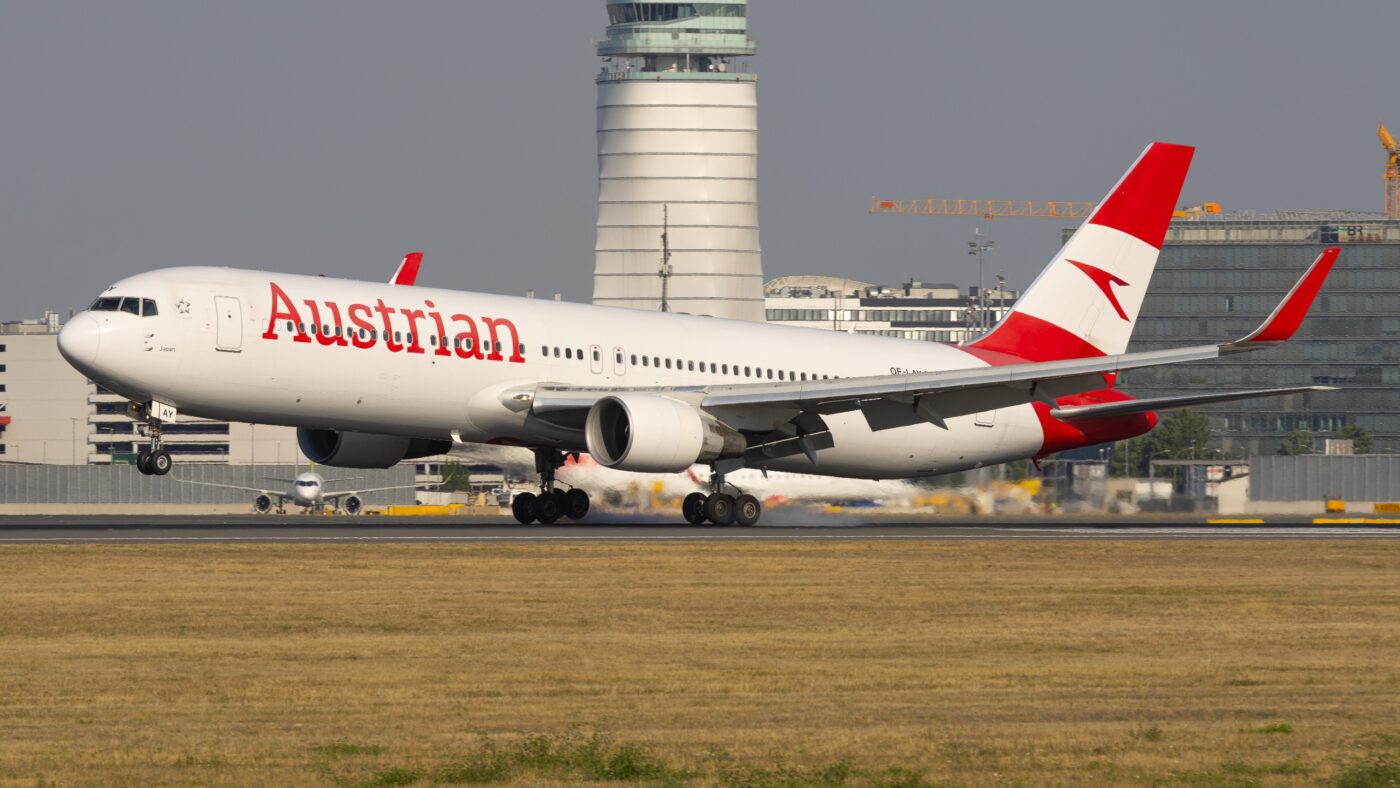
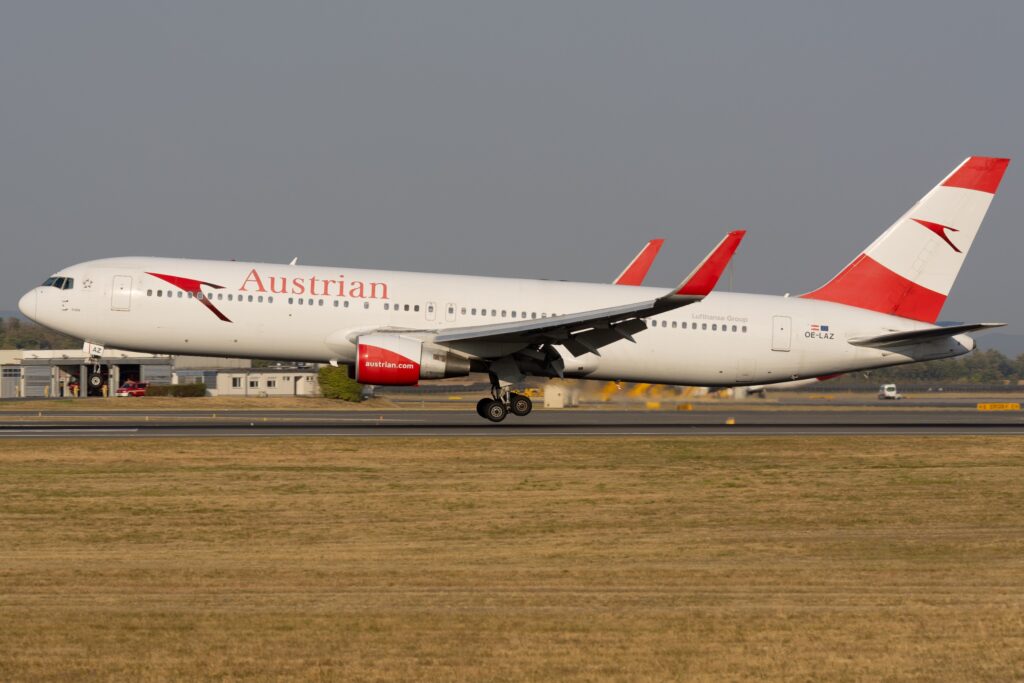
Austrian Airlines has sold its three remaining Boeing 767-300ERs as it prepares to withdraw the type before the end of 2026. The aircraft will head to Arizona for parts recovery, closing a chapter that began with Lauda Air nearly four decades ago.
The departure of the 767 marks the next stage of Austrian’s transition to the Boeing 787-9 Dreamliner. Its replacement programme will eventually also remove the Boeing 777-200ER, leaving a single aircraft type operating the airline’s long-haul network from Vienna.
Three aircraft sold for parts recovery
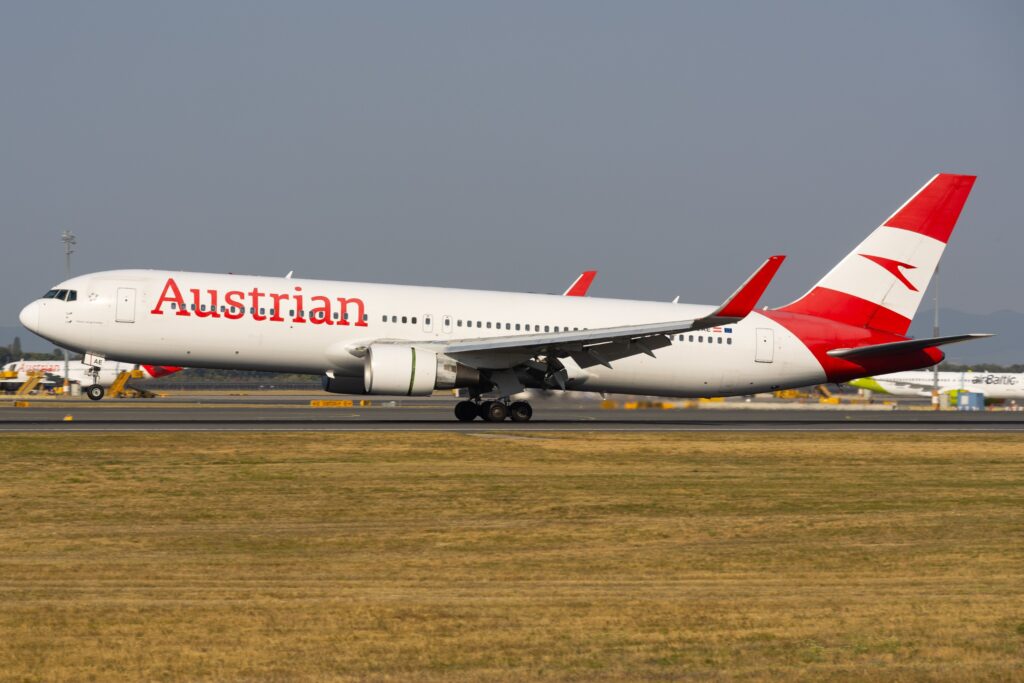
An Austrian official confirmed to Aviation Week on September 21 that OE-LAE, OE-LAY and OE-LAZ have been sold to US company Cobra Aviation Services LLC. The purchase price remains confidential, and all three aircraft are destined for Arizona.
OE-LAZ is expected to be transferred to the United States in October. OE-LAE and OE-LAY will follow towards the end of the year, allowing Austrian to continue using them during the final months of the 767 operation.
The buyer intends to recover parts from the aircraft. The announced plan is therefore for dismantling, rather than a return to airline service or conversion into freighters. The reporting reviewed does not identify the specific Arizona facility or a timetable for completing the work.
What happens after the final flight?
Parts recovery gives retired aircraft a continuing role in supporting other fleets. Components with remaining service potential can be removed and assessed for reuse, even when operating the complete aircraft is no longer commercially attractive.
In a typical teardown, recoverable equipment can include engines, landing gear, flight control surfaces and other systems. The precise inventory depends on the aircraft’s condition and the buyer’s requirements. No detailed component recovery plan has been disclosed for Austrian’s three jets.
Recovered equipment does not go straight onto another aircraft. Boeing describes used serviceable material as previously installed parts that have been inspected, tested and found to meet the applicable airworthiness requirements. Depending on their condition, components may need repair and recertification before returning to service.
After reusable equipment has been removed, the remaining structure can be dismantled and its materials sorted for recycling. This is the general process used by aircraft recycling specialists; the exact handling of these three airframes has not been announced.
Austrian has followed a similar disposal route before. In 2021, it sold three older 767s to Monocoque Diversified Interests, with aircraft subsequently used as sources of spare parts. Cobra’s acquisition now covers the last three examples in the fleet.
Final passenger flight provisionally planned for December
OE-LAZ is scheduled to leave commercial service on September 28, according to an Austrian spokesperson quoted by aeroTELEGRAPH. OE-LAE and OE-LAY would then remain as the final two passenger aircraft of the type.
Current planning points to a final departure from Vienna on November 30 and a return arrival on December 1. Austrian Wings reports that Washington is the likely destination, with flights OS41 and OS42 under consideration.
However, Austrian has not announced a fixed final-flight date. Neither the exact operation nor the aircraft assigned to it should yet be treated as confirmed. The distinction also matters for the retirement timeline: the last passenger service and the subsequent ferry flight to the United States are separate events.
A legacy stretching back to Lauda Air
The 767’s Austrian history began in 1988, when Lauda Air introduced its first example, OE-LAU, named “Johann Strauß”. The type subsequently became an important part of the airline’s intercontinental operation before its integration into Austrian Airlines.
Austrian took over six Lauda Air 767-300ERs in 2005 and operated them on routes across the Atlantic and to Asia. Their retirement therefore ends more than two decades in Austrian service, alongside a broader Austrian aviation history spanning approximately 38 years.
The remaining aircraft date from the closing years of that original fleet expansion. OE-LAY first flew in December 1998, followed by OE-LAZ in July 1999 and OE-LAE in October 2000. All three will be more than 25 years old when they leave passenger service.
What changes with the Dreamliner?
Austrian introduced the Boeing 787-9 on scheduled long-haul services in June 2024, with OE-LPL operating the inaugural flight from Vienna to New York JFK. The third Dreamliner, OE-LPG, began scheduled service to Montreal on June 1, 2026, after transferring from Lufthansa.
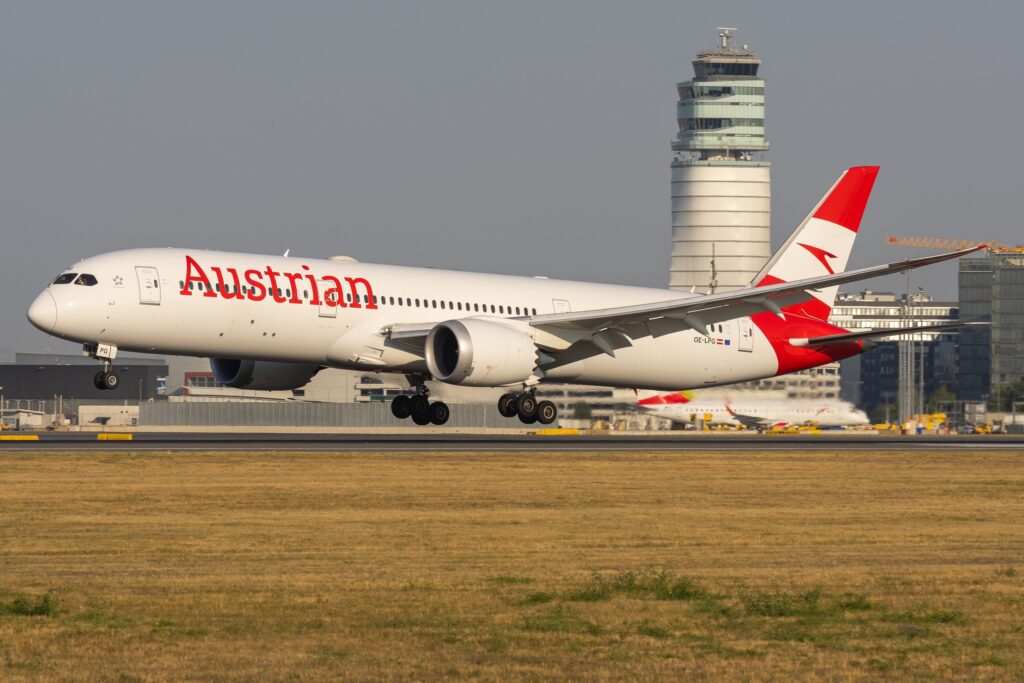
The replacement changes the scale of an individual flight. Austrian’s published 294-seat Dreamliner configuration offers 83 more seats than its 211-seat 767, an increase of approximately 39%. The cabin breakdown shows where that additional capacity sits:
| Cabin | Boeing 767-300ER | Boeing 787-9 |
|---|---|---|
| Business | 24 | 26 |
| Premium Economy | 30 | 21 |
| Economy | 157 | 247 |
| Total | 211 | 294 |
Almost all of the additional seats are in Economy. Premium Economy is smaller in the published Dreamliner layout, despite the aircraft carrying more passengers overall. These figures describe the configurations currently published by Austrian, rather than a guaranteed layout for every future delivery.
The 767 already provides flat beds in Business Class, individual entertainment screens and USB ports. On the Dreamliner, every Business Class seat has direct aisle access. Other changes include larger electronically dimmable windows and more spacious overhead storage.
The 787 also introduced Wi-Fi to Austrian’s long-haul fleet, with free messaging available across all cabins. For passengers, that adds a practical difference alongside the changes in seating and cabin design.
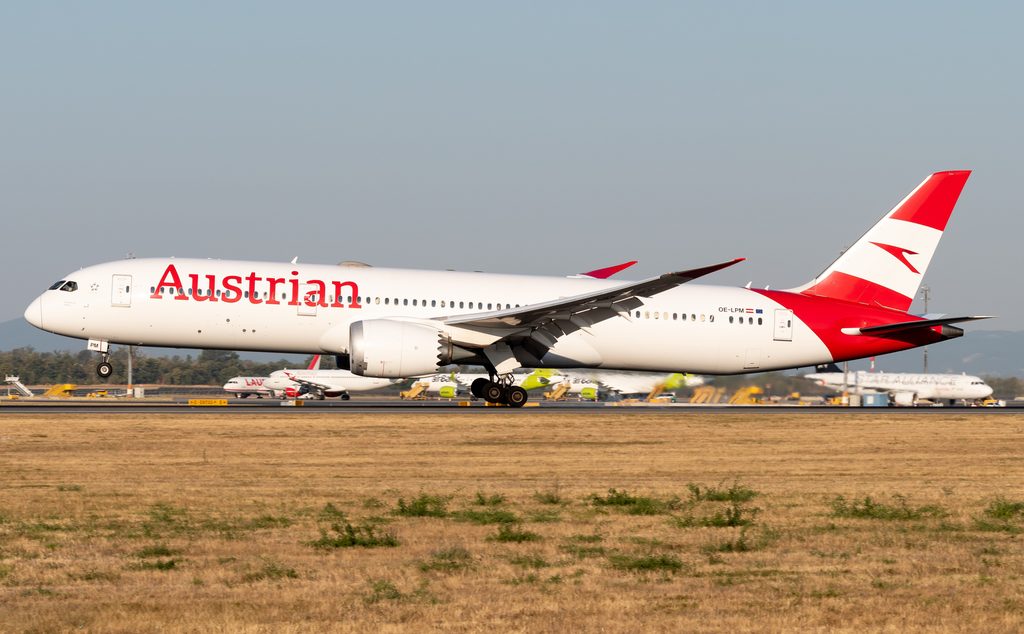
Austrian states that the Dreamliner consumes around 2.5 litres of fuel per passenger per 100 kilometres, up to 20% less than the 767. Actual consumption depends on the flight and passenger load, but the airline’s comparison illustrates the efficiency improvement behind its fleet renewal.
Towards a single long-haul fleet
Austrian’s June fleet update set a target of 12 Boeing 787-9s by the end of the winter 2028/29 timetable. The 767 withdrawal is an intermediate step, with the six remaining 777s also due to be replaced gradually.
The wider programme extends to European services. Austrian is phasing out its Embraer 195 fleet and expanding its Airbus operation, with the stated aim of consolidating five aircraft fleets into two: the A320 family and the 787-9.
For passengers, the 767’s departure will be the most immediate change.
The full transition to Austrian’s future fleet will continue for several more years.