
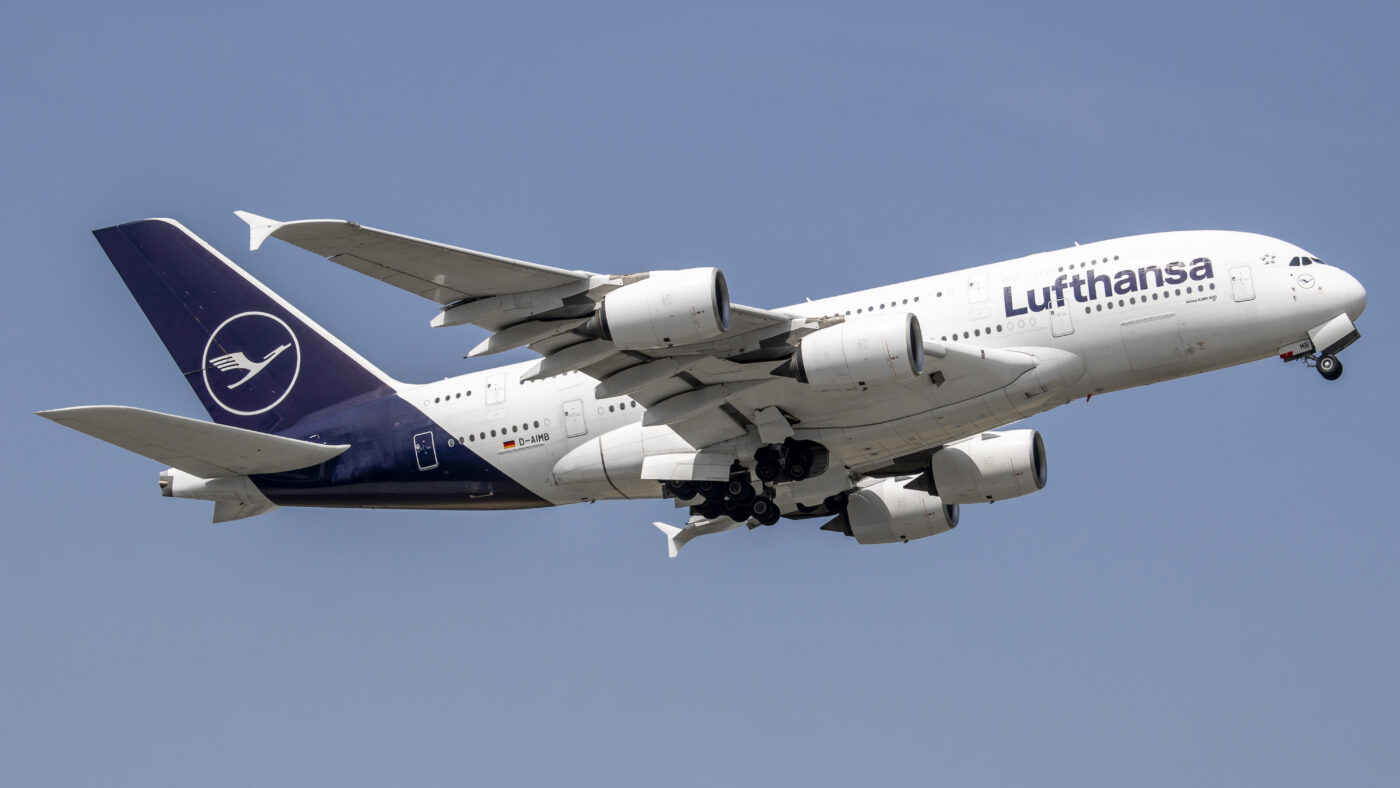
Following an aborted takeoff caused by an engine failure, the US Federal Aviation Administration (FAA) has issued a new Airworthiness Directive. The measure affects certain GP7270, GP7272, and GP7277 engines manufactured by Engine Alliance, a joint venture between GE Aerospace and Pratt & Whitney. These engines are exclusively used on the Airbus A380.
Faulty Seal Prompts Safety Measures
The directive follows an incident in which an Airbus A380 had to abort its takeoff after an intermediate seal in the high-pressure turbine (HPT) failed uncontrollably. The failure caused a GP7270 engine to shut down.
The FAA is continuing to investigate the exact cause of the incident. In the meantime, affected operators must remove the relevant seal and replace it with an approved component. The measure is intended to prevent further consequences of the technical failure. According to the FAA, leaving the issue unaddressed could result in an engine fire and damage to the aircraft.
Replacement Required Within Set Deadlines
The directive targets 15 intermediate seals with the highest number of operating cycles since their respective engines last underwent an overhaul. However, the wording does not clearly establish whether this refers to 15 individual seals installed in 15 separate engines.
Replacement deadlines vary depending on the engine serial number. In some cases, the work must be completed within 50 flight cycles or no later than 30 days after the directive takes effect. The earlier deadline applies in each case. The new regulation is scheduled to enter into force on October 23.
The measure also comes with substantial costs. The FAA estimates the replacement cost at $528,150 per unit. This includes $527,300 for parts and $850 for ten hours of labor at $85 per hour. The total is equivalent to approximately €470,000. Aviation news outlet Aero Times was the first to report on the directive.
Four Airlines Operate A380s with Affected Engines
According to the FAA, no engines installed on aircraft registered in the United States are currently affected. Since no US airline operates the Airbus A380, the measure concerns international operators.
These include Emirates, Etihad Airways, Qatar Airways, and Korean Air, whose A380 fleets are equipped with Engine Alliance engines. Other airlines use alternative powerplants. Lufthansa, for example, operates its Airbus A380 fleet with Rolls-Royce engines.
Emirates, meanwhile, uses both Engine Alliance and Rolls-Royce engines across its A380 fleet. Which specific aircraft or operators are affected by the new directive depends on the individual engine serial numbers.With the mandatory maintenance measure, the FAA aims to ensure that the affected engines can continue operating safely.