
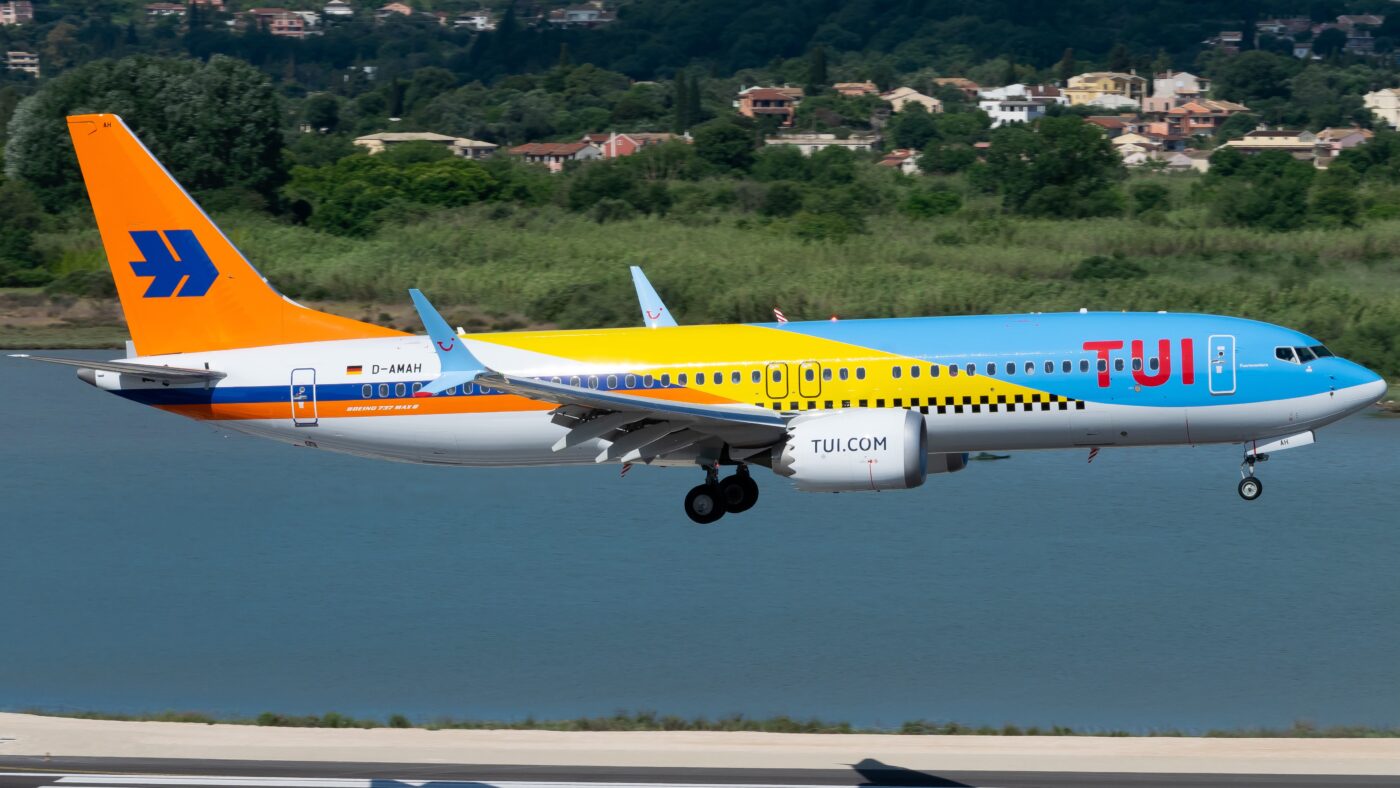
TUI has narrowed its full-year profit forecast as stronger late bookings support its tour operator and airline business, although summer sales remain below last year’s level.
In a trading update on September 22, the travel group said it expects underlying operating profit of €1.2 billion to €1.3 billion at constant exchange rates for the financial year ending September 30. Its previous range was €1.1 billion to €1.4 billion.
The revised forecast leaves the midpoint unchanged. TUI also cited strong demand for its Holiday Experiences business, which includes hotels and cruises, as a factor supporting the outlook. Its revenue guidance remains suspended.
Late summer bookings improve
Summer booked revenue in TUI’s Markets + Airline division was 5% below the previous year, compared with a 6% shortfall reported in August. Booked revenue over the latest four-week period was 2% higher year on year.
The UK remained weaker than Germany, with summer booked revenue down 7% and 2% respectively. Greece and Spain, including the Balearic and Canary Islands, were the most popular summer destinations.
These figures cover the combined tour operator and airline business. They are not a measure of flight-only ticket sales or passenger numbers.
TUI has reduced its summer capacity for which it bears the commercial risk by 5%. It said prioritising the use of that capacity, alongside cost savings and efficiency measures, had supported performance. Average selling prices were holding up despite competition.
Winter demand remains cautious
The shift towards booking closer to departure is continuing into winter 2026/27. Booked revenue for the season was 7% below the previous year, although the shortfall for bookings made during the latest four weeks was just 1%.
TUI plans to retain flexibility to adjust capacity as demand develops. The Canaries, mainland Spain, Egypt and Cape Verde will form the core of its winter programme, alongside long-haul destinations including Thailand, Mexico and the Dominican Republic.
Fuel remains another planning challenge. As of September 14, TUI had hedged 63% of its forecast winter jet fuel requirements, compared with 98% for summer 2026. These arrangements provide greater cost certainty when setting prices and planning capacity.
The group’s outlook assumes no material escalation in geopolitical tensions and continued fuel supplies. Full-year results are scheduled for December 9.