
Thousands of miles away from the world’s major aviation hubs, a small runway on the Midway Atoll has become an important issue for the future of trans-Pacific aviation. Henderson Field, officially named Midway Atoll Airport, is rarely used by commercial aircraft, yet the Federal Aviation Administration (FAA) says the airport plays an important role in the flight planning of long-distance routes across the North-Central Pacific.
The reason is simple: Midway is an emergency diversion airport for aircraft operating under Extended-range Twin-engine Operations Performance Standards, commonly known as ETOPS. These rules allow modern twin-engine aircraft to fly long distances over remote areas while requiring operators to remain within an approved diversion time of a suitable airport. The FAA describes ETOPS as a system designed not only to permit long-range operations but also to protect passengers and crews if an aircraft has to divert following an engine or other critical-system failure.
A Runway with an Unusually Important Role
Henderson Field is located on Sand Island, part of the Midway Atoll National Wildlife Refuge. The airport is owned by the U.S. government and operated by the U.S. Fish and Wildlife Service. Unlike conventional commercial airports, its importance is not measured by passenger numbers.
The U.S. Government Accountability Office has previously described Henderson Airfield as an emergency landing airport serving aircraft in the central Pacific. Under FAA rules, airlines conducting extended operations must identify suitable airports that can be used in an emergency.
The FAA is now openly questioning how long Midway can continue performing that role. According to the FAA, the infrastructure is getting worse and will require significant financial investments and rehabilitation within the next three to five years to maintain its operational capability and compliance with airport certification and ETOPS requirements.
The financial challenge is substantial. The FAA says major rehabilitation is expected to cost more than $100 million, including runway milling and repaving as well as seawall repairs. Current funding is considerably smaller: the Fish and Wildlife Service uses approximately $2.5 million a year in federally mandated Airport Improvement Program funding while contributing another $2.6 million annually to maintain minimum operational capability.
Why Qantas is Monitoring the Situation Closely
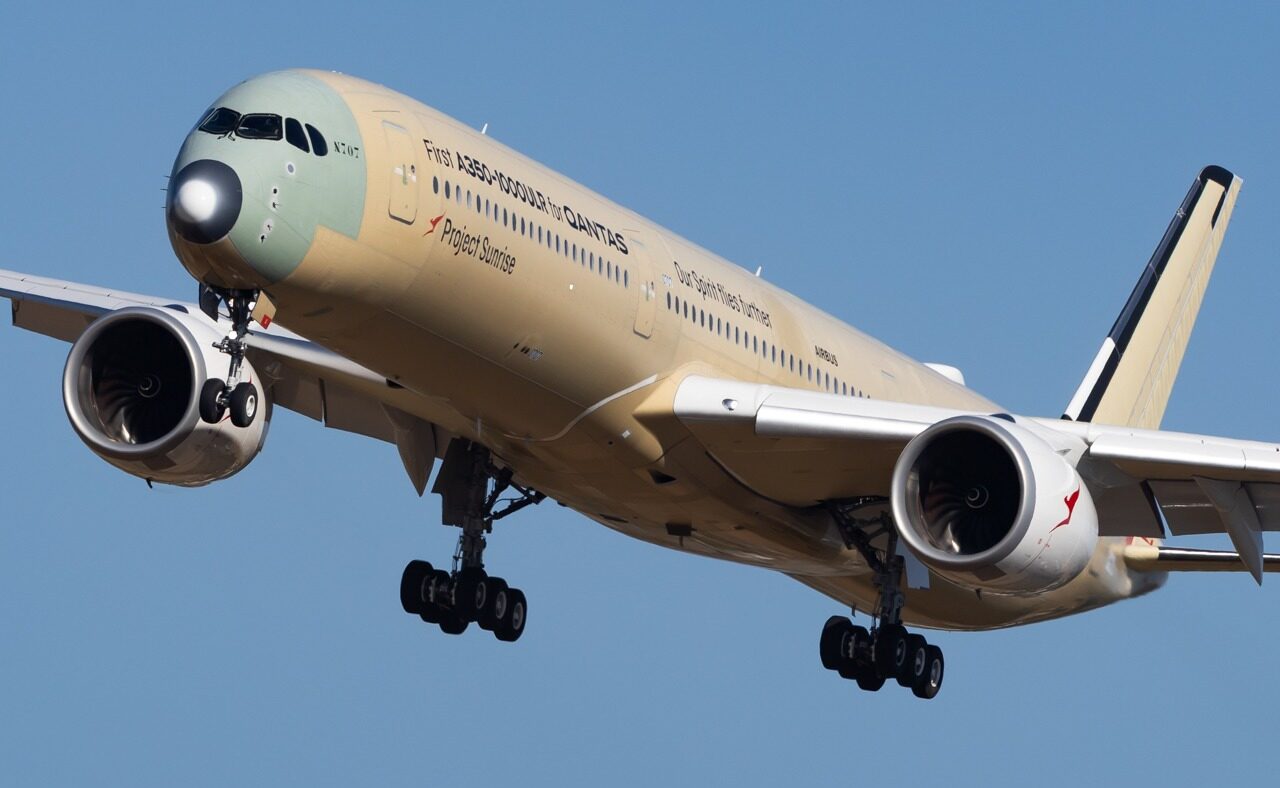
The issue has taken on particular significance for Qantas as the Australian airline prepares to launch Project Sunrise. From October 2027, Qantas plans to operate daily non-stop flights between Sydney and London using specially configured Airbus A350-1000ULR aircraft. The airline says the aircraft will be capable of flying more than 16,000 kilometers and up to 22 hours non-stop.
For such flights, the availability of diversion airports is a fundamental part of route planning. Qantas has therefore told the FAA that Midway has a particularly important role in its planned operations. If Henderson Field were no longer available, the airline would have fewer options when planning its route across the Pacific.
Qantas has stated that it supports continued federal investment in Midway and has described the airport’s function as “unique” for its future operations. The carrier has also argued that losing Midway could force a different routing for some ultra-long-haul services, potentially increasing fuel requirements and reducing the payload that could be carried.
The Reaches Wider than just Qantas
Qantas is not the only airline concerned about the airport’s future. Midway’s role extends across the trans-Pacific network, where airlines rely on geographically dispersed diversion airports to comply with ETOPS requirements.
The FAA itself says Midway currently serves a specific function in global aviation: trans-Pacific ETOPS flight planning for both commercial and military operations. The agency’s consultation is therefore not an announcement that the airport will close. Rather, it is an attempt to establish what the consequences would be if Midway could no longer meet the necessary standards.
That leaves Henderson Field in an unusual position. Almost nobody needs to land there on a normal day. But its existence can influence where aircraft are allowed to fly thousands of kilometers away. For airlines operating increasingly long routes with highly efficient twin-engine aircraft, a remote runway in the middle of the Pacific can therefore be just as important as an airport serving millions of passengers.