
Despite stable demand in key market segments, the German aviation industry is making only slow progress. High government-regulated costs, limited aircraft availability, and declining capacity on domestic German routes are putting pressure on the industry. New data on the 2026/27 winter flight schedule shows that trends in Germany continue to differ from those in many other European markets.
While airports and airlines elsewhere are expanding their capacity, supply in Germany remains below pre-pandemic levels. The causes lie not only in demand but also in the economic conditions under which airlines operate their aircraft and plan new routes.
Fewer Seats Despite Sustained Demand
According to data from flight schedule provider OAG, published by Aviation Week on October 21, German airports are expected to offer approximately 47.95 million outbound seats in the 2026/27 winter flight schedule. This represents a 1.3 percent decline compared to the previous winter. At the same time, the number of scheduled departures is falling by 3.9 percent to about 260,500.
As a result, capacity remains well below pre-crisis levels. This trend is particularly striking when compared to the rest of Europe: For the 2026/27 winter season, Europe as a whole is expected to reach a capacity of about 118 percent of 2019 levels, while Germany is projected to reach only about 88 percent. The figures illustrate that the German market is recovering more slowly than the European aviation sector as a whole.
This trend does not indicate a general decline in the desire to travel. Rather, the interplay of costs, available aircraft, and expected revenues influences where airlines deploy their capacity. Airlines can prioritize stationing additional aircraft and crews at locations where economically viable operations are more feasible.
High Government Levies are Exacerbating Cost Pressures
A key factor driving this trend is the cost structure of Germany as an aviation hub. This includes the aviation tax, aviation security fees, and air traffic control charges. According to Fraport COO Dietmar Focke, these three cost components combined have doubled between 2019 and 2026. This statement underscores just how significantly the operating environment for airlines has changed in recent years.
The impact is not limited to individual airlines. When deciding where to station their aircraft, airlines compare different locations, taking into account both demand and operating costs. If an aircraft can be operated more cost-effectively at another European location, this will also affect the route offerings of German airports in the long term.
Furthermore, government-regulated fees account for only a portion of the total costs. Airports and airlines must also finance personnel, maintenance, fuel, infrastructure, and other operational services. If multiple cost items rise simultaneously, the profitability of individual routes can deteriorate—particularly for connections with low demand or limited revenue potential.
The federal government has since responded to this burden. As of July 1, 2026, lower air traffic tax rates are once again in effect. For flights in the shortest statutory distance category, for example, the rate dropped from 15.53 to 13.03 euros per passenger. The rates for medium- and long-haul flights have also been reduced.
While this relief is a step in the right direction, it does not automatically change the overall situation. Whether airlines add additional routes or station aircraft in Germany depends on a variety of economic and operational factors. The development of the upcoming winter flight schedule has not yet shown a widespread return to previous capacity levels.
A Shortage of Aircraft is Further Limiting Growth
In addition to cost factors, fleet availability plays an important role. Delays in aircraft deliveries and maintenance-related restrictions—including those related to engines—make it difficult for airlines to provide their planned capacity. Focke also noted this in his assessment of German market trends.
For airlines, this means that additional demand cannot be immediately translated into additional flights. When aircraft are not available, capacity must be allocated among different routes and markets. As a result, domestic German routes, European short- and medium-haul routes, and long-haul flights compete for limited resources.
These decisions have consequences for airports. An airline will prefer to deploy its capacity where it expects a sufficient return on investment with the available aircraft. High location costs can therefore contribute to additional capacity being built up in other markets, while supply in Germany grows more slowly.
This creates a complex interplay of various factors: High costs make economic planning difficult, while a shortage of aircraft limits the ability to respond to demand on short notice. The weaker performance of the German aviation industry cannot, therefore, be attributed to a single cause.
This Trend is Particularly Evident in Domestic German Air Travel
The forecasts for the winter flight schedule illustrate just how differently individual market segments are developing. While international seat capacity at German airports is expected to remain largely stable at around 41.52 million seats, domestic German routes are projected to see a decline of 8.8 percent to approximately 6.43 million seats.
Domestic traffic thus accounts for nearly the entire projected decline in total capacity. For travelers, this may mean fewer flight options and a more limited selection of direct connections. Where flights are canceled, rail connections or connecting flights at major hubs may offer alternatives. Whether these alternatives can fully compensate for the cancellations, however, depends on the specific route and travel times.
This development is particularly relevant for smaller airports and regional transportation networks. They are often more dependent on specific routes and airlines than large international hubs. If connections are reduced, this can impair access to economic regions and require additional transfers.
At the same time, not every German airport is developing at the same rate. While Frankfurt, Munich, and Berlin are reporting declines in available seats for the winter, growth is expected for Düsseldorf, Cologne/Bonn, and Dortmund. The figures thus reveal not only a general weakness in the market but also a shift within the German airport system
Major Hubs Continue to Focus on International Connections
Despite the weaker overall market, Germany remains a major hub for international air travel. Frankfurt and Munich have extensive connecting traffic and serve key business travel and long-haul markets. Both locations are also investing in their infrastructure to be prepared for future growth.
Frankfurt is focusing on expanding its terminal capacity and improving operational efficiency. However, the economic importance of a hub does not depend solely on the size of its infrastructure. It is also crucial that airlines deploy enough aircraft and offer sufficient feeder connections to operate international routes profitably.
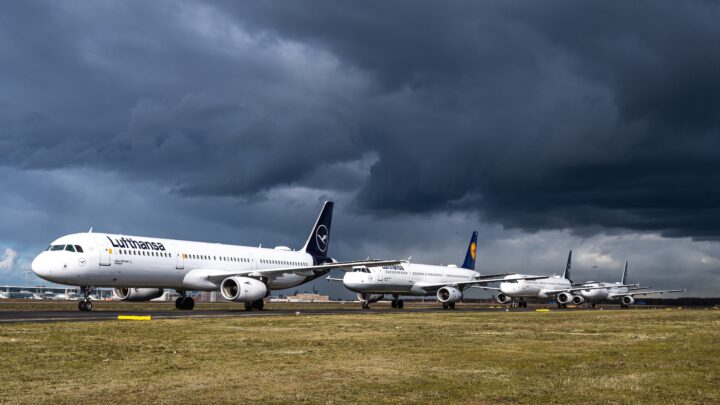
Developments within the Lufthansa Group also illustrate that capacity is not simply expanded across the board. For the winter of 2026/27, the core Lufthansa brand is expected to see a decline in available seats, while Lufthansa City Airlines and Discover Airlines are set to expand their capacities. Flight planning will thus be differentiated more closely according to business model and operational area.
This shift shows that the industry is not entirely abandoning growth. Rather, available capacity is being redistributed and deployed where airlines anticipate better economic prospects. For Germany as an aviation hub, however, the question remains whether these adjustments will be sufficient to narrow the gap with other European markets in the long term.
Competitiveness Will Determine the Course of the Recovery
The development of the 2026/27 winter flight schedule makes it clear that the recovery of the German aviation industry continues to face challenges. High regulated costs, limited aircraft availability, and a particularly weak domestic flight schedule in Germany are all contributing factors. While the reduction in the air travel tax, which has been in effect since July, signals relief, it has not yet triggered a comprehensive expansion of flight offerings.
For the coming months, therefore, the key factors will be how cost conditions evolve and to what extent additional aircraft will be available to airlines. Equally important is whether demand in individual markets develops in such a way that new or resumed routes become economically viable.
The challenge is not merely to bring more passengers to German airports. Rather, it is crucial that airlines receive sufficient economic incentives to deploy their capacity here. Without an improvement in these framework conditions, Germany could continue to lose ground in European air travel—even if demand for air travel remains strong overall.